
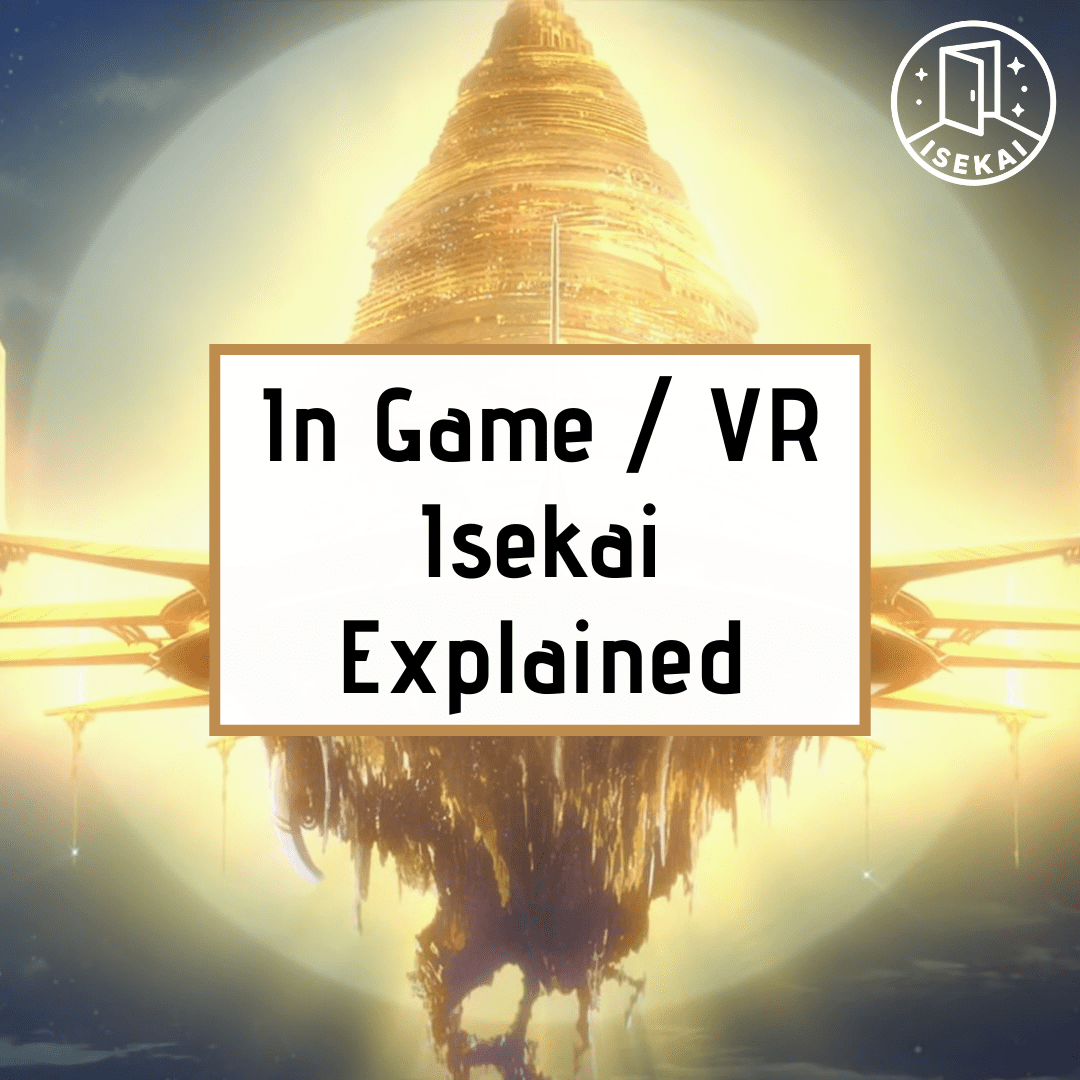
Virtual worlds. Infinite possibilities. Real consequences. In the captivating subgenre of In-Game / Virtual Reality Isekai, characters don’t just play the game; they live it. Whether by choice or accident, they’re drawn into digital realms where game mechanics rule and escape is never guaranteed. But why has this genre taken such a strong hold of the anime and manga community? Let’s dive deep!
What Is In-Game / Virtual Reality Isekai?

At its core, this type of isekai features characters entering a virtual game world. This isn’t your average portal fantasy; here, game logic becomes reality. These worlds are governed by stats, quests, health bars, and skill trees, but they’re also full of emotional stakes and psychological depth. It’s an isekai that asks not just “how do I survive here?” but often, “who am I now that I’m no longer me?”
What makes it especially compelling is that it balances escapism with existential dread. Protagonists may be OP, but they also face the loss of their humanity, memories of the real world, or ethical dilemmas regarding NPCs who may be more real than expected.
How They Get There: Common Tropes

The in-game isekai journey can start in a few key ways:
- Trapped in a game (Sword Art Online, Log Horizon): The players are forcibly kept in the virtual world, often with lethal consequences.
- Server shutdown surprises (Overlord): A game ends… but one player doesn’t log out.
- Login becomes life (Shangri-La Frontier): The protagonist chooses full-dive VR, where immersion is so deep, reality blurs.
- Transformation into avatars or NPCs (Skeleton Knight in Another World): They don’t just play the character—they become it.
These tropes create dramatic tension from the start: Can they escape? Do they even want to? And who gets to decide what’s real?
What Sets It Apart?

Unlike traditional isekai, where a character is whisked into a magical world via reincarnation or summoning, in-game isekai originates from technology, a mirror to our growing digital entanglement. The world isn’t entirely new; it’s familiar, based on rules the protagonist often understands. This creates a unique dynamic of mastery vs mystery.
Also, stakes aren’t always about saving the world. Sometimes they’re about keeping a guild together, protecting a digital homeland, or grappling with isolation in a place that feels almost like home.
Why We Love It

We love in-game isekai because it masterfully blends power fantasy with strategic brilliance. There’s something deeply satisfying about watching a skilled protagonist manipulate game systems, optimise builds, and outwit opponents using pure intellect and mechanics mastery. But beyond the combat and levelling up lies an intricate layer of world-building. These stories are often rooted in rich, game-inspired lore that includes class hierarchies, crafting systems, guild politics, and even evolving AI behaviours.
This complexity makes these worlds feel alive and immersive. At the same time, many of these series explore profound philosophical questions: What defines identity when your body is digital? Can AI possess sentience? What does it mean to die in a world that’s not quite real? And finally, there’s a core of heartfelt nostalgia and longing. Stories often echo the feelings of belonging we find in online spaces, highlighting friendships forged in guild halls, the ache of disappearing servers, and the comfort of rules that, while artificial, offer structure in a chaotic world.
Digital Lives, Real Consequences

One of the most compelling aspects of in-game isekai is how it grapples with the long-term psychological impact of living in a virtual world. For characters who are trapped, whether for days or decades, the boundaries between their real and digital selves begin to blur. Prolonged immersion can lead to identity dissociation, emotional detachment from reality, or even full emotional investment in their in-game persona. Protagonists like Tsukasa from .hack//Sign or Kirito from Sword Art Online often show signs of trauma, isolation, or guilt upon reentry into the real world, struggling to reconcile who they’ve become in-game with who they were outside.
Relationships are deeply affected, too. Bonds formed in-game—whether romantic, platonic, or adversarial—carry weight and often surpass those from the real world, especially when the latter is inaccessible or painful. This raises meaningful questions: are digital emotions any less valid? Can a virtual friend or lover be “real” if your feelings are?
And then there’s the ethics of NPC treatment. Many in-game isekai worlds include NPCs that exhibit emotional depth, self-awareness, or evolving behaviours. Are they merely code—or something more? Series like Overlord and Trapped in a Game That Flopped push these boundaries, exploring whether digital entities deserve empathy or rights. It’s a haunting reminder that as AI grows, these speculative dilemmas could one day become real.
Foundational & Fan-Favourite Examples
Here are some standout anime and manga examples that highlight the depth and diversity of in-game isekai. These stories fuse clever storytelling with character-driven progression, often balancing strategy, action, and emotional nuance, whether through epic guild wars, personal identity crises, or the quiet bonds formed in digital worlds.
Anime:
- .Hack//
Perhaps the quintessential in-game isekai of the early 2000s. Unlike action-heavy entries in the genre, this series leans into psychological tension and introspective storytelling, exploring themes of trauma, identity, and digital isolation. It’s a slow-burn mystery that helped define the philosophical side of VR-based isekai long before it was trendy. - A Wild Last Boss Appeared!
In this gender-bending twist on in-game isekai, the story follows a player who wakes up as the final raid boss of his favourite MMORPG, and in the body of his female character, Ruphas Mafahl. With all her overwhelming endgame stats intact, Ruphas sets out to uncover what happened to the world she once ruled and why everything feels too real. Blending comedy, kingdom-building, and introspective moments about power and identity, this series is a standout for fans who enjoy dominant protagonists with a touch of mystery and heart..
Manga:
- Surviving the Game as a Barbarian
After beating the notoriously difficult VRMMO Dungeon & Stone, Hansu Lee finds himself trapped in the body of his in-game barbarian character, Bjorn Yandel. Armed with game knowledge but limited by his character’s brutal, low-intelligence nature, he must navigate a harsh, survival-driven world. With clever strategy and raw power, this series offers a grounded take on in-game isekai, mixing action, world-building, and dark humour. - Trapped in a Game That Flopped
In this fresh twist on in-game isekai, an administrator suddenly finds herself trapped in her own RPG, Save the Earth, only to discover it’s a failed, cursed game. Now stuck as an NPC, she must survive by leveraging her admin knowledge while racing against the clock to beat the game before her real-world body perishes. With its clever blend of comedy, romance, and tragedy, plus a gentle touch of high-stakes tension, this manhwa proves that even a “flopped” game can become a captivating world worth exploring.
What’s Next?
In-game isekai is more than just pixel-perfect wish fulfilment. It’s a genre where escapism becomes entrapment, where the thrill of levelling up comes with the cost of lost reality. As technology blurs the line between real and virtual, these stories resonate more than ever. Whether you’re here for the tactics, the lore, or the philosophical musings on self and identity, there’s a login screen waiting for you.
Welcome to the game, player. Will you log out?
~ Stay updated on the latest Isekai posts by subscribing to the blog ~


Leave a Reply