
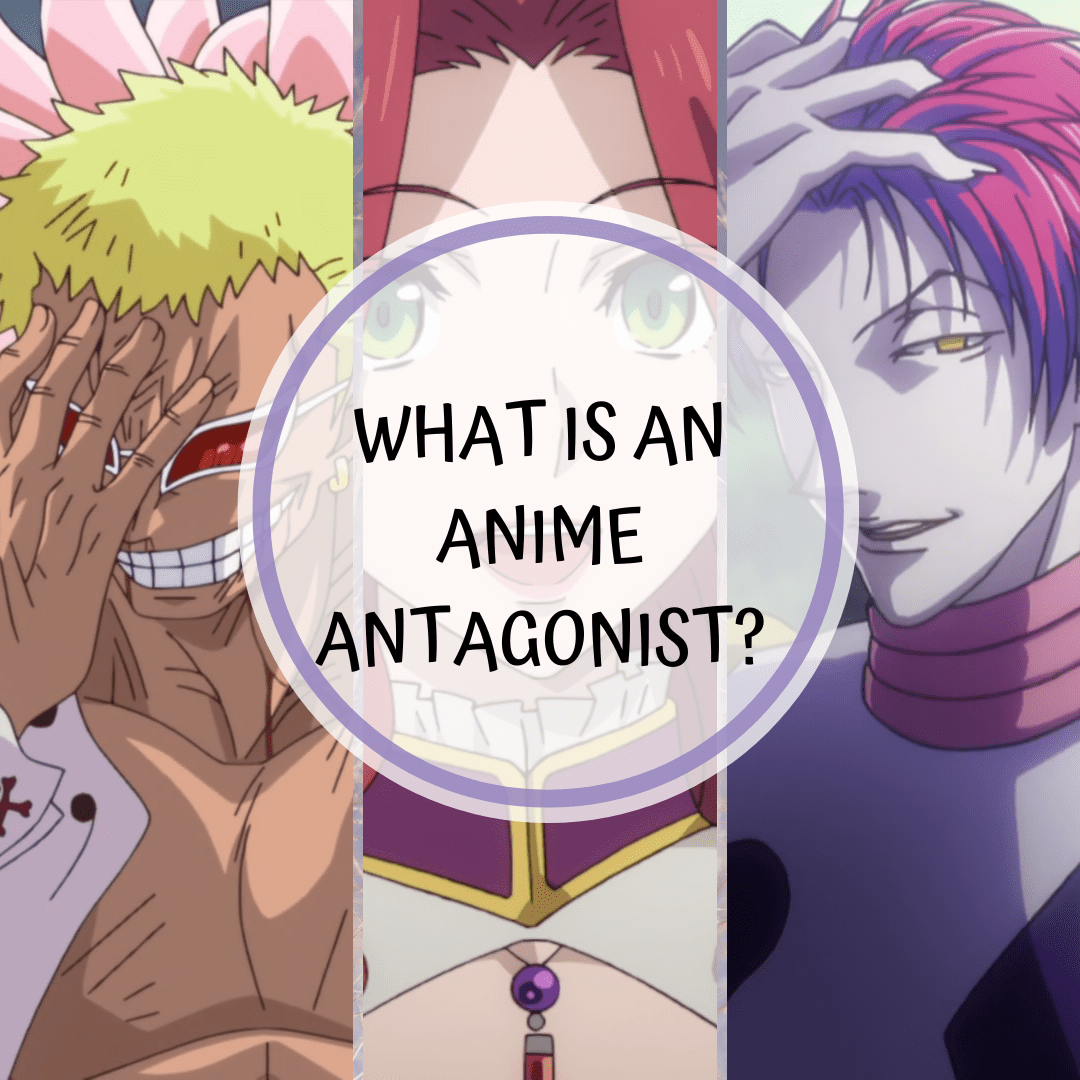
An anime antagonist is usually a fast favourite character for myself and many others. Anime is full of unforgettable characters, but the most captivating are often those who stand against our heroes. In this blog post, I delve into what makes a great anime antagonist, explore their different forms, and highlight some of the most iconic antagonists from anime and manga.
Definition of an Anime Antagonist
In a story, the antagonist is the character, force, or a concept that opposes the main character, who is the protagonist of the story. The whole point of an antagonist is to create a conflict and drive the plot forward. They are not always outright “villains” – sometimes their goals or beliefs, simply, clash with the protagonists.
Anime antagonists are the forces that create conflict, drive the action, and make us question our own beliefs.

Antagonists in Anime and Manga
Anime and manga are renowned for their wide range of complex and fascinating antagonists. Here’s why they are important and some examples of how they can differ:
- Essential for Compelling Stories: Antagonists add depth by presenting challenges that force the protagonist to grow and change. A great antagonist makes us question morality, motivations, and what we might do in a similar situation.
- Not Always Evil: Many anime antagonists aren’t purely villainous. They might have understandable reasons for acting the way they do, even if their methods are wrong. This makes them more believable and relatable.
- Example: Light Yagami (Death Note) believes he’s improving the world, but his methods are undeniably evil.
- Diversity: Antagonists in anime and manga come in all shapes and sizes:
- Powerful, monstrous villains (like titans in Attack on Titan)
- Rival characters (like Vegeta from Dragon Ball Z)
- Internal struggles a protagonist must overcome, acting as their own antagonist
Anime antagonist examples:
For other anime terminology, check out the anime dictionary. Otherwise, here are some examples of other anime antagonists.
Muzan Kibutsuji

- Anime: Demon Slayer
His unparalleled power and cruelty force Tanjiro to continuously push his physical and mental limits. Their battles are also deeply personal, embodying Tanjiro’s desire to avenge his family.
Rachel

- Anime: Tower of God
Rachel’s betrayal and ambition shake Bam’s core beliefs about trust and his place in the world. She acts as a constant reminder of the challenges and sacrifices he may face on his journey within the Tower.
Askeladd

- Anime: Vinland Saga
A ruthless Viking leader, Askeladd acts as both a brutal mentor and a philosophical opponent for Thorfinn. His views on honor and power force Thorfinn to question his own path of vengeance.
Himiko Toga

- Anime: My Hero Academia
A member of the League of Villains, Toga’s twisted fascination with Izuku Midoriya and her ability to shape-shift challenge his heroism. She forces him to confront the unsettling realisation that villains can sometimes harbour relatable and even innocent feelings.
Meruem

- Anime: Hunter x Hunter
Initially a ruthless and tyrannical Chimaera Ant King, Meruem undergoes significant development. His exploration of humanity challenges the traditional concepts of ‘monster’ and ‘villain’.
Who are your favourite antagonists in anime?









Leave a Reply