
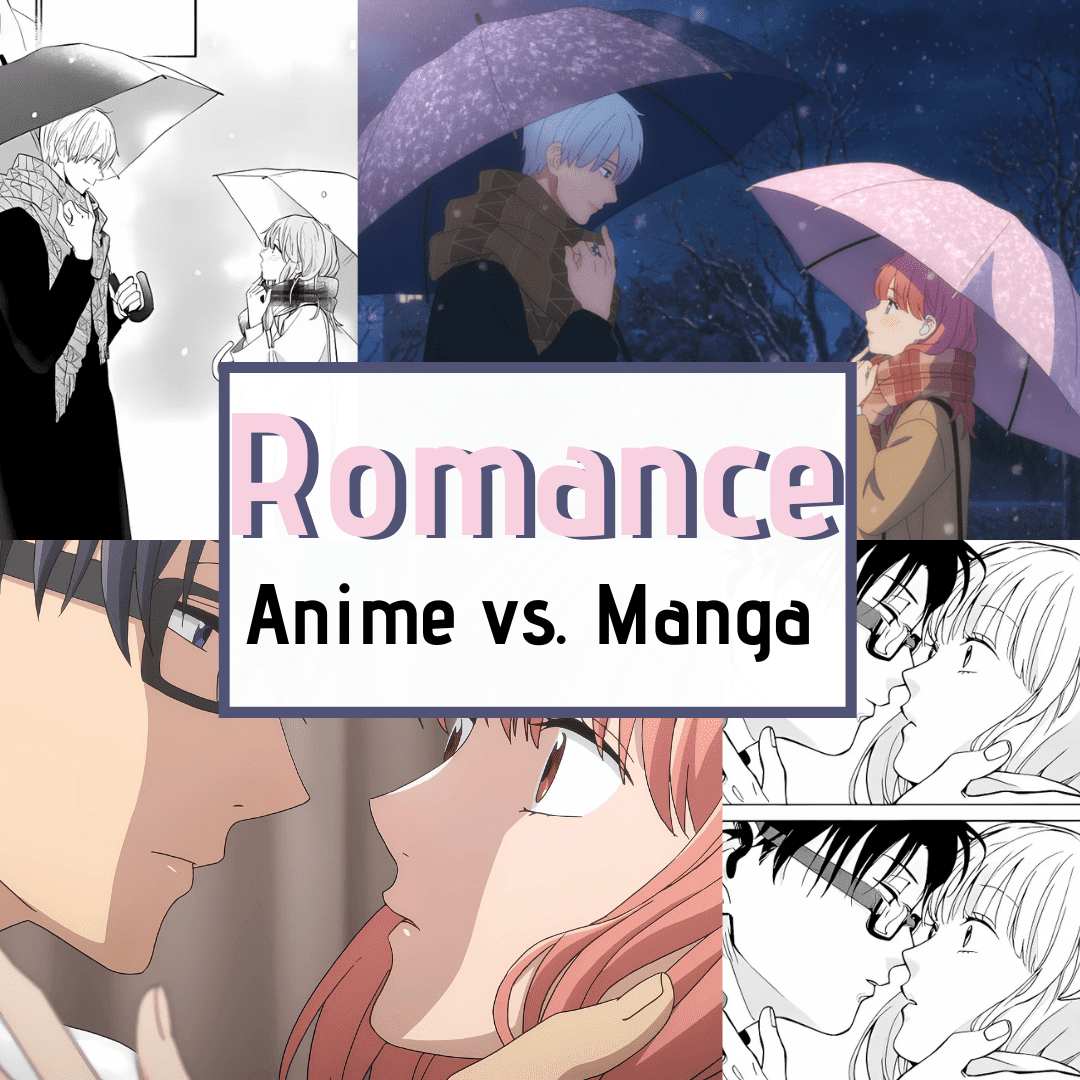
Romance is one of the most popular genres in both anime and manga, offering heartwarming love stories, emotional depth, and unforgettable character relationships. While these two mediums often tell the same stories, they do so in vastly different ways. From pacing and character development to artistic representation and emotional impact, romance in anime and manga has its unique strengths and weaknesses. But rather than competing, these two mediums often complement each other, creating a fuller and richer experience for fans.
So, which format tells love stories better?
Storytelling & Character Development
Romance stories thrive on strong character development and emotional depth. Whether it’s a slow-burning love story or an intense whirlwind romance, the way relationships are portrayed greatly impacts how invested we become in the characters. Both anime and manga bring their own strengths to storytelling.
Manga: Deep Emotional Exploration

Manga excels in exploring characters’ emotions because it isn’t restricted by episode counts or time constraints. The story unfolds naturally, allowing readers to connect deeply with characters through internal monologues, subtle emotional shifts, and detailed backstories.
- Example:
- Kimi ni Todoke (From Me to You): The manga spends more time inside Sawako’s and Kazehaya’s minds, making their slow-burn romance feel more intimate. The anime condenses much of this introspection, making their connection seem slightly rushed.
- Blue Spring Ride (Ao Haru Ride): The manga delves deeper into Futaba’s and Kou’s emotional struggles, showing their gradual growth and changes over time. The anime adapts only a portion of their story, leaving out key moments that build their relationship.
Strengths of Romance in Manga:
- Detailed inner monologues provide emotional depth.
- Longer format allows for slow-burn relationships.
- Side characters often receive more development.
Weaknesses:
- Some stories may feel too slow-paced.
- Heavy focus on internal dialogue can limit visual storytelling.
Anime: Expressive & Visually Impactful Romance

Anime brings love stories to life with animation, voice acting, and music. Emotional moments hit harder when combined with dramatic cinematography, expressive character performances, and stunning visuals.
- Example:
- Your Lie in April: While the manga is beautifully written, the anime’s use of music and visual metaphors makes the emotional highs and lows even more powerful. The performances of the characters’ piano and violin pieces add a depth that a silent manga panel simply cannot capture.
- Horimiya: The anime brings the manga’s romance to life with bright visuals, a lively soundtrack, and expressive voice acting that amplifies the comedic and romantic moments. However, due to time constraints, it condenses several important relationship-building scenes.
Strengths of Romance in Anime:
- Voice acting and music enhance emotional moments.
- Dramatic cinematography elevates key scenes.
- Easier to consume for casual viewers.
Weaknesses:
- Time constraints often lead to cut content.
- Some anime adaptations rush relationship development.
- Stories may end before the manga’s full narrative is adapted.
Pacing & Story Progression
Pacing can make or break a romance story. A relationship that develops too quickly can feel rushed and unrealistic, while one that drags on too long can become frustrating.
Manga: Slow-Burn & Extended Storylines

Since manga isn’t bound by episode limits, relationships unfold at a natural pace, often spanning months or even years. This allows for deeper character growth and more organic love stories.
- Example:
- Fruits Basket: The manga takes its time developing the relationships between Tohru and Kyo/Yuki, allowing for rich character growth. The original 2001 anime adaptation cut the story short, while the 2019 remake finally gave fans the full romance arc.
- Skip Beat!: The anime adaptation only covers the beginning of Kyoko’s journey, leaving fans without the full romantic and character development found in the manga.
Strengths of Manga Pacing:
- Relationships feel organic and well-developed.
- Longer run time means more opportunities for character interactions.
- No constraints on episode count allow for deeper storytelling.
Weaknesses:
- Can feel slow, especially for readers who prefer faster-paced romance.
- Some manga remain unfinished or drag out romantic tension too long (Boys Over Flowers is infamous for this).
Anime: Fast-Paced & Concise Adaptations

Anime often needs to compress years’ worth of storytelling into a limited number of episodes, leading to faster-paced romance arcs. This can be beneficial for viewers who enjoy concise storytelling but frustrating for those who want a more in-depth experience.
- Example:
- Horimiya: The anime condenses a lengthy romance manga into a single cour (13 episodes), leaving out several relationship-building moments.
- Clannad: Despite being a lengthy anime, it skips certain arcs from the visual novel, making the romance feel slightly rushed in places.
Strengths of Anime Pacing:
- Faster storytelling keeps things engaging.
- Removes unnecessary filler.
- Ideal for casual fans who prefer quicker narratives.
Weaknesses:
- Important moments may be rushed or omitted.
- Viewers might miss out on extra romantic details from the manga.
Visual & Artistic Storytelling
Romance isn’t just about words—it’s also about how emotions are conveyed visually. The lingering glance between two characters, the subtle blush of a confession, or the dramatic framing of a climactic moment all contribute to how a love story is experienced.
Manga: Symbolism & Creative Layouts

Manga artists use creative panel layouts, shading, and visual metaphors to express emotions. Flowers blooming in the background, changing weather patterns, and subtle shifts in shading all contribute to the atmosphere of a romantic scene.
- Example:
- A Sign of Affection: This manga uniquely conveys the experience of its deaf protagonist, Yuki, using stylised panels that reflect her way of perceiving the world.
- Orange: The manga uses fading outlines and soft sketching techniques to convey regret and nostalgia, elements that are less pronounced in the anime adaptation.
Anime: Movement, Colour, and Sound

Anime enhances romance through body language, voice acting, and soundtrack choices, making emotions more vivid and immersive.
- Example:
- Toradora!: Taiga’s and Ryuuji’s emotions are amplified by their subtle changes in tone, voice inflection, and body language, making their romance feel incredibly natural.
- The Dangers in My Heart: The anime uses lighting, colour changes, and camera angles to subtly highlight the shifting emotions between Yamada and Ichikawa.
Strengths of Anime’s Visual Storytelling:
- Voice acting adds another layer of emotional depth.
- Music enhances romantic and dramatic moments.
- Animation captures micro-expressions and body language.
Weaknesses:
- Some adaptations may lack the detailed artistic style of the manga.
- Limited budgets can affect animation quality in certain romantic moments.
Unfinished Love Stories: When Anime Leaves You Wanting More

Many romance anime stop before fully adapting the manga, leaving relationships unresolved. If you’ve ever been left unsatisfied by an anime ending, checking out the manga might give you the closure you need!
- Examples:
- Skip Beat! – Ends before the romance even develops.
- Nana – Never finished due to the mangaka’s hiatus.
- Kare Kano – Changes the manga’s ending drastically.
How Anime & Manga Work Together to Tell Better Love Stories

Despite their differences, anime and manga are not competing mediums—they complement each other. Many romance fans start with anime adaptations and later turn to the manga for a more complete experience. Likewise, manga readers enjoy seeing their favourite stories brought to life with sound and movement.
- If an anime adaptation is incomplete, reading the manga can provide closure. Wotakoi: Love is Hard for Otaku never fully adapted the manga’s romance arcs.
- If a manga has beautiful artwork, anime can enhance it with animation and music. Your Lie in April’s musical performances are breathtaking in anime form.
- If an anime condenses the story, the manga offers extended details and deeper character development. Horimiya’s anime feels rushed compared to the manga.
Which One Is Better?
At the end of the day, both anime and manga offer unique experiences for romance fans. Ultimately, it depends on personal preference. If you love deep emotional exploration and slow-burn romance, manga is your best bet. If you prefer expressive animation, voice acting, and a more concise love story, anime might be the better choice.

I personally prefer to read my romance rather than watch it. Why? For starters, I read quickly, so I can breeze through a series without waiting for weekly episodes or dealing with filler. There are also way more options available in manga, and as I mentioned before, I get the full story—so in a way, anime does its job by introducing me to a series and then sending me straight to the manga for the complete experience.
Another reason? Some romance anime lines can be so cringy when spoken out loud—I get second-hand embarrassment just watching. But when I read those exact same lines in manga, they come across as sweet and heartfelt. Instead of cringing, I find myself squealing over the sappiness.
Do you prefer romance in anime or manga?






Leave a Reply