
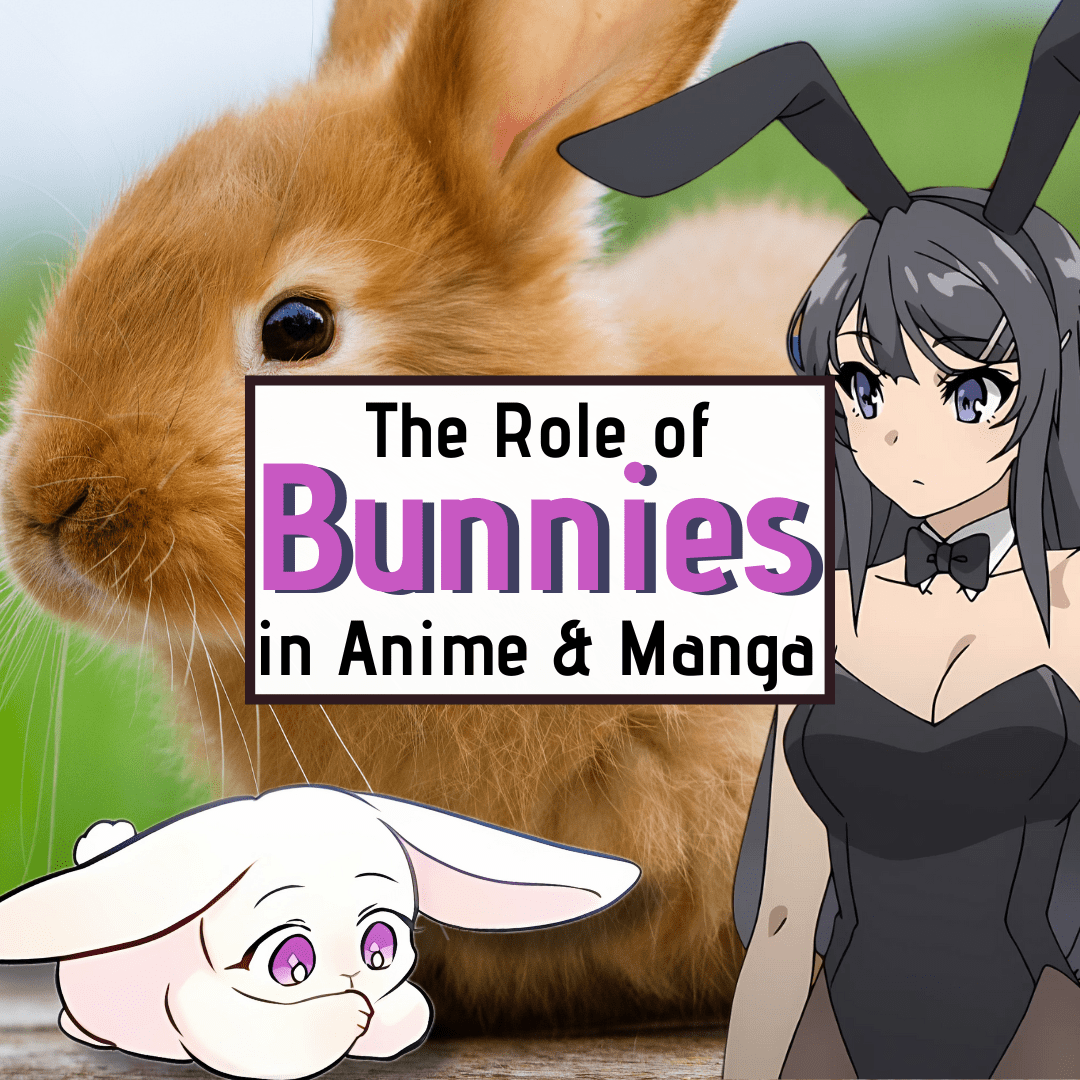
When you think of Easter, chances are, pastel colours, chocolate eggs, and adorable bunnies come to mind. With it being Easter, I started to wonder about bunnies in anime and manga. Surprisingly, they have plenty to say when it comes to our long-eared friends. Far more than just mascots, rabbits in anime take on a wide variety of symbolic and narrative roles. From folklore to fanservice, their presence is more meaningful (and chaotic) than it might appear at first glance.
But first, why are bunnies linked to Easter?

The image of a bunny delivering eggs on Easter morning might seem odd at first (bunnies don’t lay eggs, after all!), but it actually comes from a long mix of ancient symbolism, folklore, and Christian tradition, with a sprinkle of springtime fertility magic on top. The bunny’s connection to Easter is all about rebirth, fertility, hope, and celebration, ideas that blend pagan folklore, Christian meaning, and cheerful modern traditions. It’s a soft, symbolic figure that perfectly captures the mood of spring, even though it’s autumn on my side of the world.
In this post, we’ll explore how anime brings these ideas to life through characters and tropes inspired by bunnies. From gentle souls and mystical moon rabbits to powerful beastkin warriors, chaotic mascots, and the ever-iconic bunny girl aesthetic, we’ll hop through some of the most memorable and meaningful rabbit representations in anime and manga.
So unwrap a chocolate egg (or three~), and let’s hop into the fluffy, magical world of bunnies (and rabbits) in anime and manga this Easter.
The Role of Bunnies in Anime and Manga
For the purpose of this post, I will be using bunnies and rabbits interchangeably, as if they are one and the same.
Innocence and Fragility

Rabbits have long been associated with purity and gentleness, and anime often leans into this, using bunny symbolism to represent characters who are delicate and emotionally layered.
Take Haru from Beastars, for instance: a soft-spoken white dwarf rabbit whose small stature hides a world of strength and complexity. Her species emphasises her vulnerability in a society ruled by predator-prey tension, while also deepening her emotional arc.
Similarly, Usagi Tsukino, the beloved heroine of Sailor Moon, literally has “rabbit” in her name (“Usagi” means bunny in Japanese). Her clumsy kindness and emotional openness are core to her character’s growth, from a timid crybaby to the graceful guardian of love and justice.
Mystical Moon Rabbits and Folklore

In Japanese mythology, the moon rabbit is said to live on the moon, endlessly pounding mochi. Anime often borrows from this folktale to add layers of spiritual or mythic depth to bunny characters.
Sailor Moon is perhaps the most famous example, fusing the moon rabbit myth with magical girl brilliance. But even older shows like Dragon Ball wink at the legend, remember Monster Carrot, the gangster bunny who gets banished to the moon? Classic Toriyama silliness.
This motif also reappears in more obscure corners, such as in Touhou Project-inspired anime, where lunar rabbits appear as celestial beings with immense power. I was first introduced to the rabbit on the moon through.Hack/Legend of the Twilight, when I watched it back on Animax over 15 years ago. Honestly, seeing a rabbit on the moon is easier for me than seeing a man.
Subverting Cuteness: Powerful Bunny Characters

Not all bunnies are soft and sweet; some are fierce, wild, and incredibly cool. These characters flip the trope and prove that you shouldn’t underestimate a rabbit.
Case in point: Mirko from My Hero Academia, a muscular pro hero with rabbit-like speed, agility, and raw ferocity. Her design takes all the agility associated with real-life rabbits and channels it into a powerhouse fighter. As well as Carrot from One Piece, who has a surprisingly fierce and loyal side behind her cute persona.
In fantasy anime, bunny-eared warriors and “beastkin” species often combine adorable appearances with deadly strength, a fun twist that challenges assumptions and balances fan appeal with action chops. Plus, let us not forget the nightmare of the rabbits found in Re:Zero.
Comic Relief and Mascot Madness

Sometimes, a bunny is just there to be, well, chaos. And we love that for them. Whether it’s the mysterious and fluffy Tippy from Is the Order a Rabbit?, or the deceptively cute and horrifying Kyubey from Madoka Magica, anime and manga use bunny designs to create characters that subvert expectations, whether they are actually a bunny or not. These mascots might be wise, magical, ridiculous, or downright sinister, but they are never boring.
The Bunny Girl Aesthetic

We can’t talk anime bunnies without giving a nod to the iconic bunny girl trope. Inspired by Western fashion, think Playboy, it has become a beloved, if cheeky, costume in anime, typically worn during cultural festivals or as a form of comedic fan service.
Characters like Mai Sakurajima from Rascal Does Not Dream of Bunny Girl Senpai use the trope more symbolically. Her bunny outfit isn’t just for looks; it highlights her emotional isolation in a world where no one seems to notice her anymore. It’s elegant, melancholy, and quietly brilliant.

In the colourful world of anime and manga, bunnies are more than just Easter icons; they’re emotional symbols, mythical figures, comedic wildcards, and subversive surprises. Whether they’re hopping through fields or unleashing a roundhouse kick, these floppy-eared characters remind us of the many faces of spring: sweet, strange, and full of new beginnings.
So the next time you spot a bunny-eared character or a mysterious rabbit-shaped mascot in your favourite manga or anime, take a moment to appreciate the layers they might be hiding. Are they a symbol of innocence? A vessel of chaotic energy? A moon-dwelling myth made cute?
Which bunny-inspired character has left the biggest impression on you, and why? I’d love to hear your favourites in the comments!





Leave a Reply