
My anime dictionary is here just to give a general definition of all anime jargon that I find. For more information on any terms or recommendations related to the term, click on the image. You can either scroll down or jump to a specific letter below.
Alphabet List:
0-9

2.5D musical: The term “2.5D musical” refers to stage productions that blend elements of 2D animation (typically from anime, manga, or video games) with live-action theatre.
A

ABS (Animated Boobs Syndrome): Refers to exaggerated breast movements in anime, often characterized by unrealistic bouncing or jiggling.
ACG (subculture): Stands for Animation-Comic-Game subculture, encompassing anime, manga, and video games as cultural phenomena.
AFK (Away From Keyboard): Used in gaming and online communities to indicate that a person is temporarily unavailable.
Ahegao: A facial expression in anime and manga characterized by rolling or crossed eyes, a protruding tongue, and a flushed face, often seen in adult or hentai content.
Ahoge (アホゲ): A noticeable strand of hair that sticks out in a different direction from the rest of a character’s hair, often used to denote a quirky or foolish personality trait.
Aidoru: Japanese term for “idol”; refers to young entertainers, often singers or performers idolized by fans.
Alternative Manga: Manga that deviates from mainstream styles and themes, often experimental or avant-garde in nature.
Anime: Japanese animated TV shows and films.
Anime Convention: Event where fans gather to celebrate and discuss anime, manga, and related interests.
Anime Music Video (AMV): Fan-made videos combining clips from anime with music, often edited to fit the rhythm or lyrics of the song.
Anime-influenced Animation: Animation produced outside Japan but heavily influenced by Japanese anime stylistically or thematically.
Animegao Kigurumi: A form of cosplay where participants wear full-body suits with oversized masks to resemble anime characters.
Aniparo (アニパロ): Slang term for the parodic use of anime characters by fans, blending “anime” and “parody”.
Ansatsuken: A fictional martial art style featured in the “Street Fighter” series, notably used by characters like Ryu and Ken.
Antogonist: The character, force, or concept that opposes the main character. The whole point of an antagonist is to create a conflict and drive the plot forward. They are not always outright “villains”.
AOTS (Anime of the Season): Refers to the best anime series of a particular season as chosen by fans or critics.
AOTY (Anime of the Year): Refers to the best anime series of a particular year as chosen by fans or critics.
Arc: A storyline in anime or manga that spans multiple episodes or chapters, focusing on a particular plot or theme.
B


Baka: Japanese for “idiot” or “fool”; often heard in anime dialogue.
Bakunyū: Literally “enormous breasts”; refers to characters with extremely large breasts in anime and manga.
Bara: Refers to a manga genre about muscular and beefcakey gay men, primarily created by and for gay men.
BD: Abbreviation for Blu-ray Disc; higher-quality physical media used for anime releases.
BG: Short for Background; refers to the scenery or environment depicted in an anime scene.
BGM: Short for Background Music; the music playing during an anime scene.
Bishōjo: In Japanese, it means “pretty girl” or “beautiful young woman.” It is often used to describe attractive female characters in anime and manga.
Bishōnen: Translates to “beautiful boy”; refers to male characters with androgynous or effeminate qualities that are considered aesthetically pleasing.
Bishounen Complex: An attraction to or preference for bishounen (beautiful boy) characters.
Bittersweet Ending: An ending in a storyline that simultaneously evokes happiness and sadness.
Boys’ Love: Often abbreviated as “BL”; a genre featuring romantic and sometimes sexual relationships between male characters, primarily aimed at a female audience.
Bumper: In broadcasting, a short segment usually used to transition between programmes or during commercial breaks. See Eye Catch
Bunka-kei: Refers to a cultural type of otaku interested in literature, theatre, art, and other cultural pursuits.
Bunkasai: A cultural festival, often depicted in school-based anime and manga, where students showcase various cultural activities and performances.
Bunkobon: A format of Japanese paperback books, typically smaller and more compact than tankōbon (collected volumes of manga).
C


Canon: Official material accepted as part of the story or narrative of a series, recognised as authoritative within the franchise.
Catgirl: A character, typically female, with feline traits such as cat ears, a tail, and sometimes whiskers, often depicted in anime and manga.
Cel Animation: A traditional animation technique where each frame is drawn by hand on a transparent celluloid sheet (cel) and then photographed to create the illusion of motion.
CGDCT: Abbreviation for “Cute Girls Doing Cute Things”; a genre in anime focusing on the everyday lives and activities of adorable female characters.
Chibi: A style of drawing characters in a small, cute, and exaggerated way, often with oversized heads and tiny bodies.
Children’s anime and manga: Anime and manga targeted primarily at a younger audience, usually featuring themes and content suitable for children.
Chūnibyō: Literally, “Middle-school 2nd-year syndrome” describes adolescents who exhibit delusions of grandeur, often believing they possess special powers or knowledge beyond others.
Class S (culture): A term originating in early 20th-century Japan to describe close, emotionally intense same-sex relationships between schoolgirls, often depicted in girls’ manga.
Club: A group or organisation depicted in many school-life anime series, where characters gather to pursue common interests or activities.
Comiket (Komiketto): Short for “Comic Market”; one of the largest trade fairs for dōjinshi (self-published works) and fan-made comics held biannually in Tokyo.
A compilation film is composed of edited scenes from previously released anime series or movies, often with added or revised content.
Cosplay: The practice of dressing up and often acting as characters from anime, manga, video games, and other media, typically seen at conventions and events.
Crunchyroll: A popular streaming service specialising in anime, manga, and East Asian dramas, offering a wide range of content to subscribers.
CV (Character Voice): Refers to the voice actor or actress who provides the voice for a particular anime character, known as a “seiyuu” in Japanese.
D


Dandere: A character archetype who is typically quiet, shy, and socially awkward but may become more open and affectionate around close friends or a love interest.
Danmei: A genre of Chinese fiction primarily depicting romantic relationships between male characters, often with explicit content.
Denpa: A Japanese term referring to individuals who may feel disconnected from reality, often entertaining wild fantasies or holding unusual beliefs that appear strange to others.
Deredere: A character archetype described as sweet, affectionate, and openly loving from the beginning, often cheerful and optimistic.
Dojikko: A character archetype of a cute girl who is clumsy and accident-prone, often causing humorous situations due to her clumsiness.
Donghua: Chinese animation; refers to animated TV series or films produced in China. (Similar to how “anime” refers to Japanese animation.)
Doujinshi: Self-published works by fans, including parodies, fan fiction, or original manga, often featuring characters from existing anime or manga series.
Doujinshi-ka: A person who creates doujinshi, often as a hobby or as part of a fan community.
Drama CD: Audio dramas featuring characters from anime or manga, often expanding on the story or providing additional content outside of the main series.
Drop: To stop watching an anime series before completing it, usually due to loss of interest or dissatisfaction with the story or characters.
Dub vs. Sub: The debate over whether to watch anime with dubbed voices in another language or with the original Japanese audio and subtitles.
Dub: Anime with dialogue translated and voiced over in another language, replacing the original Japanese voices.
Dubtitle: Subtitles that match the dubbed audio track rather than translating the original Japanese dialogue.
E


Ecchi: A genre of anime and manga that includes playful sexual themes, innuendos, and mild nudity, often for comedic or titillating purposes.
ED (Ending Theme): The closing theme song at the end of an anime episode (played during the end credits).
Edo Period: This refers to the period in Japanese history from 1603 to 1868, characterised by the rule of the Tokugawa shogunate and frequently depicted in historical anime.
Emoticons/Kaomoji: Japanese-style emoticons used in text communications, consisting of characters to create facial expressions or symbols, such as (^-^) or (ಥ_ಥ).
Engrish: Poorly translated or spoken English, often unintentionally humorous, as sometimes found in anime and manga due to attempts at using English phrases or titles.
Eroge: Short for “erotic game,” a genre of Japanese video or computer games that feature explicit sexual content, usually in anime-style artwork.
Eshi: An artist or illustrator who creates anime, manga, or light novels, often with a distinctive style or technique.
Eyecatch (aikyatchi): A short scene or illustration used to mark the beginning or end of a commercial break in Japanese TV programs, similar to commercial bumpers in Western television.
F


Fan service: Elements intentionally included in anime or manga to entertain or titillate the audience, often involving sexual or provocative content, which may or may not contribute to the plot.
Fanart: Artwork created by fans based on characters or settings from anime or manga, expressing their creativity and admiration for the original works.
Fandom: The community or subculture of enthusiastic fans who share a common interest in anime, manga, or other forms of media.
Fandub: A fan-made version of an anime or foreign film where fans provide their own voice-over in a language other than the original.
Fanfiction: Stories written by fans that feature characters, settings, or plots from anime or manga, often exploring alternative scenarios or expanding on existing narratives.
Fansub: These are fan-made subtitles for anime or foreign films, where fans translate dialogue into another language, typically without official authorisation.
Fillers: Non-canon episodes inserted into an anime series to pad out the storyline or allow time for the source material (like manga) to progress further.
Filler Arc: A storyline within a longer anime series that deviates from the main plot and may not contribute significantly to the overall narrative.
Fudanshi: A term for male fans of yaoi (male-male romance) or Boys’ Love (BL) genres in anime and manga.

Fujoshi: A term for female fans of Yaoi or BL genres in anime and manga, often characterised by their enthusiasm for male-male relationships in fictional works.

Furry is a genre or subculture in anime and manga featuring anthropomorphic animals with characters possessing human traits and characteristics.
Futanari is a genre featuring characters, often female, who possess both male and female genitalia. It is typically depicted in adult content or hentai.
G

Gacha: A game mechanic often used in mobile games where players use virtual capsules or similar items to receive randomised rewards, including characters, items, or other game elements.
Gaiden: A term meaning “side story” or “side quest” in Japanese, used to denote supplementary stories or spin-offs related to the main narrative of a series.
Gaijin: A Japanese term used to refer to foreigners or non-Japanese individuals, often used within anime and manga to describe characters or fans who are not of Japanese origin.
Galge: Short for “gal game”, a genre of dating simulation games in Japan where players interact with female characters to pursue romantic relationships.
Gekiga: A style of manga known for its mature and dramatic themes, created by artists who wanted their work to be taken more seriously than traditional manga.
Gen: Short for “general audience”, indicating content suitable for all ages without specific age restrictions.
Genki: A character archetype in anime and manga portrayed as energetic, lively, and cheerful.
Guro: A genre or type of anime, manga, or game that features grotesque or disturbing content, often involving extreme violence, horror, or explicit themes.
Gyaru: A Japanese fashion subculture characterised by tanned skin, dyed hair, flashy clothing, and a bold, confident attitude.
Gyaruo: Male fans of Yuri and GL genres, though this term is less commonly used compared to its BL counterparts.
H


Hammerspace: A whimsical concept in anime and manga where characters can pull out objects seemingly from thin air, regardless of the object’s size or physical impossibility.
Harem (genre): A subgenre of anime and manga where a single male character, often ordinary or average, finds himself surrounded by multiple female characters who may be potential love interests.
Headcanon: A fan’s personal interpretation, belief, or assumption about elements of a fictional universe that is not explicitly confirmed by canon material.
Henshin: A Japanese term meaning “transformation”, often used in anime and manga to describe the process where characters change into their superhero or magical girl forms, typically accompanied by a distinctive sequence.
Hentai: A genre of anime and manga characterised by explicit sexual content, often intended for adult audiences due to its pornographic nature.
Hikikomori: A Japanese term referring to individuals who withdraw from social life, often staying at home for extended periods, which is a common theme explored in anime and manga.
Horror: A genre that centres on creating fear, dread, and unease through various means.
Host Club: A club featured in shōjo manga where male hosts entertain female guests, providing companionship and conversation in exchange for payment or tips.
I


Idol: A young entertainer, typically part of a group such as a girl group or boy band, often admired for their singing and dancing abilities.
Ikemen: A Japanese term referring to handsome men, often used to describe attractive male characters in anime and manga.
Ikigai: A Japanese concept meaning “a reason for being” or a sense of purpose in life, which may be explored in slice-of-life anime.
Image song: A song associated with a particular character or series, often used to express the character’s emotions or personality traits.
Imouto: A Japanese term meaning “little sister”, commonly used in anime and manga to refer to a character who is the younger sister in a family or sibling dynamic.
Isekai: A subgenre of anime and manga where characters are transported from the real world to a parallel universe or fantasy world.
It’s Over 9000!: A famous meme originating from the English dub of “Dragon Ball Z”, referring to a character’s power level exceeding 9000, often used to express surprise or exaggeration.
Ita-bag: A fashion accessory bag, often decorated with merchandise and accessories featuring characters from anime, manga, or games.
Itasha: A type of Japanese car decorated with images of anime, manga, or video game characters, often featuring bright and colourful designs.
Iyashikei: A genre of anime intended to have a healing effect on the audience, portraying peaceful and calming scenarios where characters live harmoniously in soothing environments.
J

J-pop: Japanese pop music; a genre of popular music in Japan that often features prominently in anime soundtracks.
Josei: Anime and manga aimed at adult women, characterised by its mature themes and realistic portrayals of relationships and daily life.
Juné: A term used for manga or text stories with male homosexual themes, specifically created for women in an aesthetic (tanbi) style. It derives its name from the Juné magazine, which is known for publishing such content.
K


Kabe-don: A trope in anime and manga where a character forcefully slams their hand against a wall, often to intimidate or create a romantic moment with another character.
Kabedon: Short for “kabe-don”; refers to the act of one character slamming or pinning another against a wall, typically used in romantic or dramatic scenes.
Kaijudo: A trading card game and anime series that combines elements of Japanese culture and mythology with card battles.
Kaoani: Animated emoticons or ASCII art where characters’ faces and expressions are depicted using text symbols.
Kawaii: Japanese term meaning “cute”; used to describe characters, fashion, or objects that are charming, adorable, or endearing.
Kemono: Characters in anime or manga with fully animal-like features, distinct from “kemonomimi” which are human characters with some animal traits.
Kemonomimi: Characters with human bodies but animal-like ears and often other animal traits, like tails, inspired by animals such as cats, foxes, or rabbits.
Kigurumi: Full-body animal or character costumes worn in cosplay and popular culture, often resembling animals, anime characters, or mascots.
Kitsune: Kitsune are intelligent foxes in Japanese folklore that possess paranormal abilities, which increase with their age and wisdom.
Killing off: A narrative technique in anime and manga where characters are permanently removed from the story, usually through death.
Kodomo: Anime and manga targeted at children, characterised by content and themes suitable for younger audiences.
Kouhai: A junior or underclassman in school or work settings, often depicted in anime as someone who looks up to and follows the lead of their senpai (senior).
Kuudere: A character archetype who appears calm, collected, and emotionally distant on the outside, often showing little emotion but revealing a warmer side under certain circumstances.
Kyōgen: A form of traditional Japanese comic theatre, occasionally referenced or parodied in historical or cultural contexts within anime.
L

La nouvelle manga: A term referring to a modern style of manga that breaks away from traditional conventions, often focusing on innovative storytelling and artistic techniques.
LARP (Live Action Role-Playing): A hobby where participants dress up as characters and act out roles in real-life settings, often inspired by anime, manga, or other forms of fiction.
Late-night anime: Anime television shows that air during late-night hours, often featuring more mature themes, complex plots, or targeted at older audiences.
lemon: Derived from the hentai anthology series “Cream Lemon” it refers to anime or manga with explicit sexual content.
Light novel: A style of Japanese novel primarily targeting young adults, often illustrated and featuring stories that are typically shorter and more accessible than traditional novels.
Loli: A character archetype depicting young or young-looking girls, often with innocent or childlike traits. This term can be controversial due to its association with sexualisation in some contexts.
Lolicon: Short for “lolita complex”, a genre of manga and anime depicting childlike female characters in an erotic or sexual manner. It also refers to individuals who are attracted to young or young-looking girls, which remains a contentious topic within anime and manga fandoms.
Lolita (fashion): A Japanese fashion style featuring Victorian-inspired, doll-like clothing; often Gothic or Sweet Lolita, distinctly different from “lolicon”.
M


Magical girl: A genre of anime featuring young girls who possess magical powers, often transforming to fight evil forces while maintaining a balance between their ordinary lives and magical responsibilities.
Maid Café: A themed café where waitresses, dressed in maid costumes, serve customers in a manner meant to evoke a sense of hospitality and charm.
Manga: Japanese comics or graphic novels, typically characterised by black-and-white artwork and read from right to left.
Manga artist: A creator of manga, responsible for both the writing and illustration of manga stories.
Manga iconography: The visual symbols, styles, and conventions unique to manga, influencing its storytelling and artistic expression.
Manhua: Chinese comics or graphic novels, usually in Chinese; akin to manga but produced in mainland China, Hong Kong, or Taiwan.
Manhwa: Korean comics or graphic novels, similar to manga but originating from South Korea.
Mecha: A genre of anime and manga featuring robots or mechanical suits, often involved in battles. Subgenres include “super robots” and “real robots” based on the level of realism and focus.
Meido: Characters dressed in maid outfits, often portrayed in anime and manga.
Menhera: A subculture and character archetype in anime and manga depicting individuals with unstable emotional states, often associated with mental health issues.
Metaseries: A series spanning multiple forms of media (anime, manga, games, etc.) set within the same fictional universe or sharing common elements and characters.
Moe: A slang term referring to a quality of cuteness, innocence, or endearing charm in characters that evoke protective or affectionate feelings from fans.
Monster girl: Female characters in anime and manga who possess characteristics of mythical creatures or monsters, often portrayed with human-like qualities.
Mukokuseki: Literally “statelessness” or “nationlessness”, referring to characters intentionally designed with ambiguous or neutral ethnic features, not clearly identifiable with any specific nationality.
N

Nakama: A term meaning “comrade” or “friend”, commonly used in shōnen anime to refer to a close-knit group of friends or allies who support each other.
Name (Nēmu): A rough draft or storyboard of a proposed manga, outlining the plot, dialogue, and layout of each page before final artwork is produced.
NEET: Acronym for “Not in Education, Employment, or Training”, often used in anime to describe characters who are socially withdrawn or reclusive.
Nekomimi: Characters, typically human, who possess cat ears, often portraying feline characteristics or behaviours alongside human traits.
Nendoroid: A brand of small, chibi-style collectable figures featuring characters from anime, manga, and video games, known for their large heads and cute, simplified designs.
Nijikon “2D complex”: Refers to an attraction or preference for 2D anime, manga, or light novel characters over real-life individuals, sometimes involving emotional or sexual arousal solely towards fictional characters.
Nippon: The Japanese term for Japan, frequently used within anime to refer to cultural elements, settings, or themes that are distinctly Japanese.
NTR: Short for “Netorare”, a genre in anime and manga involving themes of infidelity or having one’s romantic partner taken away by someone else.
O


Odagiri Effect: A phenomenon in television where a program attracts a larger-than-expected number of female viewers due to the presence of attractive male actors or characters.
Omake: Additional or bonus material included with anime DVDs or manga volumes, often in the form of extra episodes, short stories, or bonus strips.
Omorashi: A fetish subculture in anime and manga involving a strong urge to urinate and the process of holding it in for sexual pleasure or discomfort.
Oniisan: An affectionate term meaning “big brother” in Japanese, often used to refer to an older male character.
OP: Opening; refers to the opening theme song of an anime series, typically played at the beginning of each episode.
Original English-language manga: Manga created in English-speaking countries by non-Japanese authors and artists.
Original net animation (ONA): Anime produced specifically for internet distribution, bypassing traditional broadcast methods like TV or cinema.
Original video animation (OVA): Anime released directly to video formats like VHS tapes or DVDs, often comprising standalone episodes or special content not aired on television.
Osananajimi: A trope in anime and manga where a character’s childhood friend plays a significant role, often involved in romantic themes.
Otaku: A person with an obsessive interest in anime, manga, or video games; in Japan, the term can carry negative connotations but has become more neutral over time.
Otokonoko: A man who presents himself in a culturally feminine manner, which may include cross-dressing or adopting feminine appearance traits.
Otome Game: Dating simulation games primarily targeted towards a female audience, where players pursue romantic relationships with male characters.
Otome Road: A street in Tokyo known for its shops catering to fans of BL (Boys’ Love), doujinshi, and otome games.
P
Panty Shot: A trope where a character’s underwear is accidentally exposed, often used in fanservice scenes to titillate the audience.
Pazu: Short for Pazudora (Puzzle & Dragons), a popular mobile game in Japan, frequently referenced in otaku culture and media.
Plothole: A gap or inconsistency in a storyline that contradicts the logic or continuity of the plot.
Pocky: A popular Japanese snack consisting of chocolate-coated biscuit sticks, often associated with otaku culture due to its frequent appearance in anime and manga.
Pocky Game: A game where two players eat from opposite ends of a Pocky stick until they kiss; often depicted in anime.
Portal: A webpage or section dedicated to anime and manga topics, often featuring selected articles or curated content.
Power Levels: Refers to the varying degrees of power or strength possessed by characters in anime and manga, often used to gauge their abilities in comparison to others.
PTSD: Post-Traumatic Stress Disorder; occasionally explored in serious anime themes.
PV: Short for Promotional Video; a video created to promote an upcoming anime, manga, or game, showcasing its key features and attracting interest from potential viewers or players.
Q
QT: Cutie; slang for a cute character.
Quality Control (QC): Ensuring accuracy and quality in fansubs or fan translations.
Quirk: Unique powers or abilities, populariSed by “My Hero Academia.”
R

R34: Rule 34; the internet adage that suggests if something exists, there is porn of it. It refers to the ubiquitous nature of adult content on the internet.
Raw: Anime episodes or manga scans in their original language without editing or subtitles, often used by enthusiasts for early access.
Recap Episode: An episode in an anime series that summarises previous events, serving to refresh viewers’ memories or fill time.
Rei: A character archetype named after Rei Ayanami from “Neon Genesis Evangelion,” typically portraying stoic, often emotionless personalities.
Reverse Harem: A genre where a single female character is romantically involved with multiple male characters, often featuring themes of romance and competition.
RPG: Role-Playing Game; a genre of video games where players assume the roles of characters in a fictional setting, with a focus on storytelling and character development.
Ryona: A Japanese term describing a sexual fetish involving voyeuristic fantasies of physical or psychological abuse inflicted on fictional characters, typically female.
Rakugo: Traditional Japanese comedic storytelling, occasionally referenced in anime for its cultural significance and humour.
Riajuu: A Japanese term referring to a person who leads a fulfilling real-life, often contrasted with otaku who may be perceived as more withdrawn.
Rikkaidai: A term used in anime and manga to describe next-generation talents or up-and-coming individuals in various fields.
Rojou: Japanese for “street” or “outdoor,” referring to settings commonly used in certain scenes within anime and manga.
Romance: The genre revolves around emotional and romantic relationships, typically between a main couple or love interests.
S


Scanlation: The process of scanning, translating, and editing comics from one language into another, typically done by fans.
Seinen: Anime and manga intended for the adult male demographic, featuring mature themes and narratives.
Seiyū: A Japanese voice actor or actress who provides voices for anime, video games, radio shows, and other media.
Seme: In BL (Boys’ Love) manga and anime, the dominant partner in a romantic relationship.
Senpai: A senior or upperclassman in school or work settings, often used affectionately in anime.
Sentai: A genre featuring a team of superheroes, akin to “Power Rangers,” who fight against evil forces.
Ship: originally coined from ‘relationship’.
Shōjo/Shoujo: Anime and manga targeted towards adolescent girls, typically focusing on romance, drama, and relationships.

Shōjo-ai: Manga or anime that depicts romantic relationships between women, also known as “girls’ love.”
Shōnen/Shounen: Anime and manga aimed at adolescent boys, featuring action-packed and adventurous storylines.

Shōnen-ai: A term used for male homosexual content in anime and manga, though its usage varies between English-speaking and Japanese audiences.
Shota: A young boy or young-looking boy character, often depicted in controversial contexts similar to “loli.”
Shotacon: A genre of manga and anime featuring erotic portrayals of childlike male characters.
Slice of Life: A genre depicting realistic, everyday experiences and interactions, focusing on the mundane aspects of life.
Sub/Subbed: Subtitles added to an anime so that it can be understood in another language.
Sukeban: A delinquent girl character in anime and manga, typically portrayed with a rebellious attitude and distinctive fashion.
Sundere: A character archetype who alternates between displaying affection and being cold or harsh towards their love interest.
Super Deformed (SD): A style of drawing characters with exaggerated features, commonly seen in chibi-style artwork.
Superflat: An art movement founded by Takashi Murakami, influencing the visual style of some anime and manga.
T
Tankōbon: A volume of manga that collects chapters originally serialised in magazines.
Teens’ Love: Also known as “shōnen-ai” or “boys’ love” in English-speaking communities, it refers to manga and anime genres depicting romantic relationships between male characters.
Tobirae: Refers to the full-page illustration at the beginning of most manga chapters, designed to capture the reader’s attention.
Trap: A character in anime and manga who appears to be one gender but is actually another, typically used for male characters who look convincingly female.
Truck-kun: A humorous reference to a recurring trope in anime and manga where characters are often hit by trucks, leading to various plot developments like reincarnation in another world.
Tsubasa: Japanese for “wing,” often used symbolically in titles or character names to signify freedom or flight.
Tsukkomi: In Japanese comedy duos, the “straight man” who reacts to the antics of the “boke” (foolish person) to create comedic dynamics.
Tsundere: A character archetype initially cold, hostile, or tsun-tsun (aloof), but gradually reveals a warmer, deredere (lovey-dovey) side as the story progresses.
Tsundoku: The act of acquiring books or manga and letting them pile up without reading them.
Type-Moon: A Japanese game company known for creating visual novels and anime adaptations, most notably “Fate/stay night” and its related works.
U
Uchū: Japanese for “space”; used in sci-fi anime to refer to outer space.
Uke: In BL (Boys’ Love), the uke refers to the submissive or receiving partner in a romantic relationship between male characters.
Ureshii: Japanese for “happy”; commonly heard in anime dialogue to express joy or happiness.
Urobutcher: A nickname for Gen Urobuchi, a Japanese writer known for creating dark and tragic storylines in anime and visual novels.
Urusei Yatsura: An influential manga and anime series from the 1980s created by Rumiko Takahashi, known for its comedic and sci-fi elements.
Utaite: A person who covers and uploads songs, often related to anime or Vocaloid music, on video sharing websites like Nico Nico Douga.
V
Visual Kei: A music and fashion movement in Japan characterised by elaborate and flamboyant looks, often involving heavy makeup, elaborate hairstyles, and unique costumes. It is occasionally referenced in anime.
Visual Novel (VN): A genre of interactive games with narrative-driven stories, usually involving player choices that can lead to different outcomes and endings.
Vocaloid: A vocal synthesiser software developed by Yamaha that allows users to create songs by synthesising vocals sung by virtual singers, known as Vocaloids.
Voice Acting (VA): The art and practice of providing voices for characters in anime, cartoons, video games, and other forms of media. In Japanese, voice actors are commonly referred to as “seiyuu”.
VTuber: Short for “Virtual YouTuber”; a content creator who uses a virtual avatar, often styled after anime characters, to present videos and livestreams on platforms like YouTube and Twitch.
W


Waifu: A term used by fans to affectionately refer to their favourite female character from anime, manga, or video games, often expressing romantic affection or admiration.
War – Anime that focuses on large-scale battles, military conflicts, or historical wars. These stories often include strategy, political intrigue, and the impact of war on individuals and societies. (Example: Legend of the Galactic Heroes, Mobile Suit Gundam, The Saga of Tanya the Evil)
Water Polo – Sports anime centred around water polo, a competitive team sport played in a swimming pool. (Example: Re-Main)
Weaboo (Weeb): A derogatory slang term used to describe a non-Japanese person who is excessively and obsessively interested in Japanese culture, particularly anime, manga, and video games. Originally derived from “wannabe Japanese”.
Weak to Strong – A common trope in anime where a protagonist starts off weak or inexperienced but gradually becomes powerful through training, battles, or personal growth. Found in many shounen and isekai series. (Example: Naruto, My Hero Academia, Mushoku Tensei: Jobless Reincarnation)
Webtoon: Digital comics originating from South Korea, designed for online scrolling on devices; a format of episodic manga-style stories published on the internet.
Weekly Shōnen Jump: A popular weekly manga magazine in Japan known for serializing many famous shōnen manga titles like “Dragon Ball”, “Naruto”, and “One Piece”.
Werewolves – Anime that features werewolves or characters who can transform into wolf-like beings, often blending fantasy, horror, or supernatural themes. (Example: Wolf’s Rain, Spice and Wolf, Dance in the Vampire Bund)
Western – Anime with themes, aesthetics, or settings inspired by the American Wild West, including cowboys, bounty hunters, and lawlessness. (Example: Trigun, Cowboy Bebop, Gun Frontier)
Whales – Anime that features whales either as a central theme or as symbolic creatures. Often used in fantasy or environmental stories. (Example: Children of the Sea, Kujira no Kora wa Sajou ni Utau (Children of the Whales))
Witches – Anime that prominently features witches, magic, or spellcasting. Witches can be depicted as heroes, villains, or neutral characters. (Example: Little Witch Academia, Maria the Virgin Witch, Puella Magi Madoka Magica)
Wotagei: A form of dancing and cheering performed by fans, particularly at idol concerts in Japan. It involves using glow sticks and coordinated movements to show support for idols.
Wolves – Anime featuring wolves, often symbolizing freedom, wilderness, or spiritual connections. They may be central characters or thematic elements. (Example: Wolf’s Rain, Spice and Wolf, The Boy and the Beast)
Work Life – Anime that explores professional life, workplace dynamics, and career struggles, often with elements of drama, romance, or comedy. (Example: Aggretsuko, The Great Passage, Wotakoi: Love is Hard for Otaku)
World Masterpiece Theater – A collection of classic anime adaptations of famous Western literature, often targeted at children and families. (Example: Anne of Green Gables, A Dog of Flanders, Romeo’s Blue Skies)
World War 2 – Anime that depicts stories set during or inspired by World War II, often focusing on the war’s effects on soldiers, civilians, and global politics. (Example: Grave of the Fireflies, The Wind Rises, Zipang)
Worms – Anime featuring worms, often in a horror, ecological, or science fiction setting. (Example: Mushishi, Nausicaä of the Valley of the Wind)
Wrestling – Sports anime centered around professional wrestling or grappling-based combat. (Example: Kinnikuman, Tiger Mask W)
Writers – Anime that focuses on authors, novelists, or journalists, often exploring their creative struggles and inspirations. (Example: Bungou Stray Dogs, Aoi Bungaku Series)
Wuxia – A Chinese genre focusing on martial arts heroes in historical fantasy settings, featuring strong moral codes, intricate swordplay, and legendary warriors.
X
Xeno: Refers to alien or foreign characters in anime, often found in science fiction genres where characters or beings from other planets or dimensions are depicted.
Xenoglossia: The ability to speak a language that one has never learned. In anime, this concept is occasionally depicted where characters gain the ability to communicate in foreign or unknown languages through supernatural or technological means.
Xianxia: A genre of Chinese fantasy literature and anime influenced by Taoism and Chinese mythology. Xianxia stories often feature cultivation of internal energy and martial arts, immortality, and interactions with gods and mythical creatures.
Y


Yakuza: Japanese organised crime syndicates, often depicted in anime and manga as powerful and sometimes secretive groups involved in various criminal activities.
Yandere: A character archetype in anime and manga who initially appears loving and affectionate towards someone but later becomes obsessively possessive, manipulative, and even violent in their pursuit of love or protection.
Yaoi: A genre of anime and manga that focuses on romantic and sexual relationships between male characters. Yaoi is primarily created by and for women, often featuring emotional and dramatic narratives.
Yaoi Hand Syndrome: A visual trope in BL depicting large, dominant hands.
Yōkai: Yōkai are supernatural beings in Japanese folklore, encompassing a wide range of creatures, spirits, and phenomena.

Yonkoma: Manga drawn in a four-panel comic strip format, typically used for humorous or light-hearted storytelling, popular in various genres including comedy and slice-of-life.
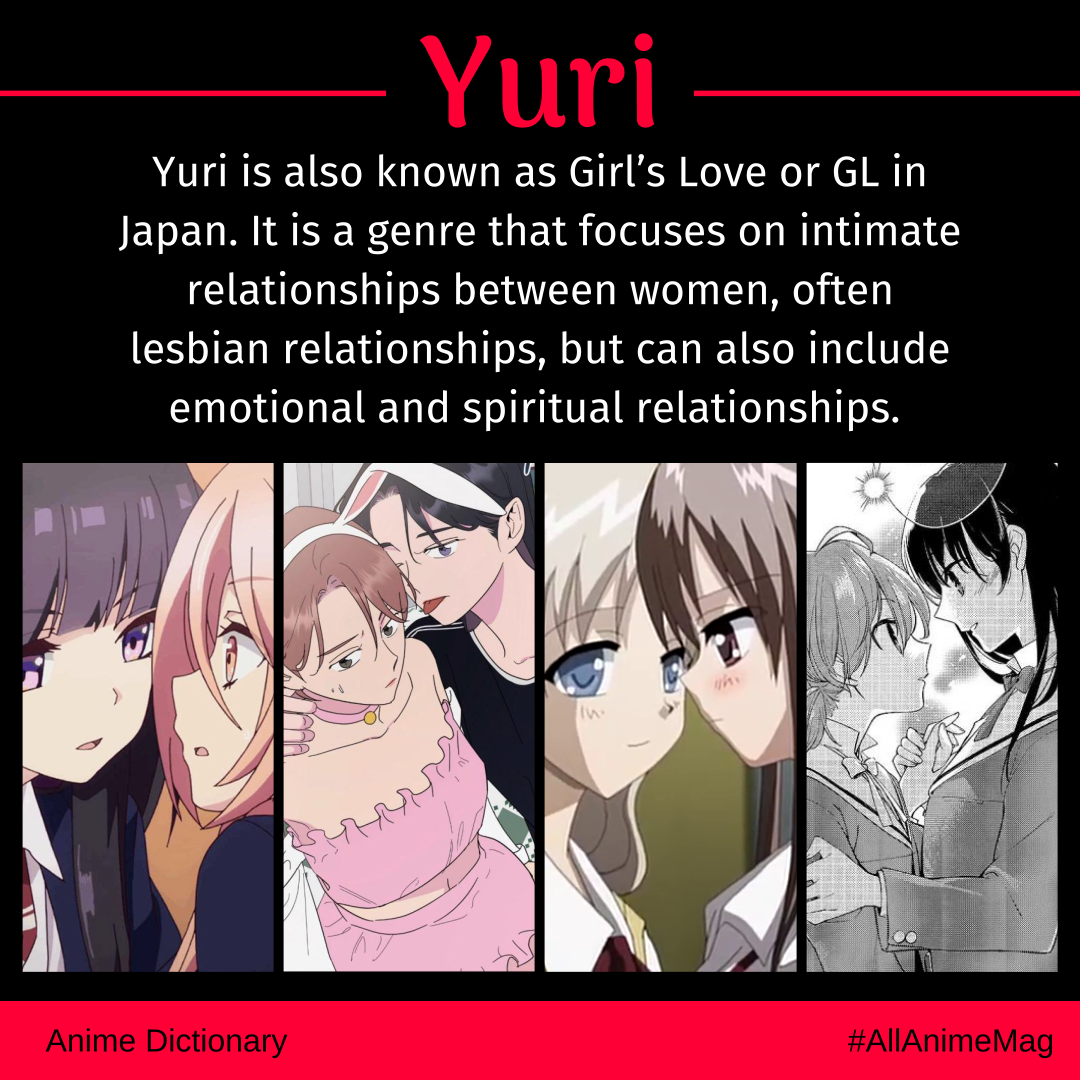
Yuri: A genre of anime and manga that focuses on romantic and sexual relationships between female characters. Yuri covers a spectrum from subtle romantic themes to more explicit content, often contrasting with the less explicit “shojo-ai”.
Yuriko: Female fans of Yuri and GL (Girls’ Love) genres, which focus on romantic and sexual relationships between female characters.
Z
Zashiki-Warashi: A type of spirit or ghost in Japanese folklore, often depicted as a childlike entity with mischievous or playful tendencies. Zashiki-warashi are believed to bring good fortune to households they inhabit and are occasionally referenced in supernatural-themed anime and manga.
Zettai Ryōiki: Known as “Absolute territory” in English, it refers to the exposed area of thigh between a short skirt and thigh-high socks or stockings. This concept is often fetishised in otaku culture and is quantified by certain ideal ratios of skirt length to thigh exposure to sock height.
Zodiac: Anime that involves astrology, zodiac signs, or celestial themes. These series may explore mythical representations of zodiac animals, horoscope-based personalities, or fate-driven storytelling. (Example: Fruits Basket)
Zombies: Anime featuring undead creatures that typically spread through a virus, magic, or other supernatural means. These shows range from horror and action-packed survival stories to comedy and slice-of-life settings with zombies as main characters. (Example: High School of the Dead, Sankarea)
Zoo: Anime that revolves around animals in a zoo setting, zookeepers, or conservation efforts. Often includes themes of environmental awareness, animal behaviour, and human-animal relationships. (Example: Shirokuma Cafe)
Do you have any terms that you would like me to expand on?
Leave a Reply