
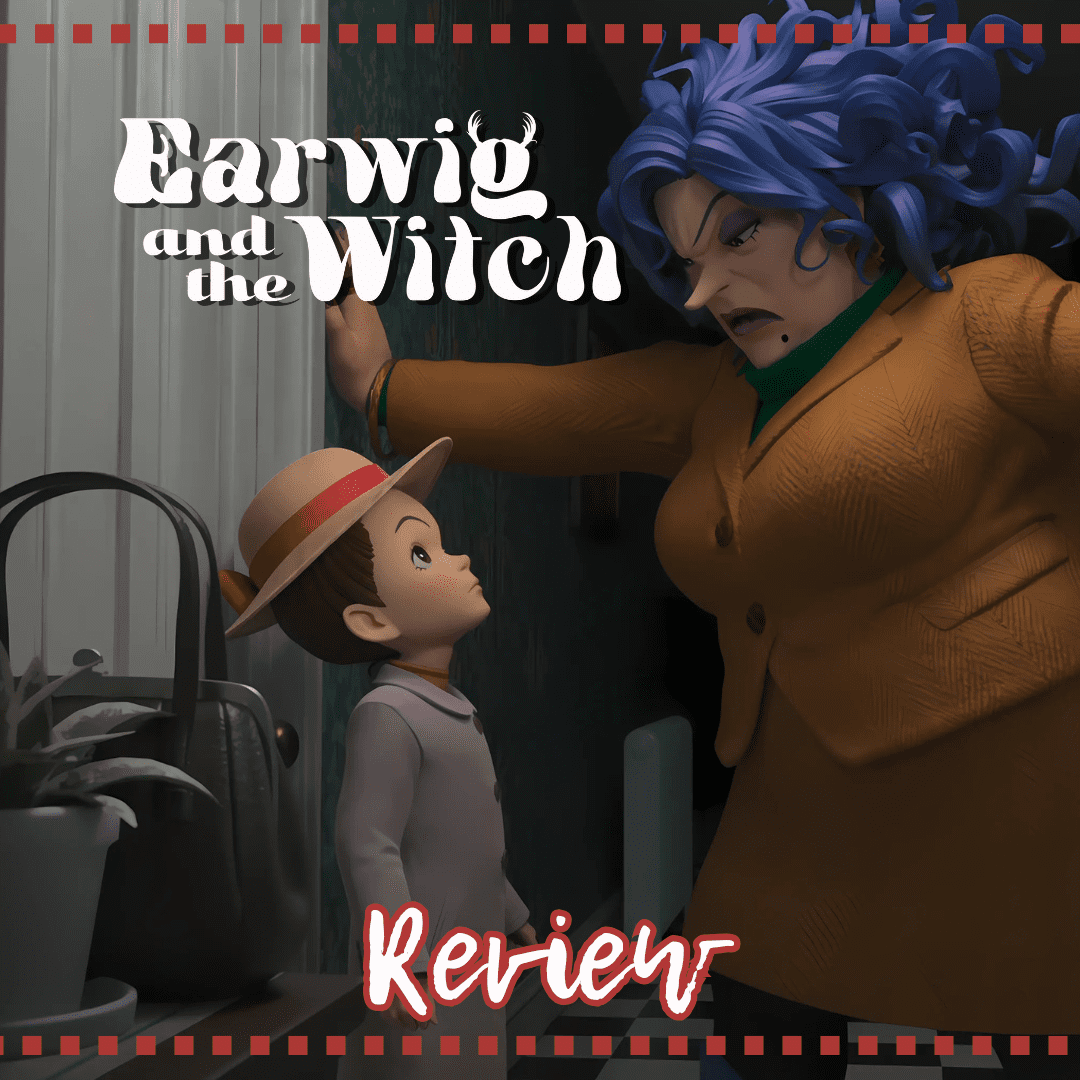
Studio Ghibli, the animation powerhouse behind beloved classics like Spirited Away and My Neighbor Totoro, ventured into uncharted territory with Earwig and the Witch, their first fully 3D CGI film. This departure from their signature hand-drawn style sparked a wave of excitement and apprehension among fans. But does this bold experiment live up to the legacy of its predecessors? Join me as I delve into the world of Earwig, a headstrong orphan who gets swept away by a mischievous witch, and discover whether this modern Ghibli adventure is worth a watch.
What is Earwig and the Witch about?

- Genre: Fantasy, Family
- Type: Movie
- Duration: Approximately 82 minutes
- Age Restriction: PG (Parental Guidance)
- Release Date: 2020
- Animation Studio: Studio Ghibli
- English Dub: Yes
- Source: Based on the novel “Earwig and the Witch” by Diana Wynne Jones
- Kanji Title: アーヤと魔女
- Alternative Title: Āya to Majo
- Average rating: 6/10
- Stream it on Netflix
The story follows Earwig, a headstrong young girl who has grown up in an orphanage, unaware that her mother possessed magical powers. Her life takes a dramatic turn when she is adopted by a peculiar couple, a selfish witch named Bella Yaga and the mysterious Mandrake. Earwig is thrust into a world of spells and potions, and with her cleverness and determination, she seeks to uncover the secrets of her new guardians. A mysterious song emerges as a potential key to discovering the family she has always longed for.
My thoughts on Earwig and the Witch
As a long-time Studio Ghibli fan, I went into Earwig and the Witch with a mix of curiosity and hesitation. This was Ghibli’s first fully 3D CGI film, directed by Goro Miyazaki, and I knew it had received a mixed reception. I wanted to give it a fair chance, especially since it was based on a novel by Diana Wynne Jones. By the end, I found myself torn—I enjoyed parts of it, but it ultimately left me feeling unsatisfied.
Story & Characters: A Mixed Bag

I did not really like Earwig (or Erica Wigg, as the head of the orphanage renames her). She’s precocious and unapologetically manipulative, which is a stark contrast to Ghibli’s usual gentle, wide-eyed protagonists. Although I do appreciate how resourceful she is. It was refreshing to see a main character who wasn’t afraid to take control of her situation, even if she could be a bit too smug at times. I will admit, Earwig pulling her tongue out to be cute made sense in the moment when she was doing it, but the animation did not manage to pull it off. It left the wrong feeling when watching it.
The supporting cast was enjoyable, though I wish they had been developed more. Bella Yaga, the witch who adopts Earwig, is amusing but mostly one-note—she’s just a mean, overworked sorceress who wants an extra pair of hands in her potion-making. The Mandrake, on the other hand, fascinated me. He’s mysterious, intimidating, and strangely compelling, even though his role in the story feels undercooked.
And then there’s Thomas, the cat. I adored him. He’s intelligent and the perfect sidekick for Earwig. He gave me major Jiji (Kiki’s Delivery Service) vibes, and honestly, I think he was one of the best parts of the movie. I did get frustrated when Earwig kept calling him Custard. The first time was endearing and cute. The second I could forgive. The third, fourth, and so on got old really quickly and lowered my enjoyment of the movie.
As for Custard…I have mixed feelings. His name feels oddly fitting—soft, sweet, and kind of helpless—which is probably why he’s such a contrast to Earwig. But he barely gets any screen time, and the film never really explores his friendship with Earwig in a meaningful way.
Plot & Pacing: Where’s the Rest of the Story?

This is where the movie lost me. The first half does a decent job of setting things up: Earwig is adopted by a witch, discovers magic, and slowly starts outsmarting her new guardians. But just when it feels like the story is really about to begin…it ends.
The biggest problem is that Earwig and the Witch feels incomplete. It’s like watching the first two acts of a film, only to have the screen suddenly cut to black before anything is resolved. There are so many unanswered questions: Is the Mandrake Earwig’s biological father? Why did her mother abandon her? What rule had she broken? Instead of answers, we get an abrupt ending that feels more like a cliffhanger for a sequel that doesn’t exist. It feels like we were in place to finally really learn about the characters, and we don’t.
And then there’s the pacing. So much of the movie consists of repetitive scenes—Earwig doing chores, Earwig sneaking around, Earwig demanding more magic lessons. While I appreciated her scheming, I found myself wishing for more variety in the story. Almost everything happens inside Bella Yaga’s house, which could have been an interesting creative challenge, but instead just made the film feel small and claustrophobic.
I do not mind open-ended series; only this one frustrated me. The end credits show daily life for our main cast but do not give any resolution to what happened with the return of the red-haired.
Visuals & Animation: A Step in the Wrong Direction?

I tried to keep an open mind about the CGI animation, but it was a tough adjustment. Studio Ghibli is known for its lush, hand-drawn animation, and something about the 3D models just didn’t capture the same warmth. The characters’ hair looked stiff and plastic, their movements were sometimes awkward, and the overall aesthetic felt more like a mid-tier TV special than a feature film from Studio Ghibli.
That said, I did like the backgrounds. The potion room and the Mandrake’s eerie lair had a lot of detail, and there were moments where I could see glimpses of that classic Ghibli charm. One of the biggest disappointments for me? The food. Ghibli is famous for its mouthwatering animated meals—whether it’s the bento box in My Neighbor Totoro or the breakfast scene in Howl’s Moving Castle. But here, the food looked…good, just not normal Ghibli. It’s a minor detail, but it’s one of those little things that made me realise how much I missed Ghibli’s signature style.
Music & Sound Design: A Bright Spot in Earwig and the Witch

If there’s one thing that really stood out in a good way, it was the music. Given that Earwig’s mother was in a rock band, the film leans into a glam rock-inspired soundtrack, which was a fun and unexpected touch. The main theme, sung by Sherina Munaf, is catchy and energetic, and it helped give the movie a bit of personality. That said, I wish the music had played a bigger role in the actual story. The connection between the Mandrake, Earwig’s mother, and their band could have been something really special, but it never gets the focus it deserves.
Final Thoughts: A Frustrating Experiment

I really wanted to like Earwig and the Witch. It had some great ideas, fun characters, and a unique protagonist who wasn’t just another wide-eyed Ghibli heroine. But the execution just didn’t work for me. The animation felt stiff, the story was half-finished, and by the time the credits rolled, I felt more frustrated than satisfied when looking at it as an incomplete Ghibli title.
Overall, Earwig and the Witch offers a unique addition to Studio Ghibli’s repertoire, blending traditional storytelling with a new animation style. While it may not resonate with all audiences, it provides an imaginative tale that explores themes of family, identity, and resilience. I feel that to really appreciate this movie, you need to read the book to get the whole story.
Date watched: 17 January 2025
More Studio Ghibli on the blog







Leave a Reply