
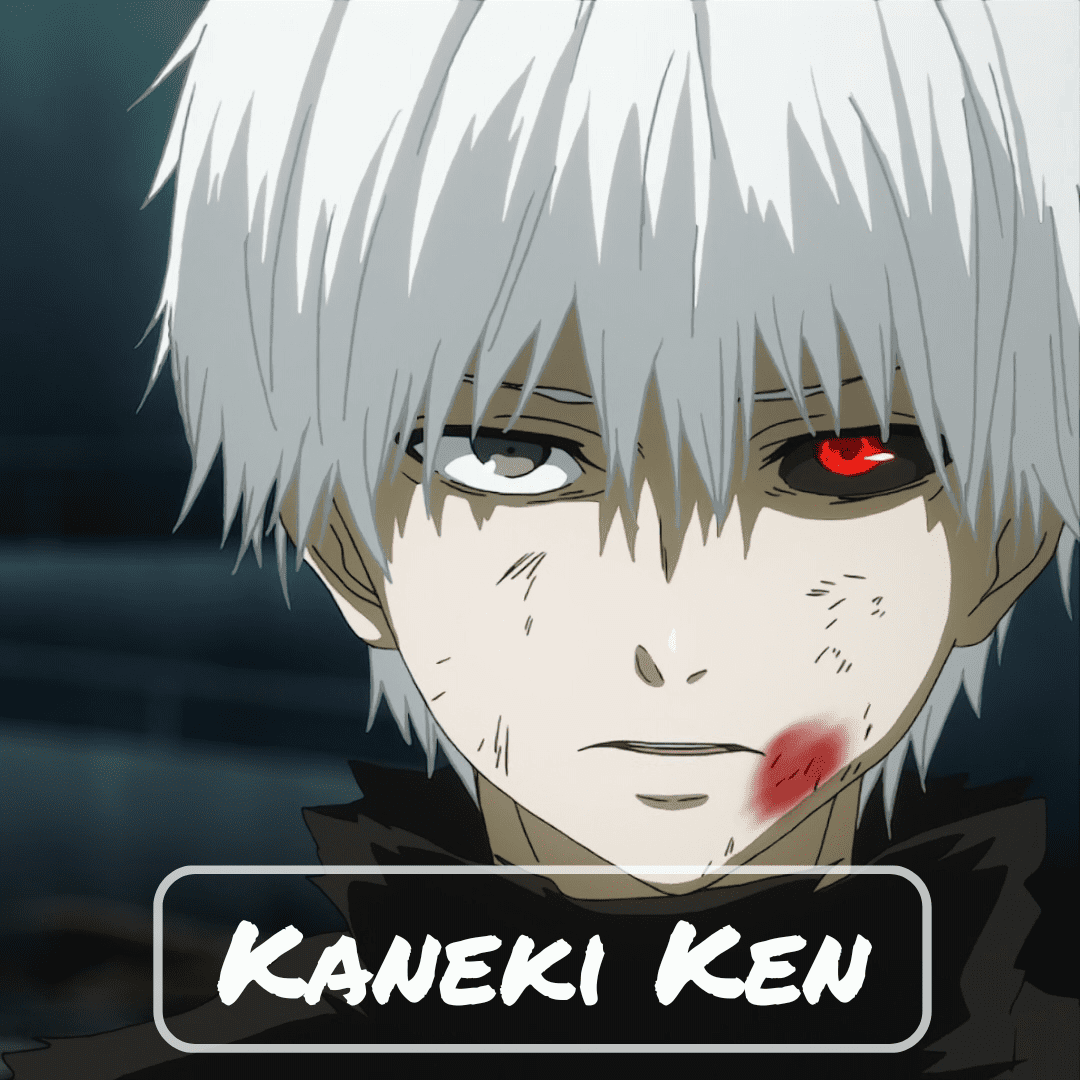
Few anime protagonists have captured the depth of human pain and transformation like Kaneki Ken of Tokyo Ghoul. His story is not one of simple heroism or power. It’s a chronicle of survival, trauma, and the fragile reconciliation between humanity and monstrosity. As such, I figured it was only fair that I update his character analysis. Afterall, I had originally hit publish on this post back on 2 December 2015.
Since then, my writing improved, my focus has matured and honestly more seasons had come out. Across Tokyo Ghoul, Tokyo Ghoul √A, and Tokyo Ghoul:re, Kaneki’s evolution reflects a truth I’ve always found hauntingly relatable: the cost of becoming who we must be to survive.
This updated analysis focuses solely on the anime portrayal of Kaneki, tracing his journey from a quiet university student to a man who bears the weight of two worlds. Now without further ado, let us get to know Kaneki Ken.
[Post read time: 24–41 min]
- Full Name: Kaneki Ken (金木 研)
- Birthday: December 20th
- Age:
- Starts as 18 years old in the beginning of Tokyo Ghoul;
- About 19 during Tokyo Ghoul √A;
- Around 22 years old in Tokyo Ghoul:re
- Anime: Tokyo Ghoul, Tokyo Ghoul √A, Tokyo Ghoul:re
- Aliases:
- Haise Sasaki (his identity during Tokyo Ghoul:re, working as a CCG investigator)
- Eyepatch (due to his masked appearance)
- Centipede (nickname derived from his kagune form)
- One-Eyed King
- Black Reaper
- Number 240
Appearance
Kaneki’s appearance reflects every fracture in his psyche, a visible record of trauma, adaptation, and growth.
At the start, he’s unremarkable, a pale, bookish student with soft black hair and timid eyes. His clothing choices of hoodies, jeans, and casual shirts mirror his desire to blend in and remain unnoticed.

After his fateful date with Rize Kamishiro, her organs transplanted into his body make him neither human nor ghoul. When his ghoul eye manifests, a red iris with a black sclera, he hides it behind an eyepatch. The Anteiku uniform, with its vest and tie, becomes a fragile symbol of belonging.

His mask, designed by Uta, is perhaps the most iconic piece of his design. The grotesque, toothy grin with an exposed gumline and a single open eye is a metaphorical prison. He hides his human eye from the ghoul world and his ghoul eye from the human one.

When Yamori’s torture breaks him, his hair turns stark white overnight. It is not a stylistic flourish but the biological echo of trauma. His nails blacken, his frame becomes leaner, and his gaze steadier. The gentle, apologetic boy is gone. In his place stands someone cold, efficient, and quietly furious.

As Haise Sasaki, his hair begins to grow black at the roots, visually symbolising the merging of his identities, human and ghoul, memory and amnesia. By the final season, he alternates between black, white, and mixed shades depending on his emotional state until finally settling into a soft grey, the colour of equilibrium.

His later years, as the One-Eyed King and husband to Touka, strip away excess. He dresses in simple black gloves, turtlenecks, and dark slacks, unassuming yet dignified. His eyes, marked by faint scar lines from his kakuja evolution, reflect the balance he has fought for, weary but resolute.
Ken Kaneki’s Personality
Kaneki’s personality undergoes seismic shifts throughout the series, each iteration a survival response to unbearable circumstances. His evolution is less about growth and more about fracturing and reassembly.
Tokyo Ghoul: The Gentle Reader

Kaneki begins as the archetype of passive kindness,shy, reserved, conflict-averse to the point of self-erasure. His only close friend is Hide, and he spends most of his time reading novels, particularly the works of Sen Takatsuki. Influenced by memories of his mother, whom he idealises as a selfless woman who worked herself to death helping others, Kaneki adopts a philosophy of absorbing pain rather than inflicting it. He’d rather be hurt than hurt someone else, a belief that gets him bullied and exploited throughout his early life.
He appears optimistic on the surface, always ready with an apology or self-deprecating remark. This gentleness feels genuine, rooted in a desire to be kind like his mother. However, beneath his altruistic nature lies a terror of abandonment, exacerbated by his mother’s death. He despises solitude, clinging to those around him not just from compassion but from a desperate need to avoid being alone. This becomes his greatest vulnerability: he’ll sacrifice himself completely to protect others, not entirely from altruism but from the fear that losing them means facing his isolation again.
After his transformation, this passivity becomes untenable. He’s forced to work at Anteiku, surrounded by ghouls who’ve learned to coexist with their nature whilst he still recoils from it. He can’t eat human food without retching, yet the thought of consuming human flesh repulses him. Coffee becomes his lifeline—the only thing both humans and ghouls can share, a fragile bridge between worlds.
He develops an interest in becoming stronger, reading martial arts manuals to protect those closest to him. His treasured life becomes something he’s willing to risk if people dear to him are threatened. This willingness to self-sacrifice will define him throughout the series, for better and worse.
Tokyo Ghoul √A: The White-Haired Predator

Yamori’s torture shatters Kaneki’s ideology. For ten days, his fingers and toes are repeatedly removed and regenerated, his body becoming a canvas for cruelty. The psychological break manifests physically—white hair, blackened nails, a transformation so complete it’s irreversible.
The Kaneki who emerges adopts Yamori’s mannerisms, particularly the habit of cracking his knuckles—a physical tic that signals his transformation is complete. He abandons his philosophy of “being hurt rather than hurting others,” replacing it with Yamori’s creed: the strong have the right to devour the weak. In his subconscious, he “eats” the manifestation of Rize, symbolically consuming and accepting his ghoul nature rather than being influenced by it.
He becomes ruthless in combat, cannibalising other ghouls to strengthen his kagune, breaking 103 of Ayato Kirishima’s bones in calculated vengeance for hurting Touka, and displaying a cold composure that suggests either complete control or complete dissociation. He’s power-hungry, superficially arrogant, and willing to cross lines that once seemed unthinkable.
Yet the gentleness never fully dies. Around those he cares about—Touka, Hinami, Banjou—he softens, showing glimpses of the boy who read novels and apologised too much. This duality creates instability. Banjou worries openly that Kaneki has developed mental instability from his torture, something that will gradually erode him. When near starvation or losing control of his kagune, Kaneki’s behaviour mimics others—Rize’s predatory chaos, Yamori’s sadism—indicating his identity is fracturing under the weight of competing influences.
After raiding Kanou’s lab and entering a period of soul-searching, Kaneki becomes uncertain about the path he’s taken. He wishes to reclaim his lost “human” side, questioning whether strength gained through violence is worth the cost. He seeks answers from Uta, Yomo, and Yoshimura, trying to understand the incidents that have spiralled since his transformation.
Tokyo Ghoul:re: The Fragmented Investigator

As Haise Sasaki, Kaneki lives without memory of his past, working as a Rank 1 Ghoul Investigator and mentor to the Quinx Squad. This version of him is heartbreaking in its normalcy—self-contained, good-natured, loyal, devoted. He possesses a strong work ethic and prefers working in groups rather than alone. He shows mercy towards ghouls, believing investigators shouldn’t annihilate them unnecessarily, much to the frustration of his colleagues.
Sasaki enjoys reading in his spare time, makes terrible puns (as shown in his conversation with Akira Mado at the curry restaurant), and displays several nervous habits. He scratches the back of his head when thinking hard or feeling uneasy, and still rubs his chin when hiding something or lying—a remnant from his Kaneki days.
He treats his subordinates with respect and concern, often acting in a motherly fashion towards them. He cooks them meals with plenty of meat, worries about their health, and struggles to enforce discipline because his gentle nature makes him ineffective at controlling their disobedience. If the Quinx team is a family, Sasaki is the doting parent constantly worried about his children’s safety.
However, beneath this peaceful exterior, Sasaki rejects his ghoul side and fears it. When analysed by Arima after his capture, Sasaki appears to retain Kaneki’s introverted nature and lack of assertiveness, along with a yearning for a motherly figure. He’s still prone to losing control, as shown when he fights Serpent and unconsciously cracks his fingers during battle.
Donato Porpora notes that Sasaki is curious about his memories but terrified of them, worried that recovering his past will destroy the life he’s built with the CCG. Internal manifestations of “Kaneki” torment him, demanding recognition and his body back. These confrontations destabilise Sasaki whenever he uses his ghoul powers, creating moments where control slips and violence erupts.
After being rescued by Hinami and forced to accept his ghoul nature to protect her and Saiko, Sasaki’s perspective shifts. He concludes that the Kaneki of the past must have been a good person because Hinami cared for him deeply. He begins conversing with a child version of “Kaneki” in his mind, who appears as a white-haired child he feels compelled to protect. Though they reach an understanding, the child tells him they cannot coexist forever—eventually, one must vanish.
Post-Memory Recovery: The Merciless Reaper

When his memories fully return during the Tsukiyama Family Extermination Operation, Sasaki recalls being physically abused by his mother—a truth his traumatised mind had warped into memories of gentle sacrifice. He realises he unconsciously wished to die and had been glad to see Arima during the Owl Suppression Operation. He understands now that burying his past seemed like salvation, so he chose to forget and live as Haise Sasaki.
Upon accepting his past, he resolves to stop “dreaming.” The Kaneki who emerges becomes colder, more violent, willing to put others at risk to complete missions. He fights with brutal force, nearly killing Tsukiyama despite their past friendship (though he ensures Kanae will rescue him before throwing him off the building). He displays his cold nature to Urie when the latter blames him for Shirazu’s death, calmly stating it was Urie’s fault for not being strong enough.
During the Cochlea raid, he displays deep unhappiness with his existence, constantly engaged in inner monologue. As he rescues Hinami, he reveals motives unchanged since the Tsukiyama Investigation: he wants to “go out in style,” acting as a sacrificial pawn with no care for his own life. When Touka tells him to see her later, he thinks it’s cruel and unfair—he’d planned to die.
Whilst being torn apart by Arima, he gives up on living altogether. He’s interrupted by a projection of “Hide” who scolds him for being selfish, reminding him that Hide sacrificed himself with the goal of “living together.” This realisation causes his hair to turn white again from stress, and he rises with a newfound will to live, wearing a smile.
The One-Eyed King: Maturity Through Burden

After defeating Arima and assuming the mantle of the One-Eyed King, Kaneki displays growing maturity. When forming Goat, he addresses all concerns, persuades reluctant members to join, and directs operations with calm authority. He shows his ability to lead during the Clown’s attack on the CCG, selecting members strategically whilst maintaining order.
However, as Goat is forced underground due to Furuta’s extermination campaign, Kaneki becomes increasingly morose. He develops tunnel vision, wanting to protect ghouls on his lonesome rather than relying on others. This self-imposed isolation mirrors his earlier pattern of shouldering everything himself—a flaw that nearly destroys him.
After his defeat by Suzuya and Hanbee, his psyche fractures again. Multiple versions of himself—Haise Sasaki, the white-haired Centipede, the black-haired student, the pre-transformation boy, Prisoner 240—convene in his mind, arguing about decisions and failures. Only the shared goal of saving Touka unites them. In that moment, Kaneki asks himself if he’s willing to cross the line of killing humans and children. He declares that he will, and that he’ll “press forward, like a centipede.”
Dragon Arc: Confronting the Abyss

Trapped within Dragon’s massive form after cannibalising the Oggai, Kaneki experiences a hallucinatory reckoning. He finds himself in a shrine surrounded by an endless ocean, with corpses of his victims floating beneath the surface. Rize appears, taunting him for the deaths he’s caused, mocking his attempts at cooperation, forcing him to confront the reality that all his actions were driven not by altruism but by a need to be needed.
She asks if he remembers their first meeting, pointing out their shared trait of not caring who dies as long as they achieve personal goals. Kaneki breaks down, admitting all he wanted was to be needed by someone. After turning into a ghoul and meeting various people, his horizons expanded. People chose to be with him, which made him happy and gave him a sense of belonging. Yet he still didn’t care about anyone else, nor the reasons for his actions. He felt that if he continued fighting, someone would want him.
This confrontation strips away every rationalisation. In accepting his sins and resolving to bear their weight rather than flee from them, Kaneki finds a path forward. When extracted from Dragon by Touka and the Quinx Squad, he awakens regretful but determined to stop Furuta and end the cycle of violence, not alone this time, but with help.
During his final confrontation with Furuta, Kaneki no longer seeks death or martyrdom. After defeating him and confronting Rize within Dragon’s core, tearfully apologising before killing her to end the rampage, Kaneki emerges as someone who’s finally reconciled with his fractured identity.
In his final reflection whilst battling Dragon’s defences, he recognises that everyone is their own protagonist, and his tragedy doesn’t make him special. He knows the world is harsh and unforgiving, but despite it all, people still strive to be loved and chosen. As a result, he’ll carry on and choose and be chosen, nothing more, nothing less.
Strengths and Weaknesses
Strengths
Kaneki’s mind is his greatest weapon. His intelligence and adaptability allow him to evolve rapidly, whether mastering combat styles from books or strategising complex missions. His regenerative capacity, enhanced by Rize’s organs, grants him near-immortality.

Emotionally, his resilience borders on impossible. He survives torture, loss, and guilt without ever succumbing fully to nihilism. Every fall is followed by a climb. Every death, literal or symbolic, births a version of him stronger, more self-aware, and more willing to try again.
Weaknesses
His empathy, however, often becomes his downfall. Kaneki internalises pain until it poisons him. His self-sacrificial nature leads him to isolate himself, convinced that he must suffer alone to protect others.

Mentally, he is fragile. His psyche fractures under pressure, spawning multiple identities that argue and coexist uneasily. When pushed too far, he mimics those who hurt him, Rize’s seduction or Yamori’s cruelty, suggesting a porous sense of self.
Physically, his regenerative abilities come at a cost. Overuse leads to premature cellular decay, black tears, and the risk of complete mental collapse. In the end, even his strength becomes a slow death disguised as survival.
Background and History

Ken Kaneki’s life begins quietly, a boy raised by a kind but overworked mother. Her mantra, “It’s better to be hurt than to hurt others,” shapes his moral compass. After her death, he grows up lonely, shy, and deeply introspective, finding refuge in books and in his friendship with Hide Nagachika.
His transformation begins with a simple crush. Meeting Rize Kamishiro at a café seems ordinary, even romantic, until she reveals herself as a ghoul and tries to eat him. A steel beam accident kills Rize, and Kaneki’s life is saved by an illegal organ transplant using her remains. He awakens changed, unable to eat human food, his body rejecting what once sustained him.

He is taken in by the ghouls of Anteiku, who teach him how to live ethically in a world that sees his kind as monsters. But Kaneki’s struggle is existential. He cannot reconcile his human empathy with his ghoul hunger.
His capture and torture by Yamori in Tokyo Ghoul √A marks the breaking point. The boy who once avoided conflict becomes a predator. His hair turns white and his heart grows cold.
By Tokyo Ghoul:re, Kaneki’s mind has been wiped, and he lives as Haise Sasaki, a CCG investigator raising a squad of half-ghouls. This amnesiac peace is temporary. Memories resurface, identities collide, and the man who was once prey becomes the king of monsters and the architect of fragile peace.
Motivations and Goals

Kaneki’s motivations shift through each season, mirroring his psychological state. Initially, he seeks belonging, a place where he can exist without hurting or being hurt. After his torture, that longing becomes obsession. He wants control, power, and understanding.

As Haise Sasaki, his goal is domestic, to live quietly, care for his team, and preserve a sense of humanity. When those memories merge back into him, his vision expands. He dreams of coexistence, a world where humans and ghouls can live side by side.

Beneath the ideology lies something simpler. Kaneki wants connection. Every version of him, from the timid student to the white-haired avenger, from the investigator to the king, is searching for love, validation, and peace.
Quirks and Habits
Kaneki’s mannerisms tell as much of his story as his battles do. He scratches the back of his head when nervous, a holdover from his human days that persists through every transformation. He reads constantly, using literature as both shield and mirror. Books are where he processes pain, finds language for grief, and learns empathy he cannot always express aloud.

He drinks coffee obsessively. It is one of the few pleasures ghouls can share with humans, and for Kaneki, it becomes ritual, grounding, nostalgic, an act of quiet resistance against dehumanisation. He often holds the cup with both hands, as if afraid to let go of the warmth.
Kaneki apologises compulsively, even when unnecessary. It is a verbal tic that speaks to lifelong guilt and an ingrained need to pacify. His voice softens when he is uncertain and sharpens when he is suppressing fear.
He maintains a fastidious environment, books in order, bed neatly made, clothes folded precisely. When his room becomes messy, it signals inner turmoil.

And perhaps most tellingly, he cracks his knuckles before battle, a habit inherited from his torturer, Yamori. What began as a trauma response becomes a declaration of readiness. It is both haunting and empowering, a reclaimed gesture that once symbolised helplessness.
Relationships
Hide Nagachika

Hide is Kaneki’s tether to humanity. Their friendship predates tragedy and remains the emotional heart of the story. Hide is warm where Kaneki is withdrawn, fearless where Kaneki hesitates. He speaks to the part of Kaneki that still believes in goodness. Even after discovering Kaneki’s transformation, Hide’s affection never falters. In one of the series’ most poignant moments, Hide offers himself to Kaneki as food so that his friend can survive. This act of unconditional love redefines Kaneki’s understanding of what connection means. When they reunite after Dragon’s defeat, scarred but alive, their friendship becomes a quiet symbol of forgiveness and endurance.
Touka Kirishima

Touka begins as Kaneki’s sharp-edged mentor, challenging his naive belief that morality can exist untouched by survival. Their relationship evolves from tension to trust, from comradeship to love. She sees through his self-destructive tendencies and confronts him without fear. Kaneki, in turn, finds in Touka the grounding he has always lacked. Their intimacy in Tokyo Ghoul:re is not gratuitous but deeply human, a shared moment of peace in the midst of ruin. Their marriage, sealed by mutual bite marks, represents not purity but acceptance. By the series’ end, they are raising their daughter Ichika, a symbol of what Kaneki fought to preserve: life that bridges two worlds.
Kishou Arima

Arima embodies both death and rebirth for Kaneki. Their first battle ends in Kaneki’s defeat and loss of identity. Yet as Haise Sasaki, Kaneki views Arima as a father figure, a calm and patient teacher who gives him structure. Their final encounter is both tragic and redemptive. Arima reveals that he always intended for Kaneki to surpass him, to become the One-Eyed King and guide ghouls toward coexistence. His death in Kaneki’s arms is the culmination of that legacy. For Kaneki, Arima’s mentorship becomes a lesson in strength without cruelty and power without ego.
Rize Kamishiro

Rize is both the origin and the mirror of Kaneki’s suffering. Her organs turned him into what he is, and her voice haunts him at every turning point. She taunts him in dreams, forcing him to confront his desires and hypocrisies. Yet despite her cruelty, Kaneki does not hate her. He recognises that through Rize he gained a purpose and the people he loves. Their final meeting inside Dragon’s core is quiet and heartbreaking. When he apologises before ending her suffering, it is an act of release rather than vengeance. It closes the circle of pain she began.
Hinami Fueguchi

Hinami represents Kaneki’s compassion at its purest. After her mother’s death, he becomes her protector, reading books with her and helping her learn to survive. She calls him “big brother,” a title that grounds him even when he forgets himself as Haise. His decision to betray the CCG to rescue her proves that his empathy is not selective. It is the core of who he is.
Shuu Tsukiyama

Tsukiyama’s obsession with Kaneki begins as hunger but evolves into devotion. Over time, he becomes one of Kaneki’s most loyal allies, funding and advising Goat with genuine respect. His flamboyance contrasts Kaneki’s restraint, but his loyalty is unwavering. Tsukiyama’s concern that Dragon has robbed Kaneki of simple joys like coffee or reading reveals that even the eccentric can love deeply. Their friendship, once built on predation, ends on mutual understanding.
Ken Kaneki’s Role in Tokyo Ghoul

Kaneki is the axis upon which Tokyo Ghoul revolves. His transformation drives the narrative, his choices define its moral scope, and his pain anchors its emotional weight. He is both observer and participant, victim and catalyst. Through his eyes, we explore identity, prejudice, and the price of survival.
Kaneki bridges two species locked in mutual fear. His existence as a one-eyed ghoul makes him an impossibility, and thus a potential solution. His struggle to find harmony between humanity and monstrosity mirrors the series’ central question: can empathy exist in a world built on consumption?
By the end, Kaneki becomes a symbol rather than a soldier. He is proof that coexistence, while fragile, is not unattainable. His life reframes monstrosity as circumstance rather than choice.
Evolution and Growth

Kaneki’s evolution is a cycle of birth, death, and renewal. Each persona he adopts represents a psychological rebirth.
As a student, he is innocence personified. As the Eyepatch ghoul, he learns fear and hunger. As the white-haired Centipede, he embodies power without mercy. As Haise Sasaki, he rediscovers tenderness through ignorance. As the One-Eyed King, he finally integrates these selves into a whole.
His growth is not linear. It is chaotic, marked by regressions and collapses. But each collapse teaches him something vital. By the series’ conclusion, he has learned that strength is not found in domination or solitude but in vulnerability and connection.
Thematic Contributions

Kaneki’s presence defines Tokyo Ghoul’s thematic core. His duality explores the blurred boundaries between predator and prey, morality and necessity.
The recurring motif of coffee symbolises connection. It is the only thing both species can enjoy, a quiet reminder that common ground exists even in chaos.
His love of books reflects the need for meaning in suffering. Every volume he reads is an attempt to frame his pain within language.
The act of cannibalism becomes metaphorical: consuming others to survive mirrors emotional dependence, the way people internalise trauma and identity.
Above all, Kaneki’s story challenges the notion that monsters are born. It insists they are made, often by a world that refuses to see its own reflection.
Internal Conflicts

Kaneki’s greatest enemy is himself. His psyche fractures under the strain of guilt and survival. Inside his mind, multiple versions of himself argue for dominance.
The timid boy clings to kindness. The white-haired Centipede demands vengeance. Haise pleads for peace. Each persona reflects a coping mechanism, a means of survival in impossible circumstances.

His conversation with Rize inside Dragon represents the climax of this internal war. There, stripped of illusion, Kaneki admits that much of what he did was not heroic but selfish. He wanted to be needed, even if it meant causing pain. Accepting this truth allows him to move forward without denial or despair.
External Conflicts

Kaneki’s external battles mirror his inner turmoil. His fight against the CCG represents his struggle against systemic cruelty. His leadership of Goat exposes the burden of responsibility. Every victory costs him part of himself.
The world of Tokyo Ghoul is merciless. The CCG hunts him, ghouls fear or idolise him, and humans misunderstand him. He stands at the crossroads of all these forces, trying to create peace in a world addicted to violence.
His final battle with Furuta encapsulates the entire series: two men born from manipulation, both seeking meaning in chaos. When Kaneki defeats Furuta, he does so not for glory but to stop the cycle. He chooses life over legacy.
Character Arc

Kaneki’s arc is one of reconciliation. He begins as a victim, becomes a monster, and ends as a man.
His journey from isolation to connection, from denial to acceptance, transforms Tokyo Ghoul from a horror story into a meditation on empathy. Each identity he assumes is both armor and prison, but by the end, he no longer hides behind any.
As husband, father, and survivor, Kaneki embodies the fragile peace he longed for. His happiness is not grand or triumphant. It is quiet, hard-earned, and deeply human.
Kaneki Ken is voiced by:

- Natsuki Hanae in the original Japanese (subbed) version
- Austin Tindle in the English (dubbed) version
Both actors manage the near-impossible: making every version of Kaneki recognisably the same person beneath the changing tones.
Closing Reflection

Ken Kaneki remains one of anime’s most enduring portrayals of psychological evolution. His story is not about conquering darkness but learning to coexist with it. His scars, both visible and unseen, are reminders of what it means to endure.
What makes him extraordinary is not his power but his persistence. He is proof that even when the world demands you become a monster, it is still possible to choose compassion.
Kaneki’s final peace, holding his daughter in a world where humans and ghouls can share coffee without fear, is the quiet reward for all his suffering. His evolution is tragic, yes, but it is also profoundly hopeful.
Sources: Tokyo Ghoul (2014), Studio Pierrot / Tokyo Ghoul √A (2015), Studio Pierrot / Tokyo Ghoul:re (2018), Studio Pierrot / Tokyo Ghoul Wiki (Fandom) / MyAnimeList Character Database. Ranker.com (Tragic Characters & Protagonists Lists)







Leave a Reply