
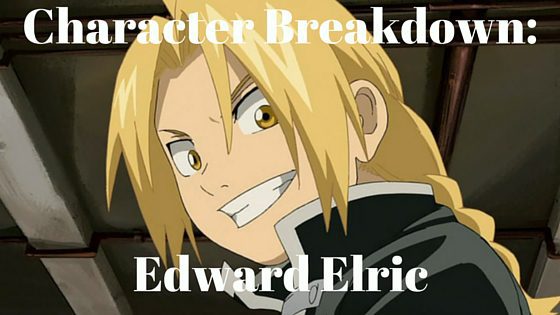
In the vast realm of shōnen anime, few protagonists are as instantly recognisable, or as emotionally resonant, as Edward Elric. The titular “Fullmetal Alchemist,” Ed is more than just a child prodigy or a skilled fighter. He’s a complex, fiercely human character whose journey blends science and spirituality, tragedy and tenacity, grief and growth. With his automail limbs, fiery gold eyes, and trademark red coat, Edward’s visual design is iconic, but it’s his emotional arc that makes him unforgettable.
Whether you’re a long-time fan or meeting him for the first time, this comprehensive breakdown explores every facet of Edward’s character—from his philosophical ideals to the scars that define him. What does it mean to sacrifice everything for the one you love? What is the cost of knowledge? And how does one hold on to hope in a broken world? Edward Elric has lived through all of this and more.
- Full Name: Edward Elric
- Height: 149 cm (early series); grows to approx. 165 cm by the end of the series
- Birthday: 2 April
- Age: 15-18
- Anime: Full Metal Alchemist and Full Metal Alchemist: Brotherhood
- Appears in: All episodes and chapters
Appearance
Edward Elric’s appearance is as iconic as his legacy in anime and manga. Small in stature but commanding in presence, Edward is initially noted for his relatively short height—approximately 149 cm (4’11”) at the beginning of the story—a fact he is notoriously sensitive about, often erupting into comedic rage at any mention of it. However, this seemingly minor trait becomes emblematic of his youthful pride, insecurities, and the broader theme of growth. Over time, particularly by the end of the manga and Fullmetal Alchemist: Brotherhood, Edward undergoes a physical and emotional transformation, eventually reaching around 165 cm (5’5″), which reflects his journey toward maturity and balance. His weight hovers around 50 kg (110 lbs), although this may fluctuate slightly due to his automail limbs.
He has striking golden-blond hair that he usually wears long, tied into a neat braid with short bangs framing his face. His eyes are a piercing shade of gold, often glowing with determination or flaring in defiance. These features mirror his fiery spirit and unyielding resolve. In the 2003 anime film Conqueror of Shamballa, Edward’s appearance subtly shifts: he adopts a thinner ponytail instead of his usual braid, and his face appears more mature, worn by the passage of time and the weight of his burdens. In that version of Earth, he also trades his Amestrian clothes for German-styled attire, including a long brown trench coat, a dark vest over a high-collared white shirt, and matching slacks, signifying both a loss of identity and his reluctant adaptation to a new world.
One of Edward’s most defining physical characteristics is his automail—mechanical prosthetics that replace his right arm and left leg, lost during the Elric brothers’ tragic human transmutation attempt. Crafted by his childhood friend Winry Rockbell and her grandmother Pinako, Edward’s automail is both practical and symbolic: it signifies his immense sacrifice, his pain, and his strength. The arm extends from his shoulder down, while the leg is replaced from just above the knee. Often concealed under white gloves and the billowing sleeve of his red coat, the automail becomes an inseparable part of his combat identity. In Conqueror of Shamballa, he uses a gas-powered prosthetic arm built by his father Hohenheim, lacking the nerve connection of Amestrian automail and disguised with a thin layer of synthetic skin that melts away during activation.
Edward’s signature outfit is equally memorable. In the manga and Brotherhood, he’s most often seen wearing a crimson red coat emblazoned on the back with a Flamel symbol—a snake on a cross crowned with wings—representing sacrifice, rebirth, and the alchemist’s code. Underneath, he wears a sleeveless black shirt, black trousers, a brown utility belt, and heavy combat boots. The combination of red and black mirrors his dual nature: the vibrant will to act and the shadow of grief he carries. His attire subtly shifts throughout the series, particularly in the 2003 anime, where he discards his red coat midway and dons a short, black, hoodless jacket with white linings, signalling a stylistic and emotional evolution as the series takes a darker, more tragic turn.
Altogether, Edward’s physical appearance is inseparable from his identity, not just a visual design but a tapestry of symbols, scars, and changes that reflect his painful past, his relentless pursuit of redemption, and the strength he finds not despite his losses, but because of them.
Character Traits
Edward Elric is a study in contradiction—both fire and steel, both vulnerability and unwavering conviction. At his core, Edward is defined by an intense emotional depth that drives every choice he makes, from his early impulsiveness to the moral clarity he develops over time. Passionate, fiercely loyal, and hot-tempered, Ed is someone who throws himself headfirst into action when he believes it’s right, even if it comes at personal cost. His most defining trait is arguably his uncompromising sense of justice. He believes in the value of every human life and clings to the hope that people can change, even when the world constantly challenges those ideals.
From the outset, Edward embodies the typical shōnen protagonist in many ways: he’s brave to the point of recklessness, filled with youthful arrogance, and determined to defy fate. But what sets him apart—and what makes him so beloved—is how deeply flawed and emotionally intelligent he becomes. He is stubborn, often to a fault, but that same stubbornness becomes the bedrock of his resilience. Whether it’s protecting his younger brother Alphonse or standing up to godlike enemies, Edward refuses to back down from the path he’s chosen.
He is also deeply empathetic, though he doesn’t always show it openly. His brusque demeanour and sarcastic wit often mask a heavy emotional burden. The trauma of losing his mother, failing to bring her back, and watching his brother lose his body left Edward scarred—but not broken. These experiences mould his worldview and feed his guiding principle of Equivalent Exchange: that everything must be paid for, and that redemption comes not through shortcuts, but through effort, sacrifice, and compassion.
Edward’s intellectual curiosity is another pillar of his character. A prodigy in alchemy and a voracious learner, Ed was certified as a State Alchemist at the young age of twelve. He’s known for his sharp problem-solving skills and scientific mind, but he balances this with strong moral judgment, never allowing knowledge to outweigh human dignity. Even when offered immense power, he remains grounded in the value of life and the danger of playing god.
Still, Ed’s flaws are not hidden. He can be impulsive, overly proud, and prone to bottling up his emotions. His sensitivity about his height is a running gag throughout the series, but it also symbolises his struggle with self-worth and being underestimated. He also has difficulty accepting help from others, especially when it feels like he’s failed. But this vulnerability makes his moments of emotional growth—like apologising, forgiving, or letting go of revenge—hit all the harder.
Ultimately, Edward Elric is a character of immense complexity: a young man grappling with guilt, hope, and an unwavering love for his brother. He is someone who doesn’t just strive to fix what’s broken—he becomes the kind of person who can carry others forward while doing so. His personality is forged not just by the flames of loss but also by the steady heartbeat of his resolve to do better, be better, and never give up on the people he loves.
Edward Elric’s Personality
Edward Elric possesses a fiercely intense and multifaceted personality that blends stubborn pride with profound emotional depth. At first glance, he appears brash, hot-headed, and deeply reactive—especially when it comes to his height, which is a sensitive sore spot that often results in explosive outbursts. Yet beneath this fiery exterior lies an incredibly compassionate soul, shaped by trauma, guilt, and a steadfast sense of responsibility. Ed is remarkably driven by a strong moral compass, rooted in empathy, justice, and the core belief that life is precious and irreplaceable. This ethical conviction is what prevents him from ever using alchemy to kill, even when provoked or cornered.
He often carries the emotional weight of the world on his shoulders, burdened by guilt over the failed human transmutation that cost him and his brother their bodies. That trauma forged both resilience and a tendency to shoulder blame alone, giving him a guarded, melancholic edge that sets him apart from more carefree shōnen leads. Despite his genius intellect and status as a prodigy alchemist, Ed is refreshingly fallible and aware of his limitations—though he’d rarely admit it out loud. His wit and sarcasm often act as shields, concealing a sensitivity that runs far deeper than he lets on. He loves fiercely, especially when it comes to Alphonse, and his protectiveness over those he cares for is matched only by his willingness to sacrifice himself for them.
Through his interactions, particularly with characters like Winry, Mustang, and even Scar, we see Edward grow emotionally and spiritually. He begins the series as a stubborn idealist obsessed with correcting a single mistake, but matures into a young man who accepts that some questions have no perfect answers. Though plagued by self-doubt, he never stops fighting for what he believes in. Edward Elric’s personality is a tapestry of contradictions—brilliant yet reckless, prideful yet deeply self-critical, impulsive yet introspective. And it’s in those tensions that his humanity shines brightest.
Strengths and Weaknesses of Edward Elric
Strengths:
Edward Elric’s greatest strengths lie in his unshakable determination, moral integrity, and extraordinary intellect. As a State Alchemist, he’s widely regarded as a prodigy, having achieved mastery of advanced alchemy techniques at a remarkably young age—without the need for transmutation circles. His ability to think strategically under pressure, solve complex scientific and philosophical problems, and adapt swiftly in battle make him a formidable opponent. But it’s his emotional courage that defines him most: Edward is the kind of person who will throw himself into danger to protect others, often at great personal cost. His loyalty to Alphonse is unwavering, forming the emotional core of the entire series, and his empathy—even for those who have wronged him—is part of what separates him from those who misuse alchemy. He’s introspective enough to question his beliefs and grow from his experiences, something not all heroes can claim.
Weaknesses:
Yet, Edward is far from flawless, and his weaknesses are equally impactful, often driving key moments of conflict in the story. His infamous short temper, especially around remarks about his height, frequently gets him into trouble and clouds his judgment. He can be impulsive and headstrong, sometimes rushing into danger without fully assessing the risks, especially when emotionally provoked. This recklessness often leads to injuries or strategic disadvantages. Moreover, Edward carries a deep burden of guilt and self-blame, particularly over the transmutation of his mother and Alphonse’s lost body. This guilt festers into self-loathing at times, making him emotionally closed off or prone to self-sacrifice. He also struggles with trusting others, especially in the earlier arcs, preferring to bear burdens alone rather than rely on others, another reflection of his deeply ingrained need for control in a world where he has lost so much.
Ultimately, Edward’s strengths and weaknesses are intertwined: his arrogance stems from trauma, his heroism from remorse. It’s this duality that makes him such a compelling and human character, one who grows stronger by confronting—not denying—his flaws.
- Genius-level intellect, especially in alchemy
- Strong moral compass and empathy
- Quick thinking and resourcefulness in battle
- Deep loyalty and protective instincts
- Pride and stubbornness
- Height insecurity and quick temper
- Prone to guilt and self-blame
- Impulsive decision-making in emotionally charged situations
Background and History
Edward Elric was born in the remote rural town of Resembool, in the country of Amestris, to Trisha Elric and the mysterious alchemist Van Hohenheim. From a young age, Ed exhibited extraordinary intelligence and curiosity—traits that were only nurtured by his early exposure to alchemy. Alongside his younger brother Alphonse, he began learning the craft as a means of understanding the world and bonding over shared interests. However, their childhood would be marred by deep emotional loss: their father, Hohenheim, abandoned the family for unknown reasons, and not long after, their mother succumbed to illness.
Devastated and desperate to reclaim what they had lost, the brothers committed the gravest taboo in alchemy—Human Transmutation—in an attempt to bring Trisha back to life. The transmutation failed horrifically. Edward lost his left leg, and Alphonse lost his entire body. In a moment of panic and grief, Ed sacrificed his right arm to bind Al’s soul to a suit of armour using a blood seal. This trauma becomes the emotional and philosophical foundation of Edward’s character arc.
Following their physical and emotional devastation, Ed was fitted with automail prosthetics crafted by Winry Rockbell and Pinako Rockbell, childhood friends and surrogate family. Shortly after, Ed became the youngest person ever to pass the State Alchemy Examination, earning the title “Fullmetal Alchemist” and enlisting in the Amestrian State Military. His true goal, however, was not patriotism—it was to find the Philosopher’s Stone, a powerful alchemical artefact that could help him restore his and Alphonse’s original bodies.
Throughout his journey, Edward encounters not only the dark secrets of the military he serves but also the Homunculi, artificial humans tied to the stone and its sinister origins. He unearths the country’s horrifying history—especially the Ishvalan genocide, which plays a significant role in shaping his moral compass. He is constantly torn between the scientific curiosity that drives him and the ethical limitations of what should never be attempted.
Despite the suffering he endures, Edward grows from a guilt-ridden prodigy into a thoughtful, morally driven young man. His story becomes one of atonement, emotional healing, and coming-of-age through fire and philosophy. By the end of the manga and Brotherhood, Edward ultimately sacrifices his ability to perform alchemy to restore Al’s body, proving that he has matured beyond the dogma of Equivalent Exchange and embraced the power of selfless love.
In the 2003 anime continuity, Ed’s story diverges dramatically, with a darker, more metaphysical twist. His journey concludes in our world—pre-WWII Germany—separated from Alphonse and forced to confront the nature of alchemy across dimensions. This version explores themes of existentialism, loss, and the limits of scientific understanding in even more abstract terms.
Edward’s history is full of trauma and burden, but also resilience and growth. He is a character deeply shaped by grief, forged in guilt, and refined through compassion and understanding.
Motivations and Goals:
At the heart of Edward Elric’s journey is an unshakable, deeply emotional desire to make amends—not only for the consequences of his own actions, but also for the suffering of those around him. His primary motivation, especially early on, is to restore Alphonse’s body, which was lost during their forbidden attempt to resurrect their mother through Human Transmutation. While Ed also lost his own limbs in that moment, it’s the fact that Al paid the heavier price that fuels Ed’s near-obsessive determination. This guilt becomes his emotional engine—he blames himself for dragging Al into a nightmare, and he’s willing to do anything, even risk his life and sanity, to make it right.
To that end, Edward becomes a State Alchemist, earning the controversial title of “Fullmetal Alchemist.” He uses the military as a resource, not out of loyalty, but pragmatism. The access to classified research, laboratories, and libraries is simply a means to an end. However, this decision is never without its moral discomfort; Ed despises being considered a “dog of the military” and is constantly wary of the atrocities committed in its name. Still, he carries the burden in silence if it means saving Alphonse.
As the story progresses, Edward’s motivations evolve. What begins as a personal quest for restitution gradually expands into a broader fight against systemic evil, including the military-industrial complex, the Homunculi, and ultimately Father’s plan to sacrifice the entire country for godhood. Edward becomes someone who seeks truth not just to fix his own mistake, but to prevent further suffering on a national scale. His empathy widens, his goals become less self-centred, and his belief in individual worth and human dignity crystallises into a strong ideological stance.
He champions the idea that humanity’s worth lies in its imperfection and capacity to grow, rejecting the notion of sacrificing others to achieve a so-called perfect world. Even as the Philosopher’s Stone becomes attainable, Ed refuses to use it if it means trading lives, no matter the cost. This decision defines his character arc—his core belief in moral accountability, and his refusal to cut corners, no matter how desperate the situation.
In Brotherhood, Edward’s final act of sacrifice—giving up his ability to perform alchemy in order to retrieve Al’s body and soul—epitomises how far he has come. He no longer needs power to feel in control of his life. He understands that love, family, and perseverance are stronger than any alchemical shortcut. His ultimate “equivalent exchange” isn’t a transaction—it’s a choice to embrace a future rooted in trust and human connection, not calculation.
In the 2003 anime, while the initial motivations are similar, they become more introspective and existential. Edward’s goals become entangled with the mysteries of the Gate and its connection to another world—our world—and he eventually sacrifices his place in Amestris to close the portal and protect it from misuse. In this version, Edward’s journey ends with him trapped in 1920s Germany, seeking a way back not just to Al, but to a reality where their sacrifices could hold meaning.
Ultimately, Edward Elric’s goals are both personal and philosophical: to right a devastating wrong, to protect those he loves, and to redefine what it means to live with integrity in a world ruled by impossible choices. His journey becomes a beautiful exploration of how hope, humility, and human willpower can triumph over despair.
Quirks and Habits
Edward Elric is a bundle of intensity, but he’s also riddled with quirks that contrast sharply with his brooding intellect. One of his most well-known and often comedic habits is his explosive sensitivity about his height. Call him “short,” “pipsqueak,” or anything adjacent, and you’ll trigger an exaggerated, fiery reaction that becomes a recurring gag throughout both the 2003 anime and Fullmetal Alchemist: Brotherhood. His retorts range from full-on yelling matches to wild physical antics—often flailing, kicking, or ranting at the top of his lungs. Despite his intellect and maturity, this childish trigger reveals a layer of lingering insecurity and frustration, especially considering how often people underestimate him because of his appearance.
Ed also has a tendency to talk with his hands when he gets passionate, often gesturing dramatically when arguing or explaining something, especially when it relates to alchemy. He’s animated and expressive, his entire body conveying his conviction in a conversation. This is matched by a habitual scowl or furrowed brow, particularly when he’s deep in thought or suspicious, which, let’s be honest, is most of the time.
He’s intensely protective of Alphonse, to the point where he can become rash or unreasonable if he thinks someone has hurt or insulted his brother. He often steps in front of Al during confrontations or takes responsibility for their situation without hesitation. This protector instinct leads him to be stubborn in battles, frequently pushing himself far beyond his physical limits without regard for his own safety. Despite being smart and strategic, Ed often acts impulsively when emotions are high, relying on gut instinct rather than cold calculation, especially if someone he loves is in danger.
Another quirk is his refusal to use a transmutation circle, a habit that sets him apart from most alchemists. After seeing “The Truth” and gaining access to transmutation without a circle, Ed treats this skill not as a boast but as a silent signature—he rarely flaunts it unless necessary, but it’s always a moment of awe when others realise it.
Ed has a habitual distrust of authority figures, which shows in his sarcastic remarks toward Colonel Mustang, his rebellious attitude toward the military, and his general disdain for bureaucracy. He’s also a terrible patient, resisting bed rest or medical attention unless absolutely necessary. This ties into his pride and need for self-sufficiency—he doesn’t like showing weakness, even when he’s on death’s door.
While not overt, Ed also displays a quieter habit of observation. He’s always watching, noticing small details others might miss—especially in people’s emotional states or inconsistencies in logic. This thoughtful streak helps him solve complex problems and makes him emotionally intuitive, even if he masks it under layers of gruffness.
And of course, there’s his very specific habit of clapping his hands before transmuting, a motion that’s become iconic and symbolic of his unique alchemical journey.
Obsessive about his height and reacts violently to short jokes
Has a dramatic flair for speeches
Often uses alchemy without a transmutation circle (a unique ability)
Reading and research, especially on alchemy
Tinkering with automail (though more out of necessity than enjoyment)
Sparring and training
Relationships:
At the very heart of Edward’s world is his younger brother, Alphonse Elric. Their relationship is, without exaggeration, the emotional spine of the series. After their attempt at human transmutation fails—resulting in Ed losing his leg and Al losing his entire body—Ed sacrifices his right arm to bind Al’s soul to a suit of armour. From that moment on, Ed’s sole driving purpose is to restore Al’s body, even if it means tearing the world apart. He carries the guilt of being the older brother who “should’ve protected him,” and his devotion to Al borders on self-destructive. Despite the frequent bickering and sibling teasing, their love and respect for each other are unshakable.
Next is Winry Rockbell, Ed’s childhood friend and automail mechanic. Their relationship is a slow-burn mix of tension, care, and affection that matures beautifully over the course of the story. Winry is one of the few people who can call Ed out on his recklessness and arrogance, and their connection runs deep—founded on years of shared grief, support, and understanding. Ed struggles with expressing his emotions, but it’s clear he cares deeply for her. His eventual “proposal” in Brotherhood—offering half his life in exchange for half of hers—is one of the most subtle, poetic declarations of love in shōnen anime.
Roy Mustang presents a more complex dynamic. At first, Ed distrusts him, seeing the Flame Alchemist as an opportunistic authority figure who recruits child soldiers. But over time, Ed comes to respect Mustang as a mentor figure, even if they never quite lose that fire-forged rivalry. Their relationship is built on begrudging admiration, tactical cooperation, and shared values. Mustang sees the potential in Ed and pushes him toward growth—even if Ed bristles at being ordered around.
Maes Hughes is another important figure in Ed’s life. As one of the kindest adults Ed encounters in the military, Hughes provides a rare safe space, offering not just guidance but genuine affection and fatherly warmth. His tragic death hits Ed hard and contributes to his deepening mistrust of the State Military. It’s one of the first cracks in Ed’s idealism, reinforcing how personal loss is tied to the structures around him.
With Izumi Curtis, Ed shares a brutal yet deeply loving bond. As his alchemy teacher, Izumi is the only adult who truly disciplines him while also seeing his pain. She teaches him and Al not just about alchemy but about life and death, and the consequences of playing god. Their bond is forged through shared trauma—she too attempted human transmutation and lost her child—creating a spiritual link that goes beyond the master-student dynamic.
Edward’s antagonistic relationships are equally defining. Scar, who initially wants Ed dead for being a State Alchemist, becomes a sort of philosophical mirror to Ed’s evolving beliefs about justice, sin, and redemption. Shou Tucker, in contrast, represents everything Ed loathes about science without humanity—cold, obsessive, and willing to sacrifice others for personal gain.
And then there are the Homunculi, particularly Envy and Wrath. Envy, revealed to be Ed’s half-brother in the 2003 anime, is a twisted reflection of the Elric brothers’ trauma and failed familial bonds. Wrath, possessing Ed’s original arm and leg, adds another layer of anguish and confrontation to Edward’s already shattered sense of self.
Throughout all his relationships, what stands out is Ed’s loyalty and emotional honesty. He loves fiercely, protects obsessively, and holds others—and himself—to impossibly high standards. He doesn’t trust easily, but once someone earns his heart, he would literally sacrifice his life (and has, multiple times) to protect them.
Edward’s journey is not one he walks alone. It’s in his bonds—with Al, Winry, Mustang, Izumi, and even his enemies—that we see the true cost and beauty of human connection. These relationships challenge him, heal him, and ultimately make him the man we admire so much.
Alphonse Elric: His younger brother and closest companion. Ed’s love for Al defines much of his development.
Winry Rockbell: Childhood friend and eventual romantic interest. Their bond grows with emotional depth and mutual support.
Roy Mustang: A mentor-like figure and rival. Ed often bristles at Roy’s authority but respects him deeply.
Izumi Curtis: Their alchemy teacher and surrogate mother. Her strictness and compassion deeply influence Ed’s worldview.
Hohenheim: Initially estranged father. Their reconciliation represents a major step in Ed’s emotional growth.
Edward Elric’s role in the Full Metal Alchemist series
Edward is the central protagonist and moral compass of Fullmetal Alchemist. His journey drives the narrative forward, exploring themes of sacrifice, identity, morality, and the pursuit of truth. His decisions impact not only his brother but the entire world of Amestris.
Evolution and Growth
Edward Elric’s character evolution is one of the most compelling aspects of Fullmetal Alchemist. At the beginning of the story, Ed is a headstrong, prodigious young alchemist whose brilliance is only rivalled by his arrogance. Armed with immense talent and raw determination, he believes he can fix any mistake—as long as he’s willing to pay the price. But this belief is born from tragedy: the death of his mother and the catastrophic consequences of trying to bring her back to life through forbidden alchemy. It’s the first of many hard lessons that shape who Edward becomes.
Initially, Edward is quick to anger, especially about his height, and often hides his pain behind sarcasm or bluster. He’s proud, stubborn, and often reckless when it comes to protecting his younger brother, Alphonse. But beneath the bravado lies a vulnerable and deeply burdened boy, weighed down by guilt over the past and desperate to make things right. His early worldview is shaped by the principle of Equivalent Exchange—the idea that everything in life has a fair price.
As his journey unfolds, however, Edward begins to see that not all things can be fixed or repaid. He witnesses death, injustice, and the moral grey areas that science and alchemy cannot explain. Through encounters with people like Scar, Ling Yao, Winry, Mustang, and even the Homunculi, he starts to understand the broader consequences of war, the cost of ambition, and the suffering that systemic cruelty brings.
A key part of Ed’s growth is learning that strength isn’t just physical or intellectual—it’s emotional maturity. He learns to ask for help, to rely on others, and to accept that vulnerability does not equate to weakness. His relationship with Al shifts from overprotectiveness to partnership, built on mutual trust rather than guilt. He also begins to let go of his anger toward his father, Hohenheim, eventually seeing him not as a failure, but as a fellow human trying to atone.
By the end of the story, Edward’s values have evolved. He rejects the Philosopher’s Stone because it’s built on human lives. He no longer believes that power is worth any cost. In the manga and Brotherhood, this culminates in his greatest act of growth—sacrificing his ability to perform alchemy, the very thing that once defined him, to bring Alphonse back. He chooses people over power, love over legacy.
In the 2003 anime, Edward’s arc ends more tragically, but still profoundly. Trapped in our world during World War I, he continues to fight for what’s right without the use of alchemy, clinging to hope and human ingenuity instead. It’s a bittersweet but fitting evolution for a character who spent his entire life searching for answers, only to find that the most important ones were not written in transmutation circles but in the choices he made and the people he loved.
Thematic Contributions
Edward’s character is the vehicle through which Fullmetal Alchemist explores its deepest themes: the price of knowledge, the fallibility of human ambition, and the sanctity of life. He begins as someone who believes the world functions like alchemy—give something, get something equal in return. But as the story progresses, he realises that life isn’t always fair or symmetrical, and that true human worth can’t be calculated.
One of the series’ strongest throughlines is Edward’s growing understanding of what it means to be human—to be flawed, to make mistakes, and to choose compassion anyway. His unwavering stance against sacrificing others, especially in the use of the Philosopher’s Stone, reveals a powerful commitment to his evolving values. Rather than chase power at any cost, Ed becomes someone who chooses empathy and connection, even when it’s inconvenient or painful.
He also serves as a critique of militarisation and blind obedience. As a State Alchemist, he holds power, but he constantly questions how that power is used and what responsibility he bears by participating in a corrupt system. This tension becomes even more poignant in Brotherhood, as he confronts the consequences of State-sanctioned genocide and government manipulation.
Internal Conflicts
Edward Elric’s internal struggles are at the very heart of Fullmetal Alchemist, fuelling his development and lending emotional depth to his character. Beneath his sharp tongue, scientific genius, and relentless drive lies a soul wracked by guilt, moral anxiety, and an overwhelming desire to atone.
1. Guilt and Responsibility
The defining internal conflict for Edward is his guilt over the failed Human Transmutation that cost him his left leg, his brother’s entire body, and eventually his right arm to tether Alphonse’s soul to a suit of armour. While he was only a child, Ed shoulders the blame completely, believing he must fix what he broke. This guilt becomes both a motivator and a burden, pushing him forward but also leaving him emotionally raw, with a constant fear that he’ll fail Al again.
2. The Nature of Equivalent Exchange
Ed begins the story clinging to the concept of Equivalent Exchange, believing that if he gives enough—sacrifices enough—he can undo the past. But as he travels, he begins to question whether the world really operates on such fair and transactional terms. In the manga and Brotherhood, this philosophical shift challenges his very identity as an alchemist. He begins to understand that true value cannot always be calculated and that some losses may never be reclaimed—only accepted.
3. Resentment Toward His Father
Edward’s strained relationship with Van Hohenheim introduces a deeply personal source of inner conflict. He harbours intense resentment for his father’s abandonment of the family, blaming him for Trisha Elric’s death and his own childhood pain. While he outwardly lashes out with anger, this is ultimately a mask for unresolved grief and a longing for connection. As Ed matures, especially in the manga/Brotherhood, he slowly comes to understand Hohenheim’s sacrifice and even forgives him, one of the most emotionally satisfying closures in his arc.
4. Identity and Self-Worth
Despite being known as a prodigy and State Alchemist, Ed often questions his own worth, not as a fighter or alchemist, but as a person. Is he a good brother? A good son? A good man? His refusal to kill, even in desperate situations, stems from a deep need to hold onto his humanity. Yet this moral compass is constantly tested. In the manga and 2003 anime alike, he fears becoming like those who misuse power. His identity crisis peaks when he begins to see himself as expendable—as long as it saves Al. Learning to value his own life again becomes part of his emotional healing.
5. Fear of Powerlessness
Power and knowledge are Ed’s tools to control a world that has hurt him. But they are also a crutch. His biggest fear isn’t death—it’s being unable to protect the people he loves. Moments like Nina’s death, the loss of Hughes, and the danger faced by Winry confront him with his limitations. He struggles to accept that he cannot save everyone, nor bear the world’s pain alone. In accepting help and showing vulnerability, Ed slowly learns that strength isn’t solitary—it’s shared.
Guilt over the failed transmutation and Al’s fate
Hatred for his absent father, and later reconciling with him
Fear of being powerless or making the wrong decisions
The moral dilemma of using the Philosopher’s Stone
External Conflicts
While Edward Elric’s emotional journey is shaped by internal guilt and philosophical dilemmas, the world around him presents equally harrowing external threats. These conflicts often place him at the crossroads of war, politics, and supernatural horror, challenging not only his strength as an alchemist but his ethics as a human being.
1. The Homunculi
Throughout both versions of Fullmetal Alchemist, Edward clashes repeatedly with the Homunculi—artificial humans born of failed transmutations or sinister experimentation. Each represents a warped version of humanity’s flaws and tempts Ed to abandon his morality. Whether it’s Lust’s manipulation, Envy’s sadism, or Wrath’s hatred, they force Ed to confront what happens when power is used without restraint. In Brotherhood, Father’s philosophical antithesis to Ed provides a climax to these battles: a godlike being who strips away individuality in pursuit of control, opposed by Edward’s belief in human will and flawed beauty.
2. Military Corruption and the State
As a State Alchemist, Ed is complicit in a military regime responsible for heinous crimes, especially the Ishvalan Civil War. This conflict is most potent in Brotherhood, where Edward slowly realises the State is not a neutral force for good. He is torn between his official duties and his moral compass, especially as he uncovers the deep-rooted ties between the State and the Homunculi. In the 2003 anime, this theme is more personal and conspiratorial, with the military acting as an oppressive hand that silences dissenters and hides dark secrets.
3. The Philosopher’s Stone
Pursuit of the Philosopher’s Stone is the inciting action for much of Edward’s journey, but it also becomes a source of horror. Upon learning the Stone is made from human lives, Ed is forced to grapple with the cost of power. Refusing to use the Stone, even at his lowest, marks one of his most critical external and internal battles. The Stone represents everything Ed fights against: shortcuts, sacrificial logic, and abandoning morality for results.
4. Scar and the Cycle of Revenge
Scar serves as both antagonist and mirror to Edward. Driven by vengeance for the atrocities committed against his people, Scar targets State Alchemists like Ed. Their early battles are life-threatening, but later evolve into complex moral debates. Scar’s existence forces Edward to confront the role he plays as an agent of the State and whether true justice can be achieved through alchemy or violence. Their shifting relationship—from enemies to uneasy allies—is one of the story’s most powerful arcs.
5. The Gate and Cosmic Knowledge
The Gate of Truth, a metaphysical boundary between reality and knowledge, stands as both a symbol and source of terror. Edward has seen the Gate—he’s passed through it, lost parts of himself to it, and been shown glimpses of divine knowledge. Yet this “gift” is also a curse. The Gate challenges the very limits of human understanding and tempts characters into dangerous ambition. Ed’s refusal to rely on forbidden knowledge, even when it promises easy answers, cements his moral fortitude.
6. Human Conflict and Personal Loss
From Barry the Chopper’s psychological torment to the death of Maes Hughes and the suffering of Nina Tucker, Edward is repeatedly exposed to the cruelty of the world. These moments strip away his youthful idealism. Unlike typical shōnen heroes, Ed doesn’t seek power for its own sake—he is constantly navigating a world that asks him to compromise his ideals. His strength lies in enduring without losing himself.
Battles against the Homunculi and Father
Military corruption and manipulation
The threat of the Gate and alchemical forces beyond comprehension
Conflicts with antagonists like Scar, Envy, and Kimblee
Character Arc
Edward’s character arc is a masterclass in growth through adversity. He begins as a prodigious but impulsive boy, emotionally reactive, bitter about his losses, and quick to hide vulnerability behind sarcasm or anger. He sees the world in absolutes—wrong vs. right, equivalent vs. unequal.
But as the story unfolds, Edward is forced to confront the reality that life isn’t always fair and that not every mistake can be undone. He realises that equivalent exchange, while useful as a scientific principle, cannot account for love, grief, guilt, or forgiveness.
Through battles, betrayals, and losses, Edward becomes someone capable of accepting uncertainty. He grows more empathetic and reflective. His relationship with Alphonse matures into one of mutual trust and interdependence rather than older-brother protectiveness alone. He begins to see others not as tools or obstacles, but as people with their own complexities, including his former enemies.
In Brotherhood, Edward’s arc culminates in his final transmutation—giving up his own ability to perform alchemy to restore Alphonse’s body. It’s the ultimate act of love and trust, signalling that Ed no longer needs power to define his worth. In the 2003 anime, his arc is more tragic, but similarly profound—he learns to live without easy answers, in a world that doesn’t offer the same kind of cosmic justice.
No matter the adaptation, Edward’s journey ends not with power or glory, but with humility, peace, and the desire to live a life grounded in human connection.
Attempted resurrection of Trisha and loss of limbs
Becoming a State Alchemist at 12
Death of Nina Tucker and confrontation with Tucker
Discovery of Father and the Homunculi’s plan
Sacrificing alchemy to bring back Al (Brotherhood)
Death at the hands of Envy (2003) and resurrection by Al
Edward Elric is voiced by:
- Japanese (Seiyū): Romi Park
- English: Vic Mignogna (2003 and Brotherhood), Aaron Dismuke (young Ed, 2003), later replaced in some dubs
Quote
Even if I have to crawl around on the floor and cough up blood, I’ll take y’all down to hell with me and ruin your lives.
Yoshino Somei in Episode 1
What are your thoughts on Edward Elric?
Edward Elric’s journey is not simply the tale of a boy alchemist seeking redemption—it is a profound meditation on what it means to live, to love, and to grow. He begins as a guilt-ridden genius grasping for control in a chaotic world, but evolves into a young man capable of profound empathy, self-sacrifice, and emotional maturity. Through trials both metaphysical and deeply human, Edward learns that the world cannot always be repaired with equations or laws—that sometimes, healing comes through trust, compassion, and letting go. Whether he’s breaking the laws of nature or giving up his own alchemy, Edward never loses sight of his humanity. He is a symbol of resilience forged through loss, and a reminder that strength lies not in how much power we have, but in how we choose to use it. Edward Elric may be “Fullmetal” in name, but his heart is one of the most vulnerable—and powerful—ever depicted in anime.
Edward Elric is not just a shōnen hero, he’s a richly constructed symbol of hope, loss, and growth. Through trauma and redemption, his journey captures the painful beauty of learning what it means to be human. Both inspiring and tragically flawed, Ed’s legacy continues to resonate with fans as a true Fullmetal heart.

Name: Edward Elric
Age: 15-18
Magic: Alchemy
Occupation: State Alchemist
Hair Colour: Blonde
Dislikes: Being Called Short
Family: Alphonse Elric (Younger Brother), Van Hohenheim (Father), Winry Rockbell (wife)
Edward Elric known as the Full Metal Alchemist. He is the main protagonist in Full Metal Alchemist. He looses both his right arm and left leg after failing to preform a human transmutation on his mother. Edward then became the youngest state alchemist at 12 years old. He became a state alchemist in order to help his research to discover a way to return his brother to his body.
Edward comes across as really immature and stubborn. He is really strong-willed and frequently lets his pettiness and vindictiveness get the better of him, especially when being called short. He can be selfish and rather self-absorbed. He is largely hostile towards figures of authority and feels little incentive to follow orders with which he disagrees, earning him the distinction of being a loose cannon of sorts. Edward has also displayed a propensity towards impatience and an inability to sit still for long, which perhaps contributes to his love of travel.
However for those that have made an impact on him he shows his deeper nature. He becomes selfless, unflinching loyal, and shows great compassion. As someone who has had to suffer greatly at such a young age, Edward cannot ignore the true suffering of others and becomes sympathetic upon sensing pain and resolve in people’s hearts.
Although his words or actions can come across as harsh he usually does the things he does to help people move forward as quickly as possible. He also attempts to make them help themselves.
Edward has a strong bond with his brother, Alphonse. Their bond deepened after the death of their mother. Ed’s relationship with Winry Rockbell is likely one of his more complex personal connections. They had been childhood friends. Edward argues with Winry even more than he does with Al, their similarly stubborn personalities keeping them at odds with one another despite their powerful bond. It is only at the end of the series that Ed confesses his feelings to Winry. Edward has a complicated relationship with his father Von Hohenheim. Ed blames his father for his mother’s death.
Ed is a capable fighter and an acclaimed alchemist. He knows martial arts and preforms alchemy without a transmutation circle. He has an uncanny level of focus that allows him to effectively shut out everything from his surroundings and devote all of his considerable mental power to whatever problem demands his attention, especially in the case of books.
Edward is voiced by Romi Park in the Japanese (subbed) version and Vic Mignogna in the English dub.
Edward is a complex character with multiple layers. An interesting character to watch.

If you like this post, sharing is caring!







Leave a Reply