
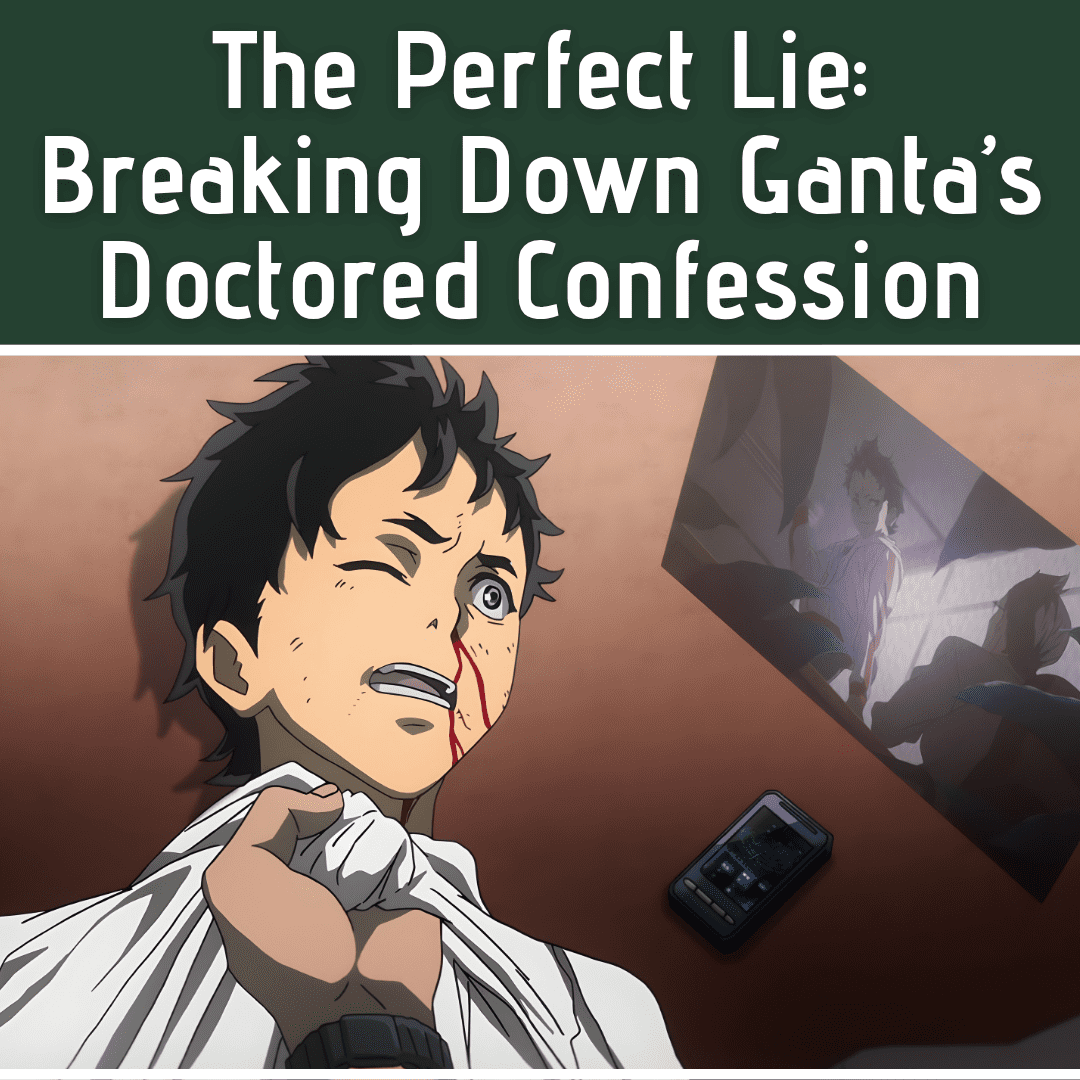
Some lies don’t just condemn a person, they rewrite public reality.
This confession is a masterclass in character assassination through fabrication. Let’s break down what makes it so effective as a piece of manipulated evidence in anime.
[Post read time: 7–12 min]
The false confidence

The opening lines establish a persona completely at odds with Ganta’s actual personality. The casual dismissal of consequences (“No one’s gonna buy a middle school kid being behind something this horrific“) plants the seed that he’s banking on leniency whilst simultaneously admitting guilt. His follow-up, “Besides, I’m just a baby. They couldn’t throw the book at me if they wanted to“, reinforces this calculated arrogance. It’s designed to infuriate anyone watching.
Deliberately inflammatory language

The confession escalates from cocky to genuinely disturbing. The crude sexual language about his female classmates isn’t just offensive. It paints Ganta as a misogynistic sadist. “Especially the stuck-up little whores. I couldn’t resist seeing for myself whether their cunts were as full of shit as their assholes” is designed to trigger visceral disgust. This is critical because it makes the crime feel personal and premeditated rather than random, which generates more public outrage.
The birthday party comparison

This might be the most psychologically damaging line. “I figured if I’m gonna do any, I might as well do them all. Kind of like passing out anime birthday party invitations” does two things: it makes him sound completely detached from the gravity of what happened, and the specific reference to anime birthday invitations ties directly back to his actual life (since the class was actively planning and preparing for an outing). It’s a detail that makes the confession feel authentic.
Withholding the weapon

The final bit about hiding the weapon is a tactical nightmare for his defence. “When I hear them say innocent, I’ll show you where it’s hidden. Call it my god-given right for being the cleverest guy in the room” makes him look manipulative and suggests he’s playing games with the legal system. It also implies he genuinely possesses knowledge only the killer would have.
What’s telling about the fabrication

The language itself betrays the forgery. This doesn’t sound like a 14-year-old boy, it sounds like how an adult thinks a disturbed teenager would speak after watching too many crime dramas. The vocabulary choices, the calculated provocations, the sexual aggression, it’s all designed to trigger maximum revulsion from a jury whilst sounding just plausible enough that people won’t question whether the confession was coerced or doctored.
The real purpose isn’t just to secure a conviction. It’s to make Ganta so publicly reviled that no one questions his guilt, no one advocates for him, and the real circumstances of the massacre stay buried. And it works perfectly.
The leaked confession’s true purpose

Tamaki’s dismissive line reveals the entire strategy behind the doctored tape. “Well, there’s no point in our filing for an appeal now, I suppose. No judge worth their salt would ever grant you one.” The confession wasn’t leaked to ensure Ganta’s conviction, that was already secured through other means. It was leaked to poison any possibility of appeal.
Killing the appeal before it starts

By flooding public consciousness with this vile, inflammatory “confession,” the conspirators accomplished something far more insidious than a guilty verdict: they made Ganta radioactive to the legal system itself. No judge wants to be seen as the person who gave a fair hearing to the “kid who bragged about carving up his classmates.” The public outcry alone would be career-ending.
Manufactured impossibility

Tamaki’s phrasing is telling: “No judge worth their salt would ever grant you one.” He’s not saying the appeal lacks legal merit, he’s saying no judge would dare touch it regardless of merit. The confession transforms Ganta’s case from a legal question into a political third rail. Even if procedural irregularities exist, even if evidence was mishandled, even if his original lawyer provided inadequate defence, none of it matters once the public believes they’ve heard him gleefully confess to mutilating his classmates.
The timing

The leak happens after conviction but before any appeal could be filed. It’s surgical timing. If it had come out during trial, the defence could have challenged its authenticity, demanded forensic analysis, questioned the chain of custody. But released after the verdict, it simply becomes “additional confirmation” of what the court already decided. It retrospectively validates the conviction whilst simultaneously contaminating any future legal proceedings.
The real function of Deadman Wonderland

This is why Ganta ends up in a privately run prison that doubles as a theme park. The entire system, the doctored confession, the impossible appeal, the spectacle of incarceration, is designed to bury him alive whilst making it look like justice. He’s not just imprisoned; he’s turned into entertainment, a monster on display, forever branded by words he never spoke.
![Power & Possession in Young and Pretty Husband [BL Review]](https://allanimemags.com/wp-content/uploads/2025/09/Young-and-Pretty-Husband-Manhwa-Webtoon-Review-AllAnimeMag.png)








Leave a Reply