
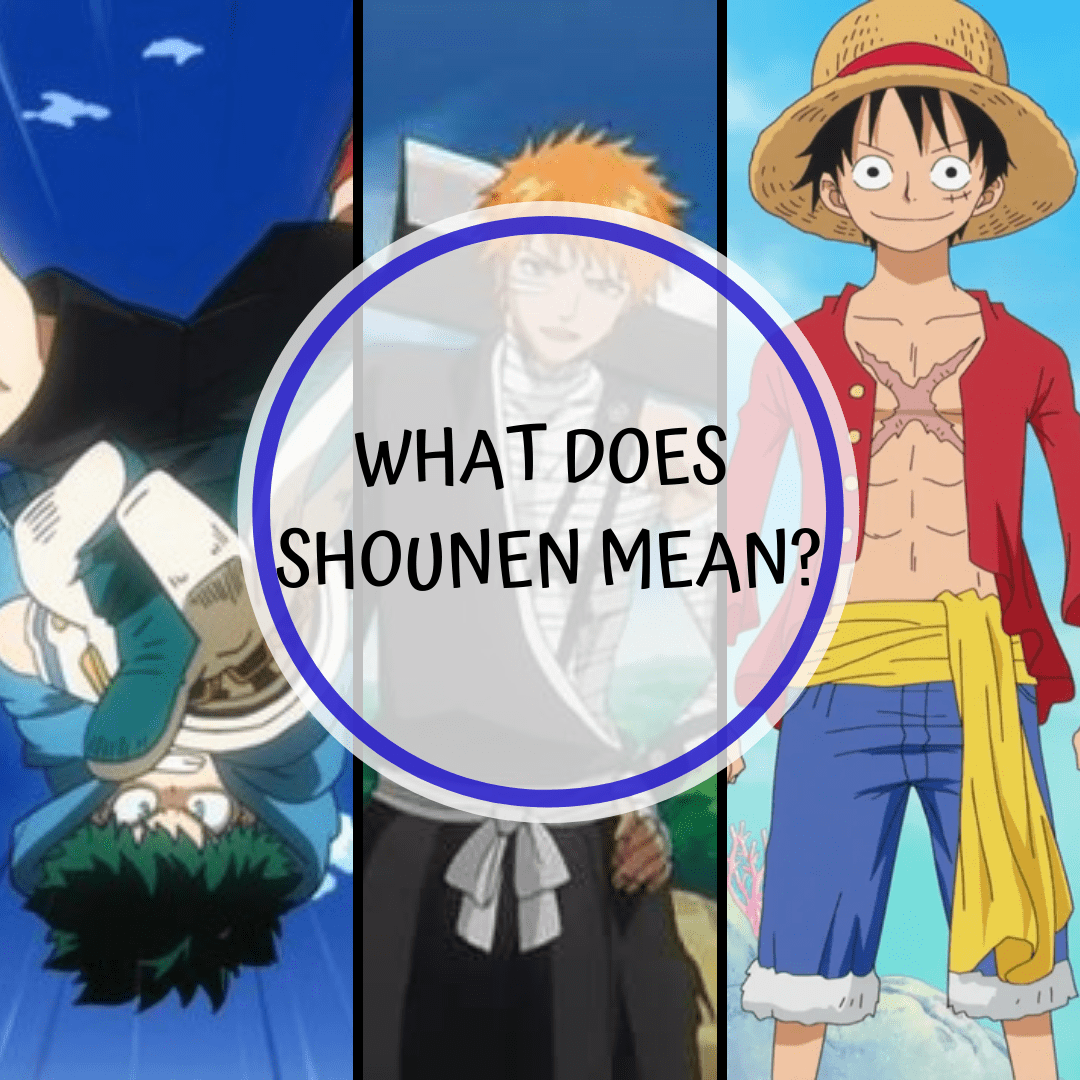
I briefly delved into what Shounen means in one of my recent posts. I thought it would be the perfect time to take a step back and really look at and define what shounen means in relation to anime and manga.
It also gave me a chance to recommend and mention a few more shounen titles I could not fit in the post, 10 Popular Shounen Anime.
Definition of Shounen
Shounen refers to a demographic category more than a specific genre. however for . If an anime is tagged with the shounen tag it means that the ideal target audience is male preteens and male teenagers between 10-years of age and 18-years of age. It is defined by the magazine or publication where the manga runs.

However, whilst shounen technically describes an audience demographic, it has developed recognisable patterns in storytelling, themes, and visual style that distinguish it from other categories like shoujo (aimed at girls), seinen (aimed at adult men), or josei (aimed at adult women).
Typical Content and Themes in Shounen

The vast majority of shounen anime and manga centre on action-driven narratives featuring young male protagonists on transformative journeys. Common themes include:
Personal growth and self-improvement: Protagonists start weak or inexperienced and train to become stronger.
Friendship and loyalty: Bonds between characters drive the story forward, often forming teams or squads.
Clear goals and ambitions: Heroes pursue concrete objectives: becoming the strongest, saving the world, or achieving recognition.
Good vs. evil conflicts: Moral lines are usually well-defined, with heroes facing off against villains.
Underdog narratives: Characters overcome adversity through determination and hard work rather than innate talent alone.
Shounen stories often balance intense fight sequences with comedic moments and lighter character interactions. The tone tends to be energetic, straightforward, and emotionally earnest, with dramatic declarations and bold displays of willpower.
Form, Structure, and Style

Shounen anime and manga follow predictable structural patterns that keep audiences engaged over long runs:
Arc-based storytelling: Multi-episode or multi-chapter story arcs build towards climactic battles or revelations.
Training sequences: Characters develop new techniques or abilities between major conflicts.
Tournament arcs: Organised competitions pit characters against progressively tougher opponents.
Power escalation: Threats become increasingly dangerous, forcing protagonists to grow stronger.
Ensemble casts: Supporting characters get individual focus episodes whilst maintaining relevance to the main plot.
Visually, shounen anime favours dynamic action sequences with bold colour palettes and dramatic camera angles. Character designs tend towards spiky hair, distinctive outfits, and exaggerated expressions. Fight choreography emphasises impact and spectacle, often incorporating special attacks with shouted technique names.
Why It Works: The Power of Aspiration

Shounen resonates because it taps into universal desires for self-improvement and belonging. Young audiences see themselves in protagonists who start off ordinary but achieve extraordinary things through effort and determination. The formula provides both escapist fantasy and aspirational messaging: you can overcome any obstacle if you never give up.
The genre’s emphasis on friendship and teamwork reinforces positive social values whilst its action-packed presentation maintains constant excitement. Shounen stories create communities of fans who debate power levels, predict plot developments, and celebrate character growth together.
Evolution of Shounen and Genre Conventions Over Time

1970s–1980s: Early shounen established core tropes with series like Dragon Ball and Fist of the North Star, which prioritised straightforward battles and clear power hierarchies.
1990s: The “Big Three” era emerged with One Piece, Naruto, and Bleach, cementing the long-running battle shounen format with hundreds of episodes and chapters.
2000s: Shounen began incorporating more complex narratives and morally ambiguous characters, as seen in Death Note and Fullmetal Alchemist.
2010s: Genre experimentation increased with titles like My Hero Academia modernising classic tropes and Attack on Titan introducing darker, more mature themes whilst maintaining shounen demographics.
Today: Shounen continues evolving with series like Jujutsu Kaisen, Demon Slayer, and Chainsaw Man blending traditional elements with contemporary sensibilities, whilst titles like Spy x Family prove shounen can work with non-action premises.
Subgenres and Hybrid Genres of Shounen

Shounen’s flexibility allows it to blend with virtually any genre, creating distinct subgenre combinations:
Battle Shounen: Pure action focus with tournament arcs and power progression (Dragon Ball, One Piece, Naruto).
Sports Shounen: Competitive sports replace combat, but maintain similar structures (Haikyu!!, Kuroko’s Basketball, Blue Lock).
Supernatural Shounen: Incorporates paranormal elements, special powers, or fantasy worlds (Bleach, Jujutsu Kaisen, Blue Exorcist).
Mecha Shounen: Giant robot battles with coming-of-age narratives (Gundam series, Neon Genesis Evangelion).
Adventure Shounen: Journey-focused narratives with exploration and discovery (One Piece, Hunter x Hunter).
Comedy Shounen: Prioritises humour whilst maintaining shounen energy (Gintama, Assassination Classroom).
Mystery/Psychological Shounen: Strategic thinking and mental battles over physical combat (Death Note, The Promised Neverland).
The “Shounen + X” formula explains why two shounen series can feel completely different despite sharing the same demographic label. A sports shounen like Haikyu!! and a supernatural shounen like Jujutsu Kaisen both feature young male protagonists striving towards goals and forming bonds with teammates, but their core genre elements create vastly different viewing experiences.
Common Misconceptions about Shounen

Shounen is only for boys: False. Whilst initially targeted at young males, shounen attracts diverse audiences across gender and age. Many women and girls enjoy shounen series, and the demographic label doesn’t restrict who can appreciate the content.
All shounen is mindless action: Not true. Whilst action is common, shounen includes psychological thrillers (Death Note), emotional dramas (Your Lie in April), and slice-of-life comedies (The Disastrous Life of Saiki K.).
Shounen always has simple plots: Increasingly inaccurate. Modern shounen often features complex narratives with intricate world-building, political intrigue, and morally grey characters.
Longer series are better: Length doesn’t equal quality. Whilst some classic shounen run for hundreds of episodes, tightly-paced shorter series can be equally impactful.
Shounen and action are the same thing: Shounen is a demographic category, action is a genre. Not all action anime is shounen, and not all shounen is action-focused.
Understanding these distinctions helps viewers appreciate shounen’s actual breadth rather than dismissing it based on stereotypes or outdated assumptions.
In Summary

Shounen represents one of anime and manga’s most influential demographics, shaping countless series that have become cultural phenomena. Its emphasis on personal growth, friendship, and determination continues resonating with audiences worldwide, whilst its willingness to evolve and experiment ensures its ongoing relevance.
Whether you’re drawn to epic battles, underdog narratives, or stories about never giving up on your dreams, shounen offers something for everyone, regardless of the demographic label originally attached to it.
Examples of Shounen Series and Titles
To showcase shounen’s range, here are notable examples across different eras and styles:
Anime
Classic Shounen

- Fullmetal Alchemist: Brotherhood
- Rurouni Kenshin
- Yu-Gi-Oh!
Modern Shounen

- Demon Slayer: Kimetsu no Yaiba
- My Hero Academia
- Jujutsu Kaisen
Genre-Bending Shounen

- The Promised Neverland
- Dr. Stone
- Chainsaw Man
Manga
Long-Running Classics

- One Piece – Pirate adventure spanning decades of publication
- Hunter x Hunter – Complex power systems and strategic battles
- Naruto – Ninja coming-of-age with themes of acceptance
Newer Standouts

- Black Clover – Magic-focused underdog story
- Blue Lock – Revolutionary take on sports manga
- Kaiju No. 8 – Workplace meets monster battles
Completed Series

- The Seven Deadly Sins – Fantasy adventure with knights and magic
- Assassination Classroom – Teachers and students in unusual circumstances
- Soul Eater – Style-focused supernatural action
What shounen series got you into anime or manga? Do you prefer classic long-runners or tighter modern series? Are there any shounen that surprised you by defying expectations?







Leave a Reply