
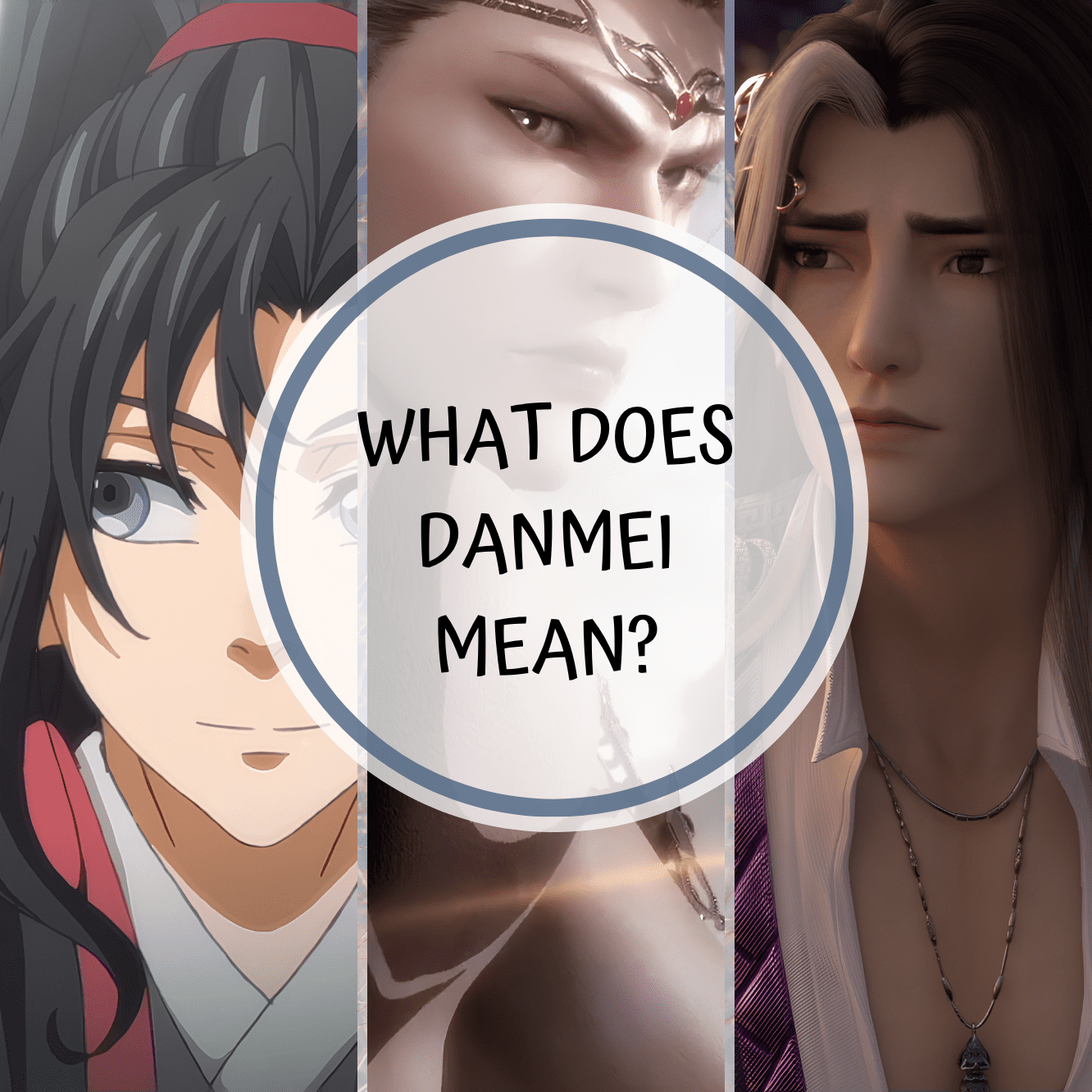
It took way too long for me to get exposed to the word Danmei. Especially since I read and watch so much of the overall genre. In the first conversation I had, where the lady across the table from me said Danmei, I paused, and with the context of our conversation, the term clicked, yet when I got home, I double-checked, “What is Danmei?” I dived deep, drafted this and let it simmer at the back of my mind for a while.
Definition of Danmei
Danmei is the Chinese form of Boys’ Love (BL): a genre of fiction and related media that centres on romantic (and sometimes erotic) relationships between men. It sits alongside Japanese yaoi and shounen ai under the wider BL umbrella, but danmei is distinctly Chinese in origin, history, and flavour.

The term itself translates roughly as ‘addicted to beauty’, which fits the genre’s reputation for emotionally intense, aestheticised storytelling. At its core, danmei is gay romance written by women, for women, often idealised, emotional, and unapologetically dramatic.
As a genre label, danmei covers:
- Chinese-origin BL fiction (novels, manhua, audio dramas, donghua, live-action adaptations)
- Works published on platforms like JJWXC, Haitang, and Changpei
- Both explicit and non-explicit male–male romance narratives
It is not a tone or a subgenre; danmei is a regional category, the same way yaoi refers to Japanese BL rather than a particular style of storytelling.
Whilst the romantic relationship remains important, these stories frequently expand into broader themes: friendship dynamics, societal structures, family complexities, and individual character growth.
Where Danmei Comes From
Danmei emerged in the late 1990s when Chinese fans of Japanese BL and Western slash fiction began producing their own original work online. What started as amateur web fiction on small forums gradually developed into a recognised genre with its own terminology, tropes, and enormous readership.
By the 2000s, danmei had migrated from niche forums to major web-novel platforms. The 2010s saw the genre shift from an underground online community into a commercially significant transmedia phenomenon, with hit novels spawning donghua, audio dramas, manhua, and live-action C-dramas.
The genre’s international breakthrough accelerated after the donghua adaptation of Mo Xiang Tong Xiu’s Grandmaster of Demonic Cultivation (Mo Dao Zu Shi) gained a global following, followed closely by The Untamed (its live-action counterpart) and the Heaven Official’s Blessing donghua. Western publishers began licensing danmei novels in English from 2021 onwards. Seven Seas Entertainment was among the first, starting with three Mo Xiang Tong Xiu titles. Licensing activity has continued steadily since, with new titles announced through 2026 and into 2027.
Danmei Across Media
Danmei is primarily a novel genre, but it has a well-established adaptation pipeline.

- Donghua (Chinese animation): Many beloved danmei novels have been adapted into animated series, bringing cultivation worlds, gods, demons, and slow-burn romance to life.
- Web novels & print novels: This is the heart of danmei. Most stories are first serialised online, often running 50–100+ chapters, before being edited and published in print.
- Live-action C-dramas: Major danmei novels are regularly adapted into live-action series, usually with the romance reframed as a close friendship or ‘bromance’ for mainland Chinese broadcast. The emotional subtext tends to remain legible to audiences familiar with the source material.
- Audio dramas: Audio adaptations are common and often retain more romantic content than visual adaptations, as they face different regulatory pressures.
- Comics (manhua/manhwa/manga): Comic adaptations of popular danmei novels exist on platforms like Bilibili Comics, ranging from officially licensed versions to fan-produced work.
Common Themes and Tropes of Danmei
Danmei is genre-flexible, but certain elements appear consistently across popular works.

Setting types: Historical fantasy is the dominant mode. Xianxia settings (cultivation, immortals, sects, Chinese mythology) and wuxia settings (martial arts, political intrigue, wandering heroes) are both common. Modern settings – office romance, university life, the entertainment industry – are also popular, as are post-apocalyptic and sci-fi frameworks.
Plot structures: Transmigration (a character waking up in a different body or world, often inside a novel or game), rebirth (returning to an earlier point in life with foreknowledge), and system novels (protagonists guided by a game-like interface) are recurring scaffolds. Dog-blood drama – betrayal, revenge, tragic backstories, elaborate schemes – is a recognised and beloved mode.
Romance dynamics: Slow-burn is the dominant pacing. Mutual pining, misunderstandings, and dramatic reunions are standard. The gong/shou dynamic (top/bottom, often labelled 1/0 in fandom shorthand) describes the couple’s dynamic, though ‘switch’ couples and works that avoid fixed roles entirely are also well represented. ‘Wife-chasing’ or ‘husband-chasing’ arcs – where one party must earn back the other’s affection after mistreating them – are a fan favourite.
Emotional register: Loyalty, found family, sacrifice, and unconditional love feature heavily. Many popular danmei works balance angst with humour and warmth; the genre is not uniformly dark.
Fantasy elements: Xianxia (immortal heroes with magic and Chinese folklore), wuxia (martial heroes with supernatural fighting abilities), cultivation systems, transmigration into novels or games, and ‘unlimited flow’ survival scenarios.
How Danmei has changed over time

Late 1990s – early 2000s: Danmei began as amateur web fiction on small Chinese forums, heavily inspired by Japanese BL and Western fandom. In this early, unregulated internet space, explicit content was common, and the community operated entirely underground.
2000s – early 2014: The genre migrated to major, structured web-novel platforms like JJWXC. While it developed its own sophisticated tropes and enormous readership, it also caught the attention of regulatory bodies.
2014 –2020s: The Chinese government’s “Clean Up the Internet” campaigns intensified. Platforms implemented aggressive self-censorship, including JJWXC’s notorious “no kissing/description below the neck” rules. Despite these restrictions on prose, the late 2010s brought a mainstream boom through sanitised visual adaptations.
2021: September 2021 marked a major escalation with the National Radio and Television Administration’s (NRTA) crackdown under Operation Qinglang. Regulators targeted live-action dangai (danmei-adapted C-dramas), labelling them part of unhealthy “traffic/idol culture” and “abnormal aesthetics.” This effectively halted most big-budget mainland productions.
2022 – 2026+: With the mainland television pipeline largely closed, the industry adapted creatively. Productions increasingly partnered with platforms in Taiwan, Thailand, and elsewhere for less-restricted releases. Meanwhile, the international English print market exploded. Publishers like Seven Seas Entertainment, Rosmei, Via Lactea, and others have continued licensing titles steadily. On domestic platforms, danmei shifted strongly toward emotional intimacy, slow-burn romance, and subtext rather than explicit content.
The genre has also diversified thematically. While xianxia and historical fantasy remain dominant, psychological thrillers, omegaverse, mystery/crime, and various hybrid works have gained prominence.
Subgenres and Hybrid Genres

Danmei isn’t one-size-fits-all; it hybridises with other genres for fresh takes:
- Xianxia/Wuxia: Immortal heroes, martial arts, and cultivation.
- Unlimited Flow: Survival games, horror, and puzzles.
- Omegaverse: Alpha/Omega dynamics with mpreg.
- Post-Apocalyptic/Dystopian: Survival amid ruins.
- Comedy/Fluff: Light-hearted romps. Hybrids like historical + transmigration (SVSSS) or modern + crime (Silent Reading) keep things dynamic.
Danmei encompasses numerous subgenres and hybrid categories:
Setting-based:
- Historical/period dramas with political intrigue
- Modern contemporary settings (office romance, university life, entertainment industry)
- Xianxia (immortal cultivation fantasy)
- Wuxia (martial arts)
- Post-apocalyptic and dystopian
- Omegaverse (alpha/beta/omega dynamics)
Plot-driven:
- ‘Dog blood’ dramas (soap opera-style with revenge, betrayal, schemes)
- Mystery and crime (detectives, investigations, murder mysteries)
- ‘Unlimited flow’ (survival games, horror, puzzles)
- Transmigration and system novels (characters transported to other worlds or into books)
- Supernatural and horror
Tone and intensity:
- Fluff and low-angst stories
- ‘Chasing crematorium’ (grovelling/redemption arcs)
- Dark psychological works
- Comedic and lighthearted
Relationship dynamics:
- Master-disciple
- Arranged marriage
- Enemies to lovers
- Childhood friends to lovers
- Human-nonhuman relationships
- Age gap romances
Why Danmei Is So Popular

Danmei’s appeal lies in romantic escapism. For many readers—particularly straight women—it offers love stories free from real-world gender expectations. The fantasy and historical settings heighten the sense of destiny and drama, making emotions feel larger than life.
Its success is also fuelled by fandom culture. Danmei thrives online, where readers comment chapter-by-chapter, share fan art, debate tropes, and build shared slang (like gong/shou, transmigration, cultivation levels, and more). This interactivity keeps fans deeply invested and helps danmei spread globally.
Today, danmei is widely recognised as a major cultural and economic force, with hit adaptations attracting massive domestic and international audiences and contributing to China’s pop-culture influence abroad.
Despite censorship restrictions, danmei has thrived internationally. Publishers like Seven Seas, Rosmei, Via Lactea, and Hai Tang Books have brought official English translations to global markets, introducing danmei to Western audiences. The genre has expanded from web novels into multiple media formats: manhua (comics), donghua (animation), audio dramas, audiobooks, and live-action adaptations.
Censorship in adaptations varies by format and distribution method. C-dramas typically tone down romantic elements to ‘bromance’, avoiding explicit kiss scenes or love confessions on mainland Chinese platforms. However, recent co-productions with Taiwan, Thailand, or Japan have found ways to preserve romantic elements by airing outside mainland China. Audio dramas on platforms like Missevan maintain more romantic content, whilst manhua adaptations navigate censorship through implication and symbolism.
The genre has also evolved thematically. Whilst historical fantasy and cultivation novels remain popular, there’s been growth in modern settings, psychological thrillers, omegaverse stories, and genre-blending works that defy easy categorisation.
Common Misconceptions About Danmei

Danmei is not the same as yaoi. Both are male–male romance genres, but danmei refers specifically to Chinese-origin BL. Yaoi describes a Japanese genre with its own separate publishing history and conventions. The terms are not interchangeable.
Danmei is not just explicit fiction. Pre-2021 danmei did include explicit content, but the genre has always prioritised plot, character development, and emotional depth. Since 2021, newly published Chinese danmei cannot include explicit sex scenes at all. The focus has shifted firmly toward emotional intimacy.
Danmei adaptations are not ruined by censorship. Works like The Untamed became internationally beloved despite – or in some cases partly because of – the creative constraints placed on the romance. The emotional connection between leads often reads clearly through performance and subtext.
Danmei is not exclusively for women. The majority of well-known authors and readers identify as women, but the genre’s readership and creator base spans all genders.
All danmei does not follow strict gong/shou roles. Many popular works feature switch couples or deprioritise physical dynamics entirely in favour of emotional ones.
Danmei is not the same as Chinese LGBTQ+ literary fiction. It is a romance genre. It does not claim to represent the reality of gay lives in China, and reading it as sociological documentary rather than genre fiction misrepresents what it is.
How danmei fits alongside yaoi, shounen ai, and BL

If you’ve read my posts on What Does Yaoi Mean and Boys’ Love, think of danmei as a regional expression of BL, shaped by Chinese storytelling traditions and publishing systems.
- Yaoi and shounen ai describe Japanese genre conventions and historical publishing labels.
- Boys’ Love functions as a broad umbrella across countries and media.
- Danmei specifically refers to Chinese-origin BL, with its own tropes, pacing, and adaptation pathways.
They overlap in audience and themes, but they are not interchangeable terms.
Examples Across Formats
Danmei starts as novels but explodes into various adaptations, each bringing its unique spin. Here are some standout examples.
Grandmaster of Demonic Cultivation (Mo Dao Zu Shi) – The donghua adaptation of Mo Xiang Tong Xiu’s novel. A carefree, morally flexible protagonist is paired with a disciplined martial artist across multiple lifetimes of mystery-solving and political turmoil. Often cited as the breakout title that introduced international audiences to danmei.
The Scum Villain’s Self-Saving System (SVSSS) – A transmigration parody in which a reader wakes up as a villain in the novel he criticised online, and must now survive a plot he knows is designed to destroy him. Comedic and meta
Word of Honor (Tian Ya Ke) – Based on Priest’s Faraway Wanderers. Two martial artists with complicated pasts and secret identities navigate a world of hidden sects and political manoeuvring. Widely praised for its chemistry and wuxia atmosphere.
A closing thought
Danmei is one of those genres that seems narrow from the outside and turns out to be enormous once you are inside it. If you came in expecting something like Japanese yaoi but with Chinese characters, you will probably be surprised by how much of a danmei novel is taken up by cultivation systems, political court drama, survival mechanics, or post-apocalyptic world-building. The romance is there – it is always there – but it is woven into something larger.
If you are just starting out, Grandmaster of Demonic Cultivation is the most accessible entry point, whether you begin with the donghua, the live-action, or the novel itself. If you want to go straight to prose and prefer something lighter in tone, The Scum Villain’s Self-Saving System is deliberately comedic and shorter than most danmei epics.
What are your favourite danmei works, and which format do you prefer, the novels, the donghua, or the C-dramas? Drop them in the comments.






Leave a Reply