
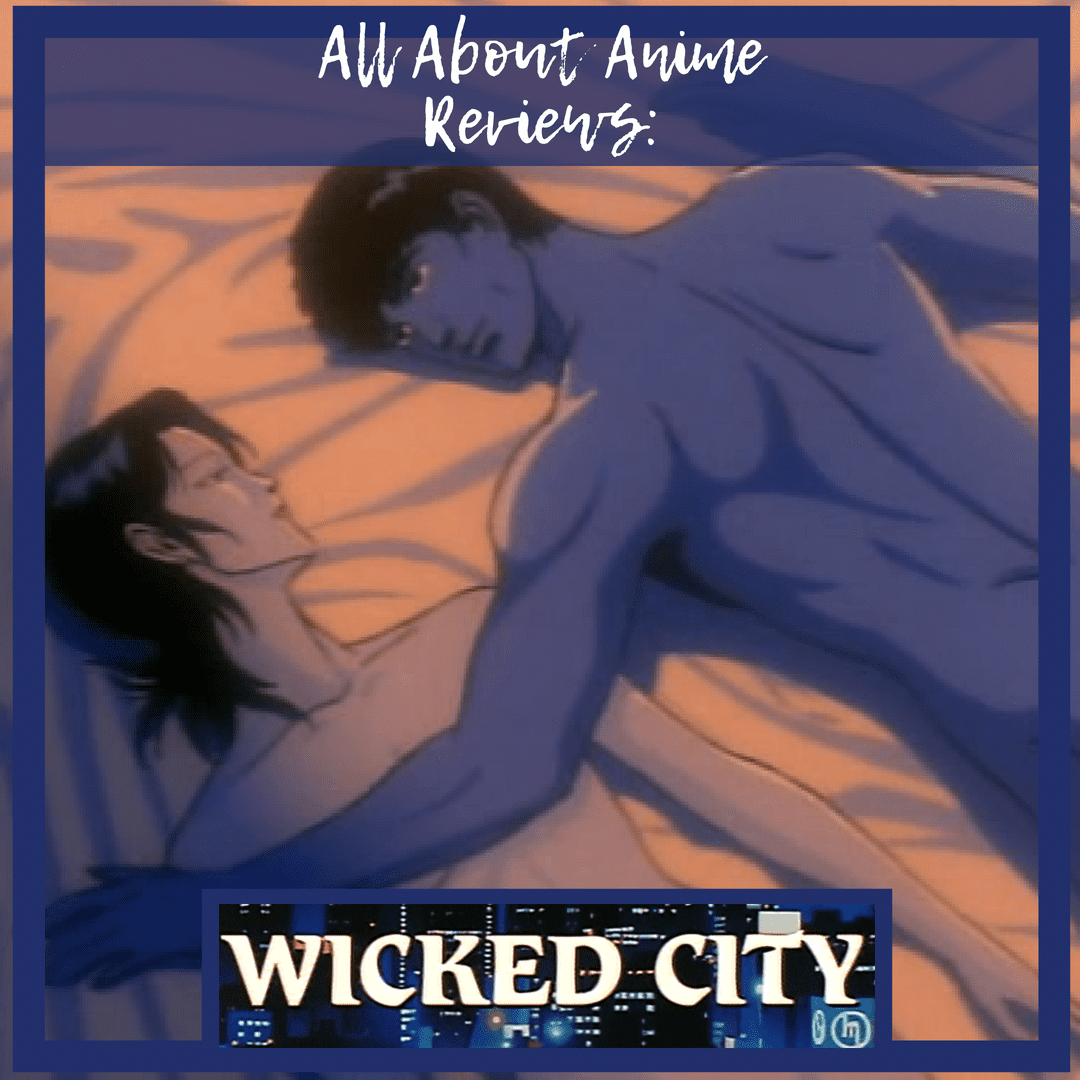
I did not expect this. Man oh man oh man, I am so glad that I watched this away from home and where no one else could hear what was going on. I went into Wicked City completely blind, and within the first few minutes, found myself blushing as moans filled the room whilst explicit scenes played out on screen. I am so glad le boyfriend did not have an open mic whilst playing Fortnite. I am obviously a sheltered or, rather, prudish person because I blushed and cringed my way through significant portions of this film, but I actually enjoyed the overall experience.
The R+ rating exists for a reason, and I learnt that the hard way.
About Wicked City
- Full Genre list: Action, Adventure, Demons, Drama, Horror, Super Power
- Key Themes: Peace treaties, duty vs desire, coexistence between worlds, sacrifice
- Type: Film
- Status: Completed
- Duration to watch: Approximately 1 hour (82 minutes)
- Age restriction: R+ (Nudity and explicit sexual content)
- Trigger warnings: Graphic sexual content, nudity, body horror, violence, attempted sexual assault
- Release date: April 1987
- Animation Studio: Madhouse
- English Dub: Yes
- Source: Novel “Black Guard” by Hideyuki Kikuchi
- Kanji: 妖獣都市
- Alternative Title: Yōjū Toshi, Supernatural Beast City
- Average rating across anime platforms: 6.4/10
- Where can it be streamed: Limited availability, check regional streaming services
- The film’s official website: N/A (1987 release)
Black Guards defend the boundary between two parallel worlds: Earth and the Black World. For centuries, a peace treaty has maintained relative harmony between the dimensions, but the terms now require renegotiation. A militant faction opposes the renewal, threatening the fragile peace. Two elite agents are charged with protecting the diplomat during treaty negotiations whilst navigating betrayals, supernatural threats, and an unexpected connection that may have been orchestrated from the start.
My Thoughts on Wicked City:
The story unfolds over a single night, which gives it both tension and momentum. The mission is simple: protect Giuseppe Mayart, the elderly diplomat crucial to the treaty renewal. But as the threats escalate, the film leans into supernatural horror and erotic excess.

The pacing is brisk, sometimes too brisk. Plot points appear conveniently rather than organically, and the militant faction never develops beyond being a narrative obstacle. When Mayart reveals that he orchestrated events to make Taki and Makie fall in love, it undercuts any genuine emotion their bond might have carried. His inexplicable resurrection scene—complete with unnecessary nudity and heavy symbolism—felt more awkward than profound.
Characters and Performances
The English dub performances varied considerably. Taki comes across as a competent agent and established playboy, but his character depth remains surface-level throughout. His flirtatiousness defines him more than any substantial personality traits or meaningful character development.
Makie stands out as the most compelling character in the limited cast. She demonstrates dedication to her duty, willingness to sacrifice herself for the mission, and genuine competence in combat situations. Her dual nature as both beautiful and dangerous gives her more dimension than the other characters manage. When she technically sacrifices her life to protect both Taki and their charge, it felt earned based on her established character.
Mayart Giuseppe frustrated me from the moment he opened his mouth. His voice immediately reminded me of Master Roshi from Dragon Ball, even though the voice actors differ. The perverted characterisation felt tired and unnecessary, and his role in manipulating the central relationship undermined the emotional stakes the film was attempting to build.
Writing and dialogue
The dialogue sits firmly in the camp of 1980s anime conventions, complete with dramatic declarations and expository conversations that spell out subtext. The script trusts the visuals more than the audience, often having characters explain their feelings or motivations rather than allowing actions to speak.
The romantic development between Taki and Makie presents the film’s most significant writing weakness. There was initial attraction, certainly, and the flirtation felt natural given Taki’s established personality and Makie’s experience handling such attention. However, the sudden declaration of love felt unearned. I understood Taki wanting to save Makie after learning she survived her sacrifice, but the depth of emotion the film insisted they felt didn’t match what I saw on screen.
The revelation that Mayart arranged their feelings deliberately could have been an interesting commentary on manufactured connections, but instead, it just muddied waters that were already unclear. I appreciated that Taki admits he’s uncertain about his feelings after learning the truth. That moment of honesty felt more genuine than the declarations of love that preceded it.
Technical elements
The animation quality reflects Madhouse’s capabilities in the 1980s. The film makes striking use of reds and blues throughout, establishing tone and atmosphere effectively. The colour palette shifts to match the emotional tenor of scenes, with cool blues during quieter moments and aggressive reds during action and horror sequences.
The use of shadows and angles demonstrates thoughtful cinematography. The film knows how to frame its horror elements, using partial reveals and silhouettes to build tension before showing the full extent of supernatural transformations. Body horror sequences are genuinely unsettling, with detailed transformation animations that showcase the technical skill involved.
The sound design supports the horror atmosphere effectively, though the explicit sexual content relies heavily on audio to convey what the animation suggests visually. This is where my personal discomfort peaked, as I was not prepared for the graphic nature of these sequences or the volume of the audio cues.
Direction and tone
The film knows exactly what it wants to be: a dark, violent, sexually explicit supernatural thriller. Director Yoshiaki Kawajiri doesn’t pull punches or attempt to make the content more palatable for wider audiences. This single-minded commitment to its mature rating works aesthetically, creating a consistent tone of danger and unease.
However, the tonal consistency also means the film never modulates its intensity. It maintains a heightened level of threat and sexuality throughout, which becomes somewhat exhausting rather than engaging. The lack of breathing room between explicit content and violent confrontations means emotional beats don’t land with the impact they might have with more varied pacing.
Themes and substance
Beneath the explicit content, the film explores themes of coexistence between fundamentally different beings, the cost of maintaining peace, and questions about manufactured versus genuine connection. The parallel worlds serve as a metaphor for any relationship between opposing groups attempting to find common ground despite militant factions on both sides opposing cooperation.
The manipulation of Taki and Makie’s relationship raises questions about authenticity and agency. If their feelings were orchestrated, do they still matter? Can something manufactured become real through lived experience? The film touches on these ideas but doesn’t explore them with the depth they deserve, too distracted by its next action sequence or explicit scene to sit with the implications.
Strengths and weaknesses
The film’s primary strength lies in its visual storytelling and atmospheric use of colour and shadow. The animation quality holds up remarkably well, particularly in sequences involving supernatural transformations and body horror. Makie’s character stands as the most well-realised element, giving the film emotional grounding when it needs it most.
The weaknesses centre on plot convenience and underdeveloped narrative elements. The militant faction never becomes believable as an organised threat. Mayart’s powers function as a deus ex machina rather than established abilities with clear limitations. The romantic development feels rushed and undermined by its own reveal as manufactured.
The explicit sexual content will divide audiences sharply. It’s integral to the film’s identity and the supernatural horror elements, but it’s also extensive enough that viewers uncomfortable with graphic depictions should avoid the film entirely. I found myself cringing through several sequences, not because they were poorly executed, but because they were far more explicit than I anticipated.
Target audience
This film suits viewers who enjoy dark supernatural horror with significant explicit content and don’t mind narrative convenience in the service of atmosphere. Fans of 1980s anime horror and Madhouse’s grittier output will find familiar territory here. The body horror elements and sexual content make this strictly for mature audiences comfortable with R+ rated material.
Viewers seeking well-developed romance, logical plot progression, or restrained content should look elsewhere. This is not a film that holds back or apologises for its excesses.
Favourite character
Most disliked character: Mayart Giuseppe
Mayart Giuseppe spoiled significant portions of the film for me. The moment he opened his mouth, all I could hear was Master Roshi from Dragon Ball, even though the voice actors are different. The similarity extended beyond just vocal tone – his perverted characterisation felt like a direct echo of Master Roshi’s tired antics. That association completely pulled me out of the film whenever he appeared on screen, transforming what should have been a mysterious and powerful diplomat into an irritating caricature I’d already seen done better elsewhere.
Most liked character: Makie

Makie emerges as the standout character despite limited competition. Out of the restricted cast, she demonstrates actual depth and development. Her dedication to duty, combat competence, and willingness to sacrifice herself for the mission made her feel like a complete character rather than a plot device. She handles Taki’s flirtation with the ease of someone accustomed to such attention whilst maintaining focus on her responsibilities. When she puts herself in danger to protect others, it stems from established character traits rather than plot necessity.
Would I recommend it?
Yes, if:
- You appreciate 1980s horror anime and Madhouse’s darker catalogue
- You’re comfortable with extensive explicit sexual content and graphic violence
- You prioritise atmosphere and visual storytelling over plot logic
- You enjoy supernatural horror with body horror elements
- You can overlook narrative convenience for aesthetic experience
No, if:
- You’re uncomfortable with graphic sexual content or nudity
- You prefer tightly plotted narratives without convenient power escalations
- You’re seeking well-developed romance or character relationships
- You’re bothered by R+ rated material or need content warnings strictly observed
- You prefer modern animation standards and storytelling approaches
Final thoughts
I survived Wicked City with my dignity somewhat intact, despite blushing furiously through multiple sequences. The film delivered an experience I didn’t anticipate, which was both the point and the problem. The explicit content dominates discussions of the film, but beneath that lies a competent horror atmosphere, striking visual design, and at least one well-realised character in Makie.
The plot conveniences and manufactured relationship development prevent this from reaching the heights it might have achieved with tighter writing. However, as a time capsule of 1980s horror anime pushing boundaries of explicit content, it succeeds at exactly what it sets out to do. I can honestly say a lot happens in one night, both on screen and in my personal comfort zone.
Would I watch it again? Probably not. Am I glad I watched it once? Yes, with significant caveats about being properly warned regarding content.
My Rating: 6/10
A visually striking but narratively convenient horror film that delivers on atmosphere whilst stumbling on plot and character development.







Leave a Reply