

Reaching my 1 000th post on All About Anime and Manga felt like a milestone worth celebrating. To mark it, I wrote 1 000 and More: The Series That Never Wanted to Stop, a post looking at anime franchises that simply refused to end.
If you missed that one, it acts as the hub for this entire topic. It looks at the idea of extremely long-running shows and how certain franchises managed to cross an almost unbelievable episode count.
In that milestone post I promised something else as well:
“Future posts will dive deeper into the specific series listed below. I didn’t want to overload this milestone post with too much detail all at once.”
This post is part of that follow-up.
Here we are looking specifically at anime with at least 1000 episodes. Some of these series reached the mark through daily short episodes. Others did it through decades of weekly broadcasts. Either way, the result is the same: enormous episode counts that almost feel impossible by modern standards.
Japan has been producing television animation since the 1960s, and the broadcasting environment there made these long runs possible. Children’s series, family comedies, educational shorts, and adventure sagas all found stable broadcast slots and kept accumulating episodes year after year.
Some built their totals slowly through five-minute daily broadcasts. Others did it through massive ongoing adventures with loyal audiences returning every week.
The result is the list below, a collection of the most famous and fascinating anime with 1000 episodes ever produced.
Anime With Over 1000 Episodes (Quick Navigation List)
These are all the series and franchises covered in this post. Click any title to jump straight to that entry.
- Sazae-san
- Nintama Rantarō
- Ojarumaru
- Oyako Club
- Doraemon (1979)
- Anpanman
- Kirin no Monoshiri Yakata
- Monoshiri Daigaku
- Kirin Ashita no Calendar
- Manga Nippon Mukashibanashi
- Hoka Hoka Kazoku
- Chibi Maruko-chan
- Doraemon (2005)
- Pokémon
- Crayon Shin-chan
- Detective Conan
- One Piece
- Sekai Monoshiri Ryokō
Some anime franchises like Pretty Cure, Yu-Gi-Oh!, Gundam, and Naruto also exceed 1000 episodes when counting all connected series.
The anime that refused to end

Most television series struggle to survive beyond a few seasons.
Anime is different.
Some shows quietly kept airing for decades until they passed a milestone that almost sounds impossible: 1000 episodes.
A few went even further. Some built their enormous episode counts through adventure stories that kept audiences returning year after year. Series like Pokemon, Detective Conan, and One Piece became global phenomena while steadily climbing toward the same incredible milestone.
The result is a fascinating group of long-running TV anime that simply never stopped airing.
The longest-running anime series ever

Japanese television animation has produced some of the longest-running television programmes in the world. While many modern anime are released in seasonal formats, older shows often aired weekly or daily for decades. Over time, this allowed certain series to accumulate enormous episode counts.
As a result, multiple anime have crossed the 1000-episode milestone, something almost unheard of in global television. Some of these shows are family comedies and children’s programmes. Others are massive adventure stories that continued building audiences across generations.
This article explores anime with 1000 episodes and explains how these series became some of the longest-running anime ever produced.
Quick notes

- Sazae-san holds the Guinness World Record for the longest-running animated television series in the world. Episode counts for Sazae-san vary depending on whether individual segments or full half-hour broadcasts are being tallied; figures range from roughly 2,800+ broadcast episodes to 7,700+ individual segments. Either way, the Guinness World Record stands.
- Nintama Rantaro and Ojarumaru dominate short-format anime longevity.
- Doraemon, Anpanman, and Chibi Maruko-chan are iconic children’s anime in Japan.
- Detective Conan, Pokémon, and One Piece continue driving long-form story arcs.
- Several series from the 1970s, particularly the Kirin educational shorts, are largely lost and no longer exist in any complete archive.
Anime episode count facts

- Longest-running anime: Sazae-san (7,700+ episodes by segment count)
- Longest-running adventure anime: One Piece
- Most famous long-running anime worldwide: Pokémon
- Longest-running mystery anime: Detective Conan
- Most anime reaching 1000 episodes started before 2000
- Finishing a 1000-episode anime is a serious commitment, but many fans have done it.
18 Anime With 1000 Episodes
Sazae-san

Sazae-san is a wholesome slice-of-life series centred on Sazae Fuguta and her extended family. It follows the Isono household through the small events of everyday life, reflecting Japanese domestic values and social customs with gentle humour that has kept a steady Sunday evening audience for over five decades. Sazae-san holds the Guinness World Record for the longest-running animated television series in the world.
More Sazae-san info
Premiere: October 5, 1969
Status: Currently airing
Episodes: 7,700+
Runtime: 20–26 minutes
Where to watch:
- Fuji TV (Japan) – Sundays 6:30 PM JST
- FOD (Fuji TV On Demand, Japan only)
- Not officially licensed for international streaming
Suggested alternatives:
- Chibi Maruko-chan
- My Neighbours the Yamadas (Studio Ghibli)
- Tonari no Seki-kun
Nintama Rantarō
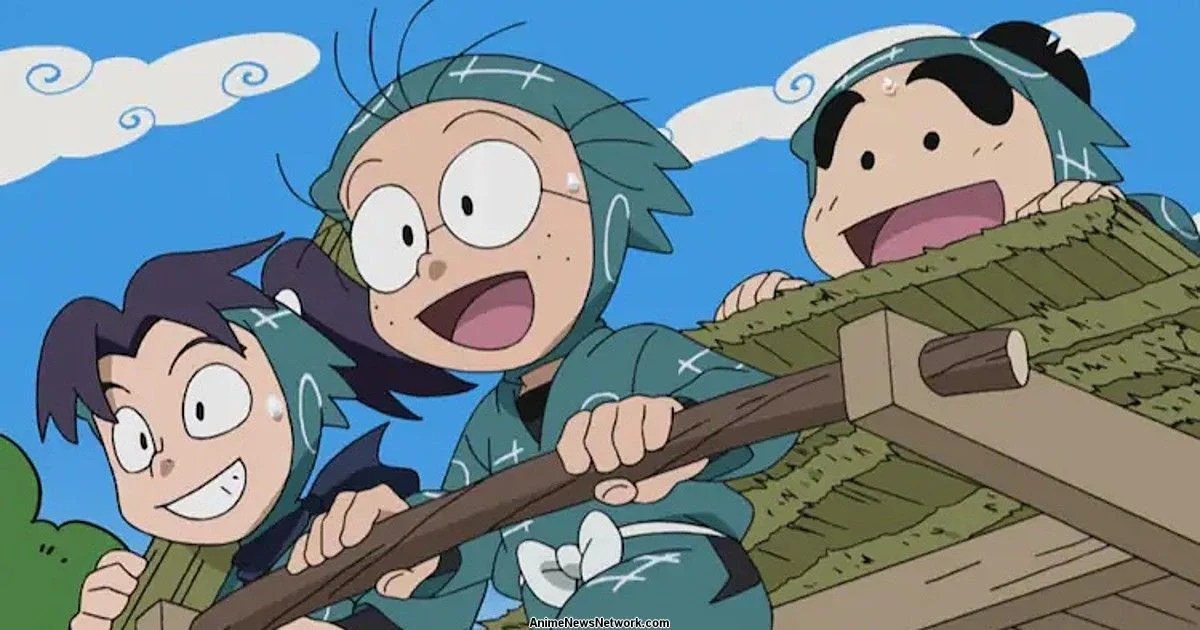
Three young students at a feudal-era ninja academy are largely terrible at being ninjas, which is the entire point and most of the comedy. Nintama Rantarō is built around short, punchy episodes of slapstick and school-life chaos, aimed squarely at younger audiences but with enough dry wit to hold anyone’s attention.
More Nintama Rantarō info
Premiere: April 10, 1993
Status: Currently airing
Episodes: 2,300+
Runtime: 10 minutes
Where to watch:
- NHK Educational TV (Japan)
- No official streams outside Japan; limited fansubs exist
Suggested alternatives:
- Naruto SD: Rock Lee and His Ninja Pals
- Doraemon
- Crayon Shin-chan
Ojarumaru

A young Heian-era prince accidentally ends up in modern Japan and has to make sense of contemporary life with the help of a local family. Ojarumaru mines the fish-out-of-water setup for gentle comedy across short episodes, and has been doing so continuously since 1998.
More Ojarumaru info
Premiere: December 1, 1998
Status: Currently airing
Episodes: 1,917
Runtime: 7 minutes
Where to watch:
- NHK (Japan)
- No official international licence
Suggested alternatives:
- Doraemon
- Chibi Maruko-chan
- Sazae-san
Oyako Club

Oyako Club is a long-running domestic comedy aimed at younger viewers, following a family through the small dramas of daily life. It ran for a decade across short daily segments, building a quiet but loyal audience before wrapping up in 1992.
More Oyako Club info
Premiere: October 5, 1982
Status: Completed
Episodes: 1,818
Runtime: ~5 minutes
Where to watch:
- No official streams available
- Occasional clips on Japanese video archives
Suggested alternatives:
- Sazae-san
- Chibi Maruko-chan
- Hoka Hoka Kazoku
Doraemon (1979)

The original run of the series about a robotic cat from the future who helps a struggling boy named Nobita using an endless supply of futuristic gadgets. Doraemon (1979) ran for over two decades and established the character as one of the most recognisable figures in Japanese popular culture. The series was created by the manga duo Fujiko F. Fujio, first published in 1969, and the 1979 anime became the defining adaptation of that era.
More Doraemon (1979) info
Premiere: April 2, 1979
Status: Completed
Episodes: 1,787
Runtime: 25 minutes
Where to watch:
- No complete official international stream for the 1979 series
- Select clips and episodes on YouTube (varies by region)
Suggested alternatives:
- Doraemon (2005 reboot)
- Crayon Shin-chan
- Ojarumaru
Sore Ike! Anpanman

A superhero whose head is made of bread fights off villains while helping those in need. Anpanman is a fixture of early Japanese childhood and has been airing since 1988, with merchandise and film releases that have made it one of the most commercially successful anime properties in Japan.
More Anpanman info
Premiere: October 3, 1988
Status: Currently airing
Episodes: 1,700+
Runtime: 25 minutes
Where to watch:
- TV Asahi (Japan)
- No official international streaming licence
Suggested alternatives:
- Doraemon
- Nintama Rantarō
- Ojarumaru
Kirin no Monoshiri Yakata

A daily educational short-form series for children covering trivia and general knowledge across a wide range of subjects. It ran from 1975 to 1979 and produced over 1,500 episodes. Sadly, most of it no longer exists in any archive, making it one of the more significant cases of lost anime in the medium’s history.
More Kirin no Monoshiri Yakata info
Premiere: April 1, 1975
Status: Completed (largely lost)
Episodes: 1,565
Runtime: ~5 minutes
Where to watch:
- No surviving stream or archive; most episodes are lost
Suggested alternatives:
- Monoshiri Daigaku Ashita no Calendar
- Sekai Monoshiri Ryokō
Monoshiri Daigaku Ashita no Calendar

Another daily educational series from the same era as Kirin no Monoshiri Yakata, covering a wide range of general knowledge topics for children across short five-minute segments. It fared slightly better in preservation than its companion series.
More Monoshiri Daigaku info
Premiere: April 3, 1977
Status: Completed
Episodes: 1,498
Runtime: ~5 minutes
Where to watch:
- No official stream; limited clips may exist in Japanese archives
Suggested alternatives:
- Kirin no Monoshiri Yakata
- Sekai Monoshiri Ryokō
Kirin Ashita no Calendar

A companion educational series from the Kirin broadcast family, also built around daily trivia segments for children. Like Kirin no Monoshiri Yakata, most of it has been lost to time and no complete archive survives.
More Kirin Ashita no Calendar info
Premiere: April 2, 1978
Status: Completed (largely lost)
Episodes: 1,498
Runtime: ~5 minutes
Where to watch:
- No surviving stream or archive; most episodes are lost
Suggested alternatives:
- Monoshiri Daigaku Ashita no Calendar
- Sekai Monoshiri Ryokō
Manga Nippon Mukashibanashi

A long-running anthology series adapting traditional Japanese folktales and regional legends for television. Each episode presented self-contained stories drawn from Japan’s oral tradition, covering regional myths, fairy tales, and morality tales across nearly two decades of broadcast.
More Manga Nippon Mukashibanashi info
Premiere: January 7, 1976
Status: Completed
Episodes: 1,494
Runtime: 25 minutes
Where to watch:
- No official international stream
- Select episodes available on Japanese streaming platforms
Suggested alternatives:
- Folktales from Japan (Furusato Saisei: Nihon no Mukashibanashi)
- Momotarō (various adaptations)
Hoka Hoka Kazoku

A warm domestic comedy following a Japanese family through everyday situations. It aired from 1976 to 1982, accumulating over 1,400 episodes during a period when daily family-oriented animation was a staple of Japanese daytime and early evening broadcasting.
More Hoka Hoka Kazoku info
Premiere: October 4, 1976
Status: Completed
Episodes: 1,428
Runtime: 25 minutes
Where to watch:
- No official stream available
Suggested alternatives:
- Sazae-san
- Oyako Club
- Chibi Maruko-chan
Chibi Maruko-chan

A semi-autobiographical comedy set in 1970s Japan, following the perpetually daydreaming third-grader Maruko through school, family life, and the small frustrations and pleasures of childhood. Based on the manga by Momoko Sakura, it has aired on Fuji TV since 1990 and remains one of the most consistent performers in the Sunday evening slot.
More Chibi Maruko-chan info
Premiere: January 28, 1990
Status: Currently airing
Episodes: 1,400+
Runtime: 25 minutes
Where to watch:
- Fuji TV (Japan) – Sundays 6:00 PM JST
- No official international streaming licence
Suggested alternatives:
- Sazae-san
- My Neighbours the Yamadas
- Hoka Hoka Kazoku
Doraemon (2005)

The reboot series carried the same premise forward for a new generation, with updated visuals and fresh storylines. Doraemon still arrives from the future to help Nobita, the gadgets are still the engine of every plot, and the heart of the original series is still intact. It has now run longer than the 1979 series it replaced. The reboot is produced by Shin-Ei Animation and has introduced Doraemon to a new global audience through wider international distribution.
More Doraemon (2005) info
Premiere: April 15, 2005
Status: Currently airing
Episodes: 1,300+
Runtime: 25 minutes
Where to watch:
- TV Asahi (Japan) – Fridays 7:00 PM JST
- Disney+ (select regions, including some Asian markets)
- Amazon Prime Video (select regions)
Suggested alternatives:
- Doraemon (1979)
- Crayon Shin-chan
- Ojarumaru
Pokémon

Pokémon is one of the most internationally recognised examples of anime with 1000 episodes, spanning decades of adventures across multiple regions. Based on the video game franchise created by Satoshi Tajiri and produced by the animation studio OLM, the series originally followed Ash Ketchum and his partner Pikachu, travelling across multiple regions while capturing Pokémon and competing in battles. Across more than 26 seasons, Ash’s journey took him through nine different regions before concluding in 2023, after which the series transitioned to new protagonists Liko and Roy. The original Ash run alone stands as one of the longest character journeys in animation history.
More Pokémon info
Premiere: April 1, 1997
Status: Currently airing
Episodes: 1,300+
Runtime: 23 minutes
Where to watch:
- Netflix (select seasons and regions)
- Amazon Prime Video (select seasons)
- Pokémon TV (official free platform, web and app)
Suggested alternatives:
- Digimon Adventure
- Yu-Gi-Oh!
- Beyblade
Crayon Shin-chan

Five-year-old Shinnosuke causes endless chaos for everyone around him. The comedy is sharper than it looks. Crayon Shin-chan started as a children’s series and became something more layered over time, with social satire and absurdist humour woven into its domestic premise. Based on the manga by Yoshito Usui, it has been running since 1992 with no sign of stopping.
More Crayon Shin-chan info
Premiere: April 13, 1992
Status: Currently airing
Episodes: 1,250+
Runtime: 25 minutes
Where to watch:
- TV Asahi (Japan)
- Crunchyroll (select seasons)
- Netflix (select seasons and regions)
Suggested alternatives:
- Doraemon
- Sazae-san
- Chibi Maruko-chan
Detective Conan

A teenage genius detective is shrunk to a child’s body after being poisoned by a criminal organisation, and has to solve cases under an assumed identity while searching for a cure. Based on the manga by Gosho Aoyama, Detective Conan (known internationally as Case Closed) blends episodic mystery plotting with a slow-burning overarching story that has been building since 1996. Shinichi Kudo, working under the name Conan Edogawa, is one of the most recognisable detective characters in Japanese animation. Detective Conan comfortably belongs in the anime with 1000 episodes club, and I have been slowly working through the series myself. If you want to follow that journey, all the Detective Conan posts on AllAnimeMag are in one place.
More Detective Conan info
Premiere: January 8, 1996
Status: Currently airing
Episodes: 1,186+
Runtime: 24 minutes
Where to watch:
- Crunchyroll (ongoing episodes)
- Netflix (select seasons)
- Funimation (select seasons, where available)
Suggested alternatives:
- Kindaichi Case Files
- Monster
- ID: Invaded
One Piece

Monkey D. Luffy and the Straw Hat Pirates sail a world of pirates and ancient secrets in search of the legendary One Piece, the treasure left behind by Gol D. Roger, the late Pirate King. Based on the manga created by Eiichiro Oda, first published in Weekly Shonen Jump in 1997, the anime adaptation began in 1999 and has been running ever since. Oda planned the ending before writing the first chapter, and the story has been moving toward it ever since through some of the most ambitious world-building in the medium. As of December 2025, the series stood at 1,155 episodes and was on a scheduled production hiatus from January to March 2026 before returning in April 2026 with the Elbaph arc. One of the great ongoing stories in any medium. We have a whole series of One Piece posts on the blog, including a 30-question deep dive into the anime if you want to go further.
More One Piece info
Premiere: October 20, 1999
Status: Currently airing
Episodes: 1,155+
Runtime: 24 minutes
Where to watch:
- Crunchyroll (simulcast and back catalogue)
- Netflix (select seasons and regions)
- Funimation (where available)
Suggested alternatives:
- Naruto
- Fairy Tail
- Hunter x Hunter
Sekai Monoshiri Ryokō

An educational travelogue for children presenting geography and culture through animated journeys around the world. It ran as a short daily series and covered an unusually broad range of countries and regions for its era, accumulating just over 1,000 episodes before concluding in 1983.
More Sekai Monoshiri Ryokō info
Premiere: April 3, 1978
Status: Completed
Episodes: 1,006
Runtime: ~5 minutes
Where to watch:
- No official stream available
Suggested alternatives:
- Kirin no Monoshiri Yakata
- Monoshiri Daigaku Ashita no Calendar
4 Franchises that qualify by combined total
Not every anime reaches the milestone through one continuous series. Some universes cross the 1000-episode threshold only when you count all the connected titles together. These franchises deserve a place on the list as well.
Pretty Cure (Precure) franchised

Running since Futari wa Pretty Cure premiered in 2004, the franchise has released a new titled series almost every year, each with a new cast of magical girl heroes. Ordinary girls transform into warriors of light to fight a dark enemy threatening their world, with friendship and emotional bonds driving every arc. The format refreshes itself annually while keeping the core premise intact. Combined across all series, the Pretty Cure franchise has crossed 1,067 episodes, making it one of the most productive magical girl properties ever produced.
More Pretty Cure info
Franchise start: February 1, 2004 (Futari wa Pretty Cure)
Status: Currently airing
Combined episodes: 1,067+
Runtime: 24–25 minutes per episode
Where to watch:
- Crunchyroll (select series)
- Various series available on regional streaming platforms
Suggested alternatives:
- Sailor Moon
- Cardcaptor Sakura
- Magical Girl Lyrical Nanoha
Yu-Gi-Oh! franchise

The connecting thread across every series is the card game. Competitive duelling where the stakes escalate from personal conflict to the fate of reality itself. Each series introduces a new era and protagonist while keeping the game mechanics at the centre, and the franchise has spanned over two decades of animated instalments as a result. The original series was based on the manga by Kazuki Takahashi and launched a duelling culture that extended well beyond anime into a globally played card game.
More Yu-Gi-Oh! info
Franchise start: April 4, 1998 (original series)
Status: Currently airing
Combined episodes: 1,069
Runtime: 24 minutes per episode
Where to watch:
- Crunchyroll (multiple series)
- Amazon Prime Video (select series)
- Yu-Gi-Oh! official website (select episodes free)
Suggested alternatives:
- Pokémon
- Cardfight!! Vanguard
- Digimon
Gundam franchise

The original Mobile Suit Gundam launched in 1979 and eventually spawned dozens of TV series and OVAs across multiple timelines and continuities. The franchise covers mechanised warfare, political conflict, and the human cost of combat across settings that range from near-future Earth to deep space. It is one of the most expansive animated universes Japan has ever produced. Compiled counts of TV episodes and OVAs across the franchise reach approximately 1,058 entries.
More Gundam info
Franchise start: April 7, 1979 (Mobile Suit Gundam)
Status: Currently airing
Combined episodes (TV + OVA): ~1,058
Runtime: 25 minutes per episode (varies)
Where to watch:
- Crunchyroll (large back catalogue and new releases)
- Netflix (select series)
- Gundam.info (official free streaming, select regions)
Suggested alternatives:
- Code Geass
- Macross
- Eureka Seven
The Naruto verse

The story follows Naruto Uzumaki from a lonely outcast dreaming of leading his village to eventually becoming the Seventh Hokage. Created by Masashi Kishimoto and serialised in Weekly Shonen Jump from 1999, the manga spawned one of the most successful anime franchises in history. Boruto: Naruto Next Generations continues the generational story with Naruto’s son as the new protagonist, and the combined episode count across both series crosses 1,000.
More Naruto info
Franchise start: October 3, 2002 (Naruto)
Status: Currently airing (Boruto)
Combined episodes: 1,013
Runtime: 23 minutes per episode
Where to watch:
- Crunchyroll (full run of Naruto, Naruto Shippuden, and Boruto)
- Netflix (select seasons)
- Amazon Prime Video (select seasons)
Suggested alternatives:
- One Piece
- Bleach
- My Hero Academia
Episode count comparison
| Anime | First aired | Episodes | Status |
|---|---|---|---|
| Sazae-san | 1969 | 7,700+ (segments) | Ongoing |
| Nintama Rantaro | 1993 | 2,300+ | Ongoing |
| Ojarumaru | 1998 | 1,917 | Ongoing |
| Oyako Club | 1982 | 1,818 | Completed |
| Doraemon (1979) | 1979 | 1,787 | Completed |
| Anpanman | 1988 | 1,700+ | Ongoing |
| Chibi Maruko-chan | 1990 | 1,400+ | Ongoing |
| Doraemon (2005) | 2005 | 1,300+ | Ongoing |
| Pokémon | 1997 | 1,300+ | Ongoing |
| Crayon Shin-chan | 1992 | 1,250+ | Ongoing |
| Detective Conan | 1996 | 1,186+ | Ongoing |
| One Piece | 1999 | 1,155 | Ongoing |
| Sekai Monoshiri Ryoko | 1978 | 1,006 | Completed |
| Yu-Gi-Oh! (franchise) | 1998 | 1,069 combined | Ongoing |
| Pretty Cure (franchise) | 2004 | 1,067+ combined | Ongoing |
| Gundam (franchise) | 1979 | ~1,058 combined | Ongoing |
| Naruto verse (franchise) | 2002 | 1,013 combined | Ongoing |
Episode counts vary depending on the source and on how individual segments are tallied, particularly for older series like Sazae-san. All figures above reflect the best available counts as of March 2026.
FAQ About Long-Running Anime
What anime has the most episodes?
The anime with the most episodes is Sazae-san, which began airing in 1969 and has accumulated more than 7,700 episodes. This makes it the longest-running animated television series ever produced.
Which anime have over 1000 episodes?
As seen in this post, several anime series have crossed the 1000-episode milestone, including Pokémon, Detective Conan, One Piece, Crayon Shin-chan, Chibi Maruko-chan, and Doraemon.
Why do some anime run for decades?
Many long-running TV anime are designed as ongoing television programming rather than seasonal shows. Children’s anime, family comedies, and adventure series often air weekly or daily for decades, allowing them to accumulate thousands of episodes over time.
Why anime with 1000 episodes exist

Looking through this list, a clear pattern emerges.
Many of the longest-running series are children’s programmes or domestic comedies that air in short weekly or daily slots. These shows quietly accumulate episodes over decades without the dramatic seasonal breaks that modern anime tends to use. Some built their totals through five-minute daily broadcasts. Others did it through massive ongoing adventures with loyal audiences returning every week.
Then there are the long adventure series. Titles like Pokémon, Detective Conan, and One Piece built their episode counts through huge stories and devoted audiences who kept coming back year after year. These are genuinely rare in global television. The combination of Japan’s broadcasting stability, weekly anime series slots, and long-form storytelling culture created conditions that allowed TV anime longevity on a scale almost impossible to replicate elsewhere.
Both approaches lead to the same outcome: anime that cross the 1,000-episode mark, something very few television series anywhere in the world manage to do. And in many cases, they are still going.
Final Thoughts

Anime has produced some of the longest-running television series in the world.
From quiet family comedies like Sazae-san to global adventure franchises like One Piece and Pokémon, these series demonstrate how Japanese television animation can grow across decades while continuing to attract new audiences. Crossing the 1000-episode milestone is rare in any form of television. The anime that achieved it represents a unique part of anime broadcasting history.
Which long-running anime have you actually watched? Have you ever tried finishing a series with over 1000 episodes? Which series on this list deserves a deep dive next?
Drop your answers in the comments below. I would love to know which of these anime with 1000 episodes you have tackled, and whether you think any of the lesser-known series on this list deserve more attention.
And if you enjoy exploring anime history, bookmarking All About Anime and Manga means you will not miss the follow-up posts as they go live.









Leave a Reply